


 Breaking News
 Tracy
Tracy Tracy
Tracy Sep 15 2026
 293
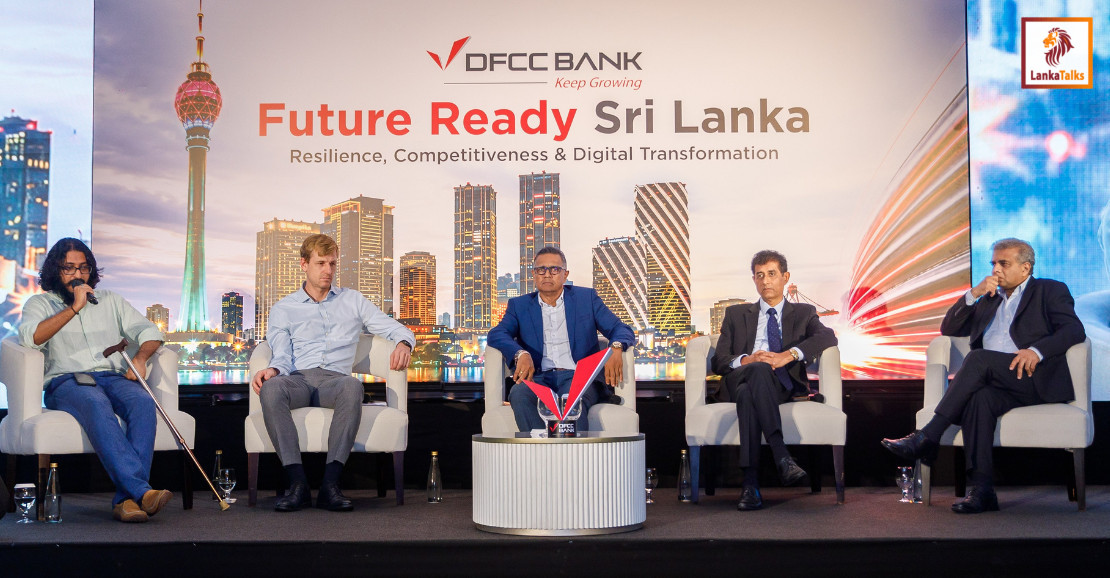
293DFCC Bank recently convened Future Ready Sri Lanka: Resilience, Competitiveness and Digital Transformation, bringing together leaders in economics, investment, digital government and banking to examine what Sri Lanka must do next as it moves beyond economic stabilisation.
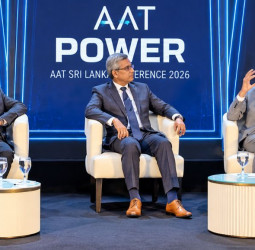
The keynote address was delivered by Mr Gregory Smith, IFC Manager for Country Advisory and Economics in South Asia. It was followed by a panel discussion featuring Dr Hans Wijayasuriya, Chief Advisor to the President on Digital Economy and Chairman of GovTech Sri Lanka; Mr Duminda Hulangamuwa, Chairman of the Board of Investment of Sri Lanka; and Mr Thimal Perera, Director and Chief Executive Officer of DFCC Bank PLC. The discussion was moderated by Mr Chayu Damsinghe, Head of Macroeconomic Advisory at Frontier Research.
Mr Gregor Smith recognised Sri Lanka’s progress since the economic crisis, including the recovery of government revenue, stronger foreign reserves, controlled inflation and renewed private-sector credit growth. However, he cautioned that stability should not be mistaken for resilience, particularly as the country approaches a period of higher debt repayments amid continued global energy, trade and geopolitical uncertainty.
“There will be shocks. There will be big shocks,” Mr Gregory Smith said, framing the challenge through a direct question: “How do we survive 2030?”
He identified active debt management, affordable access to international capital markets, a return to a solid single-B credit rating, renewable energy development at scale and the protection of fiscal gains as priorities for strengthening the economy against future disruption. He also used comparisons with India, Vietnam, Georgia and Armenia to demonstrate how quickly countries can gain or lose ground when their economic trajectories diverge.
The panel then examined the practical barriers standing between stability and growth. Mr Duminda Hulangamuwa highlighted the time and complexity involved in securing investment approvals, noting that a tourism project may require approvals from approximately 18 institutions, while access to government land or completion of a major tender can take around two years. He stressed the need for Sri Lanka to look beyond its domestic market, observing: “If you sell to 22 million people, we cannot grow more than 3% to 4%. We have to sell to the world.”
Dr Hans Wijayasuriya focused on the potential of digital public infrastructure to connect government institutions and reduce the time citizens and businesses spend moving from one agency to another. He highlighted the Sri Lanka Unique Digital Identity and National Data Exchange as foundations for more connected, paperless and citizen-centred services. He also cautioned that digital adoption must be earned through services that deliver genuine convenience and value.
Addressing the role of the financial sector, Mr Thimal Perera said the recovery in private-sector credit was an encouraging indication of confidence. However, he noted that the quality of economic growth would depend on where that capital is directed. Banks must increasingly use data, technology, cash-flow-based assessment and credit-guarantee mechanisms to support start-ups, small businesses and microentrepreneurs that may have strong potential but limited physical collateral.
“It is about raising the right kind of deposits and channelling them to industries that will really help this economy move forward,” Mr Thimal Perera said. He also called for closer collaboration among policymakers, regulators and the financial industry to support Sri Lanka’s next stage of development.
Through Future Ready Sri Lanka, DFCC Bank created a platform for a timely national conversation on the choices that must follow economic recovery. The discussion underscored that while Sri Lanka has regained stability, its longer-term progress will depend on its ability to withstand future shocks, attract investment, modernise public services and direct capital towards productive growth.
About DFCC Bank
DFCC Bank PLC, established in 1955 and listed on the Colombo Stock Exchange since 1956, is one of Sri Lanka’s leading financial institutions. Regulated by the Central Bank of Sri Lanka and rated A (lka) by Fitch Ratings, the Bank offers a comprehensive portfolio of retail, corporate, and SME banking services, along with treasury, investment, and trade finance solutions.
With customer centricity and sustainable innovation at its core, DFCC Bank delivers seamless and secure banking experiences, which include digital platforms like DFCC MySpace, and through a network of 133 branches and access to over 6,000 ATMs via the LankaPay network.
A recognised leader in sustainable finance and renewable energy initiatives, DFCC Bank is committed to reducing environmental impact and fostering long-term economic resilience.