

 Breaking News
 LankaTalks
 LankaTalks
 Mar 20 2026
 352
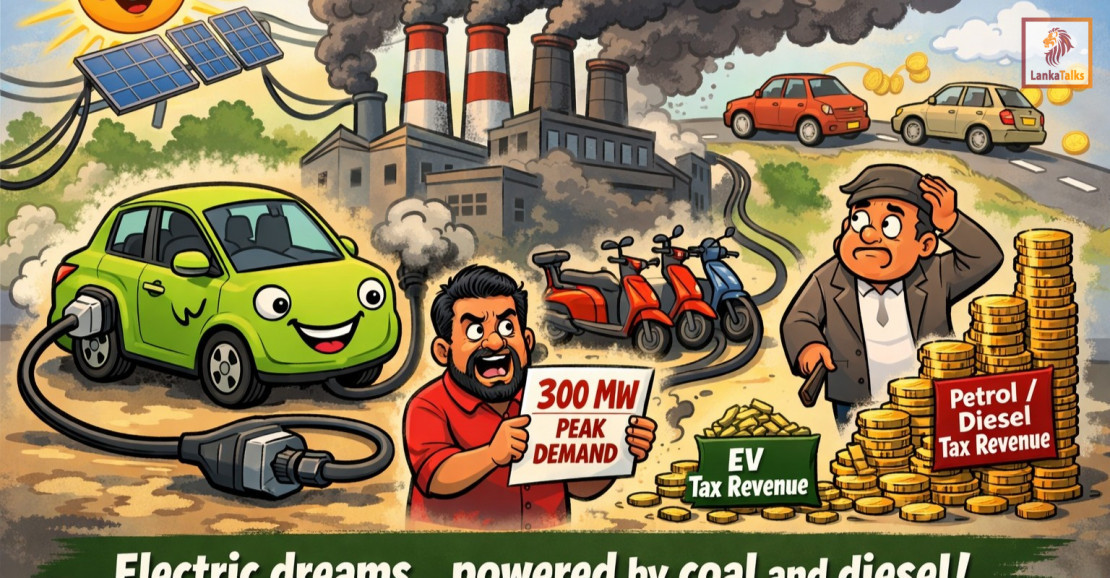
352Most governments have encouraged electric cars by offering generous tax concessions, but President Anura Kumara Dissanayake has highlighted how the supposedly “green” vehicles are actually powered by highly polluting coal and diesel.
In an address to the nation on the impending energy crisis following the Middle East war, Dissanayake spoke about the added strain on the national electricity grid from electric vehicles.
Since he lifted the vehicle import ban in February 2025, nearly 10,000 electric cars had been registered, accounting for just over a tenth of all vehicles imported.
Official data show that 8,655 electric cars and SUVs were registered in the 13 months to February 2026. During the same period, 36,860 electric scooters and motorcycles were also registered.
In addition, 49,137 hybrid vehicles — the majority of them electric vehicles with range-extender petrol engines — have also joined Sri Lankan roads, drawing electricity to charge them.
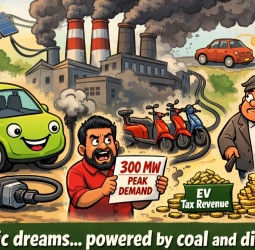
Dissanayake said a 300-megawatt surge in demand during the 6 pm to 10 pm peak period was due to the influx of electric vehicles. Ironically, authorities must operate all coal-fired power stations and thermal generators to meet that surge.
The country does not have battery storage for renewable energy, but the government was on track to allow private firms to develop such storage capacity, the president said.
He said the government was also preparing to impose a time-based tariff on EVs to encourage charging during the day, when the country has an excess of solar-generated electricity.
It was pointed out to the government last week that the policy of encouraging electric vehicles without proper infrastructure may have been a serious mistake from the perspectives of national energy security and the economy.
Electric cars are more expensive than petrol- or diesel-powered vehicles, meaning more foreign exchange leaves the country to pay for EV imports.
The tariff on an EV is also much lower than that on a fossil fuel-powered vehicle. As a result, the state earns far less tax revenue on every dollar spent importing an EV.
While the prohibitive tax of more than 200 percent on diesel and petrol vehicles is aimed at discouraging imports, the state derives the bulk of its revenue from them. The country maintained a 5.0 percent GDOP growth in 2025 thanks to vehicle imports, according to the department of Census and Statistics.
As of the start of March, before the fuel price increase, the government collected tax revenue of Rs 118.67 on every litre of petrol and Rs 97.92 on every litre of diesel sold at the pump. There is no comparable revenue from charging electric vehicles.
This means petrol and diesel users keep topping up the treasury every time they drive, unlike EV users who benefit from subsidised electricity. If they have their own solar panels, those too have been allowed into the country duty-free.
The Colombo Fire Brigade said it had asked EV importers to provide equipment to deal with electric vehicle fires, but there had so far been no response, a fire official said.