


 Breaking News
 Sheron
 Sheron
 Mar 31 2026
 551
551John Keells CG Auto (JKCG Auto), the sole authorised distributor for BYD and its premium sub-brand DENZA in Sri Lanka, is encouraging customers to adopt smart charging practices in line with recent national guidance on electricity usage.
Amid ongoing fuel-related uncertainties, demand for new energy vehicles (NEVs) has continued to grow as more Sri Lankans explore alternative mobility solutions. At the same time, the country’s past experiences with power disruptions underscore the importance of managing this transition carefully. Recent increases in electricity tariffs by the Public Utilities Commission of Sri Lanka further reinforce this need. As such, it is essential to ensure that increased NEV adoption is supported by responsible energy use and adequate infrastructure.
Charging an EV costs a fraction of what drivers would spend at the fuel pump, and with significantly lower maintenance requirements, the overall savings can be considerable. As Sri Lanka continues to navigate the current energy challenges, JKCG Auto called on its customers to take advantage of Smart Charging features built into all BYD and DENZA vehicles, helping them maximise these savings while supporting overall grid stability.
All JKCG Auto customers are provided with at home EV chargers, with 7kW and 2.5kW capacity, and together with the smart scheduling systems, this allows customers to align their charging behaviour with national energy needs, while also benefiting from greater efficiency and potential cost savings.
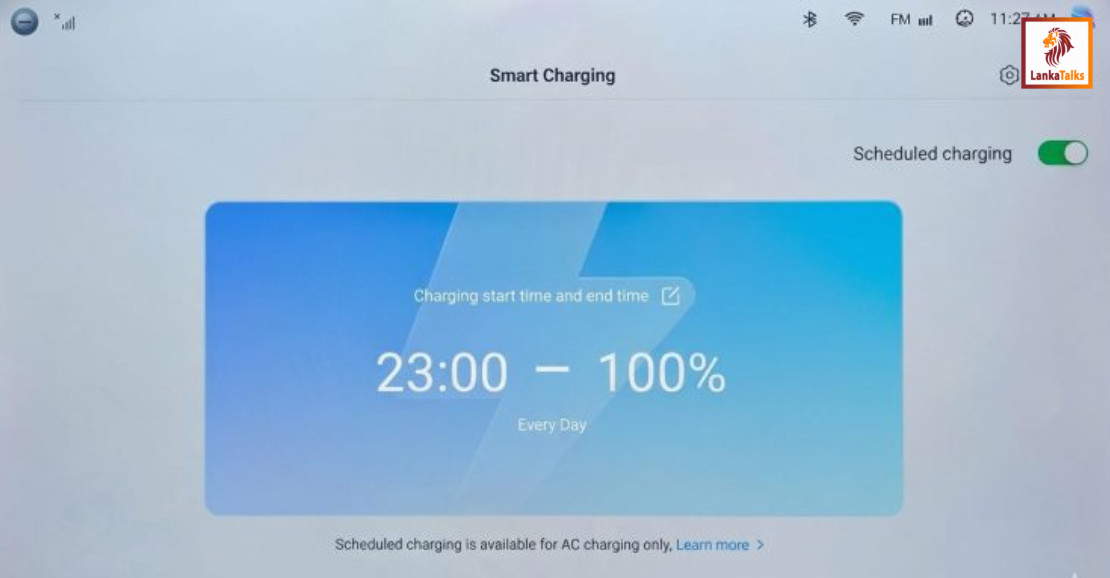
“We encourage our customers to make full use of the intelligent features built into their BYD and DENZA vehicles, such as smart or scheduled charging, which allows vehicles to be programmed to charge at predefined times rather than immediately upon being plugged in,” said JKCG Auto CEO, Charith Panditharathne.
He clarified, “This means that even if a vehicle is connected overnight, it will only draw power during designated off-peak hours, helping to reduce strain on the grid while enabling customers to benefit from lower energy costs. As EV adoption continues to grow, these small but important actions, alongside solutions like rooftop solar, can play a meaningful role in strengthening Sri Lanka’s energy resilience.”
Smart Charging practices align EV charging with periods of lower demand or higher renewable energy availability for those with installed solar capacity.
Accordingly, EV users are encouraged to avoid charging during peak demand hours between 6:30 pm and 10:30pm. Instead, users are encouraged to charge their EVs during off peak hours between 10:30 pm and 5:30 am. EV users with solar systems installed at home or work can also schedule charging to take advantage of the solar generation window between approximately 8:00 am and 4:00 pm.
| Period | Time Window | Recommendation | Reason |
| Peak | 6:30 pm – 10:30 pm | Strictly Avoid | Highest grid stress & highest cost. |
| Off-Peak | 10:30 pm – 5:30 am | Encouraged | Lowest grid demand & lowest cost. |
| Solar Generation | 8:00 am – 4:00 pm (approx.) | Ideal (if Solar) | Uses "free" or excess renewable energy. |
As NEV adoption grows and Sri Lanka’s energy needs evolve, expanding the country’s charging infrastructure is essential, including greater availability of workplace charging stations. At the same time, continued investment in renewable energy and energy storage remains important.
JKCG Auto reaffirmed its commitment to supporting this transition through the continued expansion of charging infrastructure and customer awareness initiatives, helping ensure the shift towards NEVs remains practical, accessible, and aligned with Sri Lanka’s evolving energy needs.
Source: Adaderana