


 Breaking News
 LankaTalks
 LankaTalks
 May 30 2026
 55
55Though Sri Lanka was offered access to $ 695 million (m) on Wednesday (27), with the completion of the International Monetary Fund’s Extended Fund Facility’s (EFF) Fifth and Sixth review – it has fallen short of not incurring new external payment arrears, such as the $ 2.5 m missed payment to the Government of Australia, and avoiding imposing or intensifying import restrictions, the IMF Executive Board said in its official statement.
“The IMF Executive Board completed the combined fifth and sixth reviews, providing the country with immediate access to SDR 508 m (about $ 695 m). Performance under the programme was generally strong,” the statement said, referring to Sri Lanka’s comprehensive achievements of targets under the programme.
“The continuous performance criteria on no new external payment arrears and on not imposing or intensifying import restrictions were not observed,” the statement added, referring to Sri Lanka’s diverted and missed external payment of $ 2.5 m from November 2025 to one of its bilateral creditors, the government of Australia, due to a cybercrime targeted at the Sri Lankan treasury.
According to the Government of India’s national public broadcasting platform, NewsOnAir, officials representing Colombo have requested a waiver, citing the security breach as minor and assuring that corrective measures are underway.
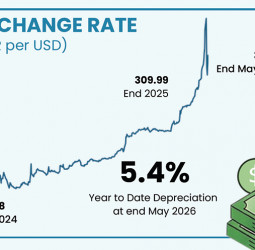
Sri Lanka’s tightening of import restrictions – through the levelling of a 50% surcharge on vehicles – amid the sharp depreciation of the rupee in mid-May was also listed as a shortfall in keeping with the Extended Fund Facility's criteria of maintaining an open trade regime.
The Board noted that despite Sri Lanka’s demonstrated resilience in navigating headwinds from cyclone Ditwah in December 2025, the impact of the Middle Eastern war has weakened the outlook, as growth is projected to slow to 3%.
“Sri Lanka’s strong implementation under the EFF arrangement has continued despite challenging circumstances. Gains from the economic reform programme helped preserve economic resilience and provided room to respond to cyclone Ditwah and the Middle East war. The latter, however, has significantly worsened Sri Lanka's economic outlook and tilted risks to the downside. For 2026, growth is projected to slow down to 3%.”
Notably, the Board also highlighted the palpable risk of Sri Lanka’s current account position weakening due to higher global oil prices. “Higher oil prices would increase inflation and weaken the current account, which would also be adversely impacted by lower tourism receipts. The uncertainty regarding the war's intensity and duration heightens risks to the outlook.”
Referring to Sri Lanka's increased Government spending – as a response to restoring infrastructure, providing compensation after cyclone Ditwah, and crucially subsidizing Sri Lanka’s own fuel import bill amid the crisis spurred by the Middle East conflict – the Board said it views this cycle of fiscal easing as appropriate to the circumstances. This marks a deviation from the austerity and fiscal discipline that the government had to maintain under the programme.
“Fiscal easing in 2026 is appropriate in response to the shocks, and the Government is implementing a temporary relief package, while also allocating additional spending to support recovery and reconstruction following cyclone Ditwah.”
The Board assured that Sri Lankan authorities are committed to redirecting the economy toward achieving a 2.3% of GDP primary balance target in 2027, and to re‑abiding by its primary expenditure ceiling.
“From 2027 onward, the authorities are appropriately committed to reverting to the primary balance target of 2.3% of GDP, as well as complying with the primary expenditure ceiling.”
Source: The morning