


 Breaking News
 Krishani
 Krishani
 Oct 06 2026
 442
442Sri Lanka’s solar power industry is warning that a new policy could undermine energy security, increase costs for consumers and businesses and weaken the country’s ability to reduce dependence on imported fossil fuels.
Sri Lanka continues to recover from an economic crisis, making energy security critical to economic stability. The Public Utilities Commission of Sri Lanka (PUCSL) and National System Operator (NSO) have warned of a potential electricity shortage of 450 MWh by the first half of 2027. The possibility of a severe drought associated with an El Niño event could further affect hydropower generation.
Against this backdrop, rooftop solar has become a critical part of Sri Lanka’s energy mix. More than 2,600 MW of rooftop solar capacity is currently connected to the national grid, with the local solar industry estimated to save approximately Rs. 20.4 billion in foreign exchange each month, or around Rs. 1.5 billion per day, by reducing dependence on imported fossil fuels.
Replacing the same volume of electricity with diesel could cost approximately Rs. 2.5 billion per day, with diesel-generated electricity costing around Rs. 170–180 per unit.
New Policy Raises Concerns- Industry concerns centre on a Ministry of Energy circular issued on September 11. Under the new circular, the previously successful Net Metering and Net Accounting schemes have been discontinued. Instead, all new connections and extensions of existing agreements are required to operate under the Net Plus scheme.
The financial impact on consumers is significant. A typical rooftop solar investment is around Rs. 1.5 million–Rs. 2 million. Under the previous system, a 5 kW system generating approximately 550 units could offset 550 units consumed by a household, effectively reducing the electricity bill to zero.
Under Net Plus, however, those 550 units would first be sold to the Government for approximately Rs. 13,000, while the consumer would then purchase 550 units for household consumption at approximately Rs. 47,000–48,000. With electricity tariffs increasing by around 5%–7.5% annually, the industry argues that this significantly weakens the incentive to invest in rooftop solar.
Businesses and Jobs at Risk -The impact extends to businesses that rely on solar to manage electricity costs and strengthen long-term energy security.
Industry representatives also argue that restricting consumer choice raises concerns regarding consumer rights and the least-cost electricity principle embodied in Sri Lanka’s Electricity Act. They maintain that consumers and businesses should be able to select the electricity arrangement best suited to their requirements, subject to appropriate technical and grid safeguards.
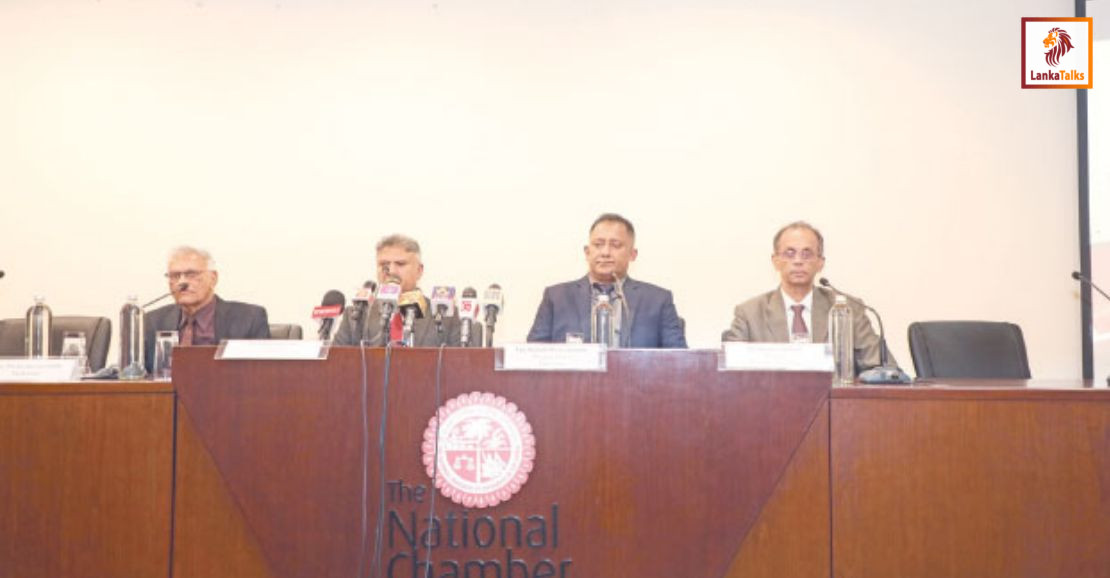
The Sri Lanka National Chamber of Commerce Vice President Dr. Lakmal Fernando, has called for investment in grid strengthening, including the potential installation of batteries at 1,000–2,000 of Sri Lanka’s approximately 33,000 transformers to store excess daytime solar power and release it when required.
Industry representatives are also calling for consumers to retain the option of Net Metering or Net Accounting, alongside greater adoption of Battery Energy Storage Systems (BESS).
The Sri Lanka National Chamber of Commerce has called for the September 11, directive to be revoked, Net Metering and Net Accounting to be reinstated, and future policy changes to be independently evaluated by PUCSL.