


 Breaking News

 Krishani
 Krishani
 Oct 14 2026
 39
39Wages rising at double-digit rates have not left households worse off under the 5 percent inflation target, the Central Bank maintained on Friday, days after the World Bank estimated that 61.1 percent of Sri Lankans live below its poverty line for upper-middle-income countries.
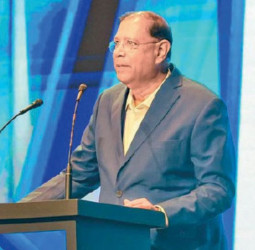
Central Bank Assistant Governor Dr. P.K.G. Harischandra, responding to concerns that the target erodes the purchasing power of low-income households and fixed-income earners, argued that purchasing power depends on income growth as much as on inflation.
“We know, on average, informal sector or formal sector wage levels increase at around double-digit level post-crisis. Therefore, in real terms, people are not really worse off with a 5 percent target,” he remarked, while Central Bank Governor Dr. Nandalal Weerasinghe put annual nominal wage increases at over 10 percent.
However, 61.1 percent of Sri Lankans lived on less than US$ 8.30 a day in 2025, the yardstick the World Bank applies to upper-middle-income countries, a group Sri Lanka rejoined in July, as per its latest Sri Lanka Development Update released on October 6.
That translates to roughly 13 million people, and although the share has eased by 5 percentage points from a peak of 66.1 percent in 2023, it is projected to remain as high as 55.7 percent in 2028.
The World Bank cautioned that the US$ 8.30 line is an aspirational benchmark and not a new poverty estimate, while the reclassification itself rests on average national income and not on how that income is distributed. At the lower US$ 4.20 line, poverty is estimated at 16.9 percent in 2025, still 5.4 percentage points above the 11.5 percent recorded in 2019.
Real wages remain about 12 percent below 2019 levels, and the recovery in real incomes stalled in the first half of 2026 as inflation climbed from 2.2 percent in March to 8 percent in August, the report noted.
Meanwhile, Dr. Harischandra conceded that incomes have yet to catch up with the post-crisis price level, but insisted that monetary policy is too blunt an instrument to address distributional concerns.
“Fiscal policy and social safety nets are better instruments to address severe distributional discrepancies,” he stressed