



 Breaking News
 A.R.B.J Rajapaksha
 A.R.B.J Rajapaksha
 Apr 21 2026
 705
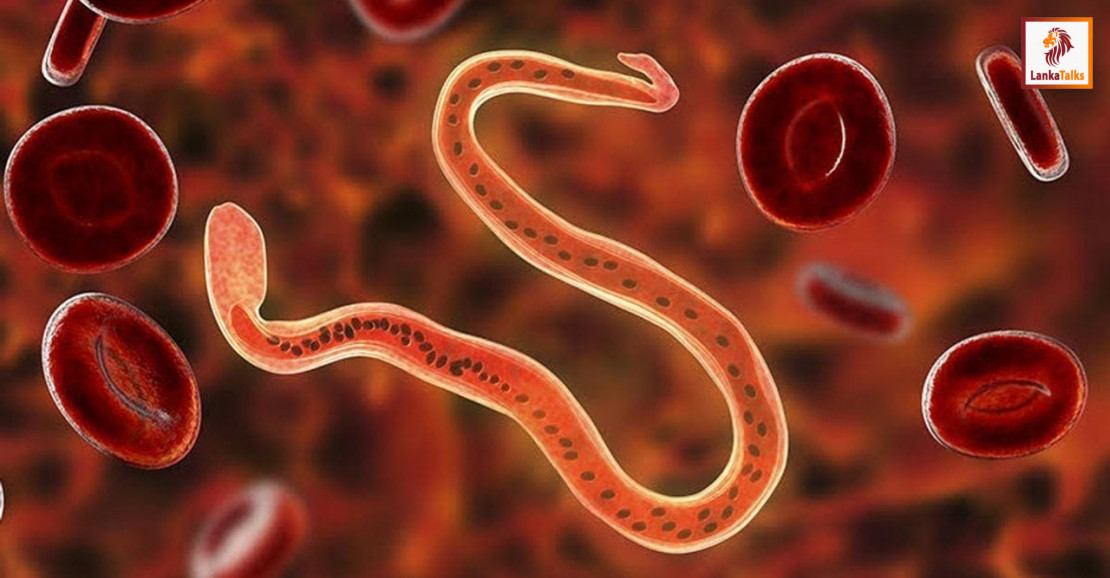
705The Anti Filariasis Campaign (AFC) said that it aimed at eliminating the Wuchereria bancrofti filarial (arthropod-borne) nematode (roundworm), which is the major cause of lymphatic filariasis, by 2030.
Responding to questions from The Daily Morning, Chief of the AFC, Dr. S.T.A. P. Serasinghe said yesterday (20) that although Sri Lanka had been able to eliminate the disease as a public health problem in 2016, the disease causing parasites Wuchereria bancrofti and Brugia malayi are still present in the island.
However, currently the aim of the AFC is to eliminate Wuchereria bancrofti by 2030. Last year (2025), Sri Lanka recorded 32 cases, he noted. This year, within the first four months (January-April), there have been three cases of the disease recorded.
With the limited resources available, Dr. Serasinghe noted that the only possible way to bring the parasite under control is to strategically manage the new cases that are detected. “The aim is to achieve the target of complete interruption of transmission by 2030,” he said, noting that in order to do so, the Campaign is tasked with eliminating Wuchereria bancrofti as well.
Responding to further questions, he said however that to control the second type of parasite, Brugia malayi, is a more uphill task. He noted that according to research, some of the cases may be zoonotic rather than being transmitted by humans.
Informed sources of the Health Ministry noted that according to data, Brugia-type filariasis cases had been detected in Districts such as Gampaha, Galle, Matara, and Kalutara and Puttalam in the recent past. They noted that a study carried out in 2026 had identified a re-emergence of Brugian filariasis after several years.
Source - The Morning