


 Breaking News
 Sheron
 Sheron
 Mar 19 2026
 2206
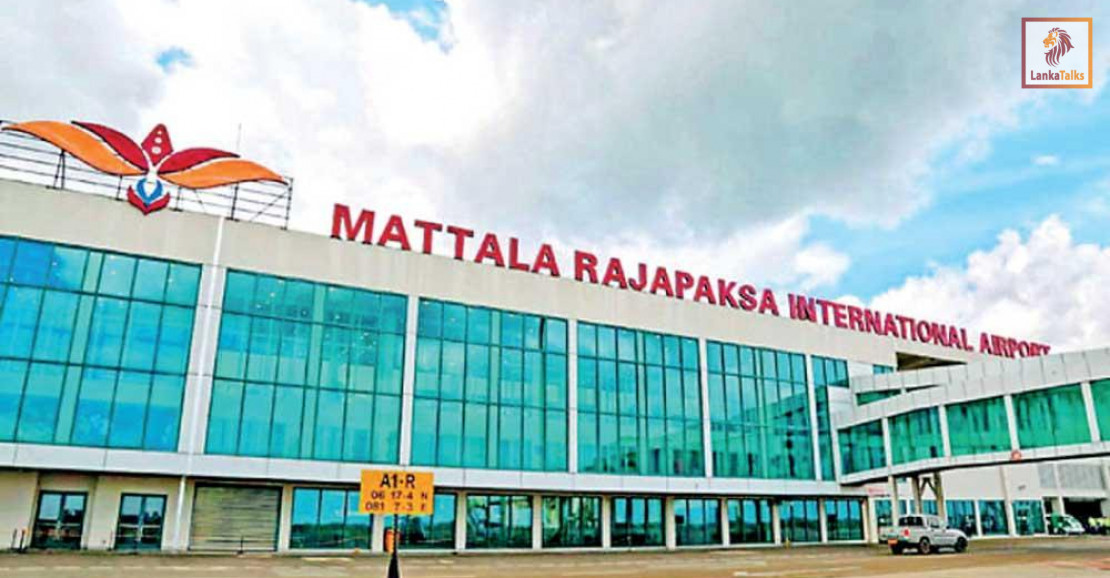
2206The Sri Lankan government has initiated the preliminary discussions with Emirates and Qatar Airways to utilise Mattala Rajapaksa International Airport as an alternative transit hub, as the escalating geopolitical tensions continue to paralyse the primary aviation networks in the Middle East.
The tourism and aviation officials confirmed that both the Middle Eastern carriers have expressed strong interest in repositioning some of their operations to the southern Sri Lankan airport. The move comes as a massive surge in demand for alternative routes and repatriation flights overwhelms the severely constrained global aviation system.
The sudden interest in Mattala is a direct fallout of the severe conflict that erupted in late February 2026, which has triggered one of the most significant disruptions to global air travel in recent history.
The crisis has forced the full or partial closure of civilian airspace across Iran, Iraq, Israel, Qatar and parts of the United Arab Emirates. Consequently, mega-hubs such as Dubai, Doha and Abu Dhabi, which typically handle a massive portion of the East-West transit traffic, have been forced to suspend or drastically reduce operations.
The industry analysts point out that Mattala offers a highly strategic geographical advantage in this climate.
Located in southeastern Sri Lanka, the airport sits directly along the primary Indian Ocean East-West aviation corridors. More importantly, it is positioned far south of the conflict-affected airspace over the Persian Gulf and Arabian Peninsula, offering a stable and secure alternative for the airlines needing to connect Europe, Southeast Asia and Australia.
The facility also boasts a 3,500-meter runway capable of accommodating the largest wide-body aircraft, which is a critical requirement for the massive fleets operated by Emirates and Qatar Airways.
The capacity crunch is being felt heavily by the national carrier SriLankan Airlines, which is currently unable to fully bridge the gap left by the Middle Eastern operators.
The officials told Mirror Business that SriLankan Airlines has completely maximised the utilisation of its wide-body A330 aircraft to maintain vital direct links to Europe. The airline is currently stretching its wide-body fleet to the limit to operate continuous flights to London, Paris and Frankfurt, alongside its Australian routes.
Because extended operations to Europe cannot be serviced by smaller A320 aircraft, the national carrier has no remaining wide-body capacity to absorb the displaced transit passenger volumes.
In the broader regional context, the airspace closures have left Turkish Airlines and its base in Istanbul as the only remaining safe and fully operational transit hub, bridging Europe and Asia in that immediate region.
While Istanbul Airport remains open and the Turkish airspace is unrestricted, the massive rerouting of global flights has led to heavy congestion, making the activation of secondary hubs like Mattala an urgent necessity for the Gulf carriers looking to maintain network integrity.
For Sri Lanka, securing these operations at Mattala could provide a vital economic lifeline.
The Middle East aviation crisis has already resulted in the cancellation of hundreds of flights to the island, dropping the expected tourist arrivals for March by roughly 20 to 25 percent and causing an estimated immediate revenue loss of US $ 40 million.
If Emirates and Qatar Airways finalise the agreements to pivot their transit operations to the south, it could not only salvage the current tourism season but also permanently validate the long-debated utility of the Mattala airport as a strategic backup hub for global aviation.
source: Daily Mirror