


 Breaking News
 A.R.B.J Rajapaksha
 A.R.B.J Rajapaksha
 May 19 2026
 619
619The rapid rise of Artificial Intelligence (AI) is reshaping the global world of work. As organisations move towards leaner, AI‑enabled teams, technology leaders such as Meta, Amazon and Oracle continue to reduce their workforces and redefine how work gets done.
The implications are significant. According to the Institute of Policy Studies, more than 22% of Sri Lanka’s workforce-approximately 1.83 million people-will be affected by generative AI. For fresh graduates seeking entry‑level opportunities, this shift may appear daunting. Yet, within this transformation lies opportunity.
At the Sri Lanka Institute of Information Technology (SLIIT), senior academics anticipated this change early. Curricula and course delivery have been designed to equip students with the skills needed to thrive in an AI‑augmented workplace. Professor Nuwan Kodagoda, Pro Vice Chancellor – Faculty of Computing and a specialist in generative AI, notes that preparation begins from orientation itself.
While experts can only speculate the full impact of AI on employment over the next decade, industry expectations today are clear. “There is an expectation from industry that entry‑level recruits already know how to use relevant AI tools,” Professor Kodagoda observes-an expectation that now extends well beyond the IT sector.
Industry exposure is therefore embedded across all faculties at SLIIT. Students engage in structured industry immersion at every stage of study. For first‑year students, this may take the form of expert‑led workshops, while third- and fourth-year students benefit from internships and placements alongside academic guidance from faculty, including Stanford‑ and Elsevier‑listed scientists.
Assessment methods have also evolved. In a world where information is readily accessible and synthesised by AI, emphasis is placed on application rather than recall. Some project‑based assessments require students to use AI tools responsibly, while invigilated examinations allow reference materials, testing interpretation, reasoning, and decision‑making skills.
Yet succeeding in a workplace today demands skills that AI has not mastered—the ability to be human. Loosely termed as human skills, collaboration, communication, active listening and conflict resolution abilities are increasingly valued. Each faculty at SLIIT uses tailored approaches to strengthen these competencies.
The SLIIT Business School organises competitive business proposal challenges. Engineering students undertake multidisciplinary design projects beyond their core modules, while the Faculty of Computing incorporates physical hardware projects into its programmes.
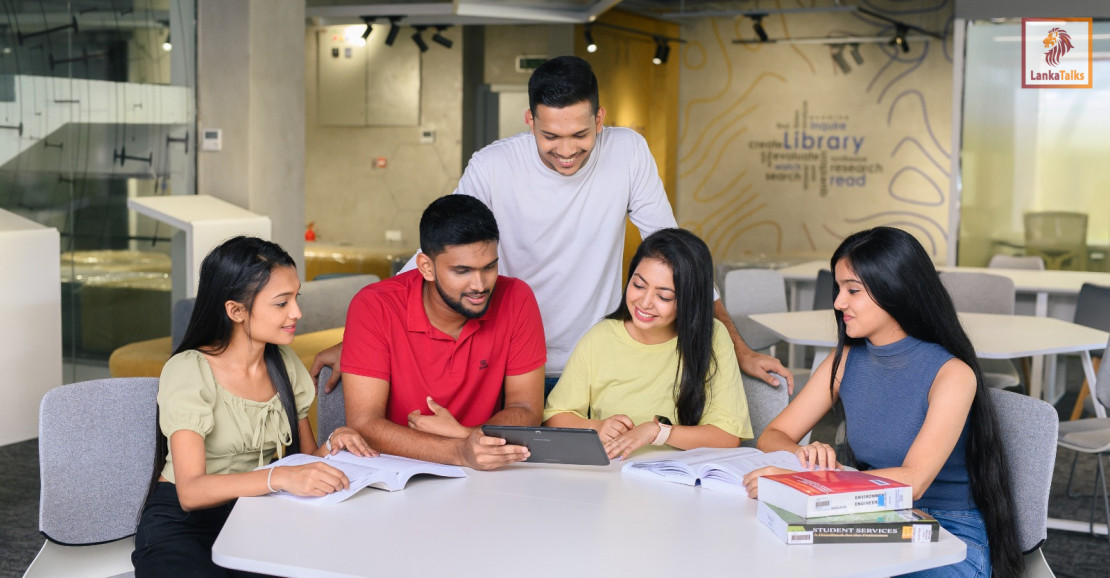
Within the Faculty of Computing, students work in carefully curated, diverse teams spanning different geographic, ethnic and gender backgrounds. “We call it diversity grouping,” says Professor Kodagoda. These groups change annually to continuously develop students’ interpersonal and collaborative skills.
With 25 years of experience in delivering industry- relevant education, SLIIT’s outcomes speak for themselves. Graduates report a 96% employability rate—clear evidence of a future-ready education model aligned with real‑world demands.
AI has not diminished the idea of success; it has redefined it. Before success for an IT graduate meant employment in large IT firms catering to the needs of foreign markets. Whereas today, SLIIT prepares them for much more. Now they are equipped to innovate and apply AI‑driven solutions across diverse sectors—from agriculture and banking to entrepreneurship and emerging industries.