


 Breaking News
 Puvanya
 Puvanya
 Sep 28 2026
 280
280For decades, technology has been designed to make human work easier. Today, however, Artificial Intelligence is beginning to do something different. It is starting to perform tasks that once required human intelligence itself.
AI systems can write emails, analyse data, generate marketing campaigns, assist doctors and even create music or artwork.
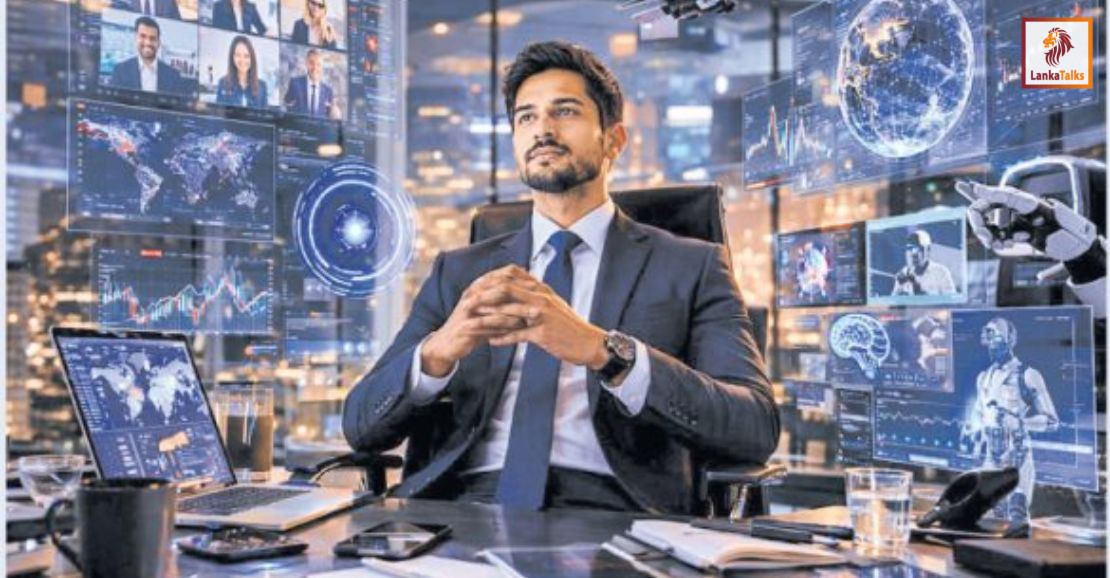
From global technology companies to small businesses, organisations are increasingly integrating AI tools into daily operations. As these capabilities expand, a new question is emerging across industries: if machines can perform many technical tasks, what skills will make humans truly valuable?
The answer may lie not in competing with machines, but in strengthening the uniquely human abilities that technology cannot easily replicate.
Intelligence vs. understanding
Artificial Intelligence is incredibly powerful when it comes to processing information. It can scan thousands of documents in seconds, identify patterns in large datasets, and produce insights at a speed no human could match. Yet AI does not truly understand the world in the way humans do.
Human beings interpret context, emotions, cultural nuance, and ethical considerations in ways machines cannot fully replicate. When a leader makes a strategic decision, it is rarely based on data alone. Experience, intuition, empathy and judgment play critical roles.
In this sense, the future workplace may increasingly depend on collaboration between analytical machines and emotionally intelligent humans. Rather than replacing people, AI may amplify the importance of human judgment.
Creativity is often described as one of the defining human traits. While AI can generate impressive content, it still relies heavily on patterns from existing information. Human creativity, on the other hand, thrives on imagination, curiosity and the ability to connect ideas from entirely different domains.
Many of history’s greatest innovations emerged not from algorithms, but from human curiosity. The ability to question assumptions, explore unconventional ideas and imagine possibilities beyond current data remains deeply human.
As AI handles more repetitive tasks, the value of creative thinking may increase dramatically. Businesses will increasingly seek individuals who can design new solutions, not simply execute existing ones. In industries such as marketing, design, entrepreneurship, and strategy, creative thinking will become an essential advantage.
Emotional intelligence and leadership
Another human ability gaining importance is emotional intelligence — the ability to understand and manage emotions, both our own and those of others. Organisations are not simply systems of processes and technology; they are communities of people. Motivating teams, resolving conflicts and building trust all require empathy and interpersonal awareness.
AI may assist with analysis and recommendations but leadership ultimately depends on human connection. The ability to inspire others, communicate vision and navigate complex social dynamics cannot easily be automated.
As artificial intelligence becomes more influential, ethical decision-making will also become increasingly important.
AI systems operate based on the data and instructions provided to them. However, the consequences of their outputs often affect real people — in areas such as healthcare, finance, recruitment and public policy. Determining how technology should be used responsibly requires human judgment.
Questions about fairness, privacy, transparency, and accountability cannot be resolved solely by algorithms. They require thoughtful leadership and ethical awareness.
Lifelong learning as a core skill
Perhaps the most important skill of all in the age of AI is the ability to keep learning.
Technology is evolving rapidly, and many professions are transforming along with it. Rather than mastering one fixed set of skills for an entire career, professionals today must continuously adapt and acquire new knowledge.
This shift is particularly relevant for younger generations entering the workforce. Technical tools may change quickly, but the capacity to learn, think critically and adapt will remain valuable throughout any career.
The human advantage
The rise of artificial intelligence does not necessarily mean that humans will become less important in the workplace. Instead, it may redefine what human contribution truly means.
Machines may become increasingly capable of performing technical tasks, but the qualities that define humanity — creativity, empathy, ethical judgment and the ability to connect with others — will become even more significant.
In a world filled with intelligent machines, the real competitive advantage may not be intelligence alone, but humanity itself.
The writer is Head of Marketing at CrossBorder Payments (Pvt) Limited