


 Breaking News
 Krishani
 Krishani
 Oct 09 2026
 41
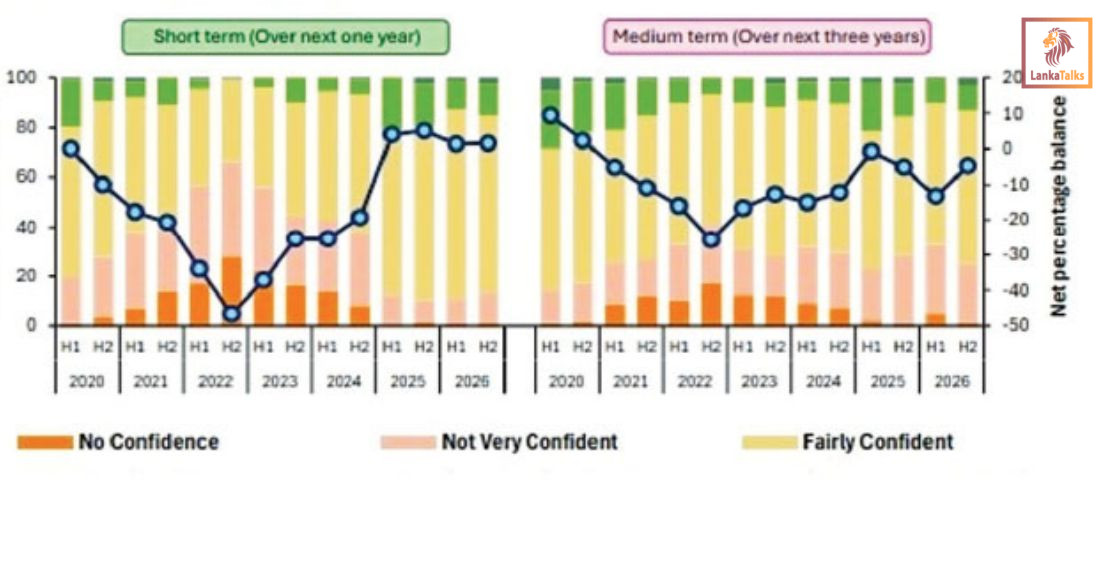
41Financial market participants in Sri Lanka are showing growing confidence in the stability of the domestic financial system, even as global macroeconomic headwinds emerge as the single largest perceived threat, according to the latest Systemic Risk Survey (SRS) for the second half of 2026 released by the Central Bank of Sri Lanka (CBSL).
The biannual survey, conducted by the Central Bank’s Macro prudential Surveillance Department between July 17 and August 14, 2026, captured perceptions across 158 financial institutions, achieving a 100 percent response rate. The report said market participants reported increased confidence in the financial system over both the short-term (one year) and medium-term (three years) horizons. Global macroeconomic risks surged to represent 33.5% of total identified systemic risks—up sharply from 26.0% in H1 2026—making it the dominant risk category. It said combined domestic macroeconomic concerns (comprising sovereign/fiscal risks and general domestic risks) accounted for a smaller proportion of overall systemic concern compared to previous survey rounds and respondents noted a slight uptick in the short-term probability of a high-impact negative event, whereas the medium-term probability of such an event declined. The survey highlights a structural shift in risk perception. While domestic macroeconomic instability dominated market sentiment in earlier years, external uncertainties have now taken priority. The sharp rise in global macroeconomic concern (33.5%) was largely driven by heightened geopolitical tensions across key international regions.
Potential cross-border spillovers impacting trade, capital flows, and energy prices. Despite external threats, overall confidence in domestic financial system stability strengthened compared to the H1 2026 survey round. The H2 2026 survey marked a major operational milestone for the Central Bank, transitioning fully to an online survey platform preceded by dedicated awareness sessions for key institutional participants. The survey sample encompasses risk officers from Licensed Banks, Finance Companies, Insurance Firms, Primary Dealers, Unit Trust Management Companies, Stock Brokerages, Microfinance Institutions, Credit Rating Agencies, Financial Infrastructure Providers, and Mobile e-Money Operators.