


 Breaking News
 Sheron
 Sheron
 Apr 05 2026
 681
681Last week offered two clear reminders of a lesson Sri Lanka keeps learning the hard way.
Markets discipline decisions. Governments struggle to run businesses. The cost of ignoring this distinction is paid by taxpayers and consumers.
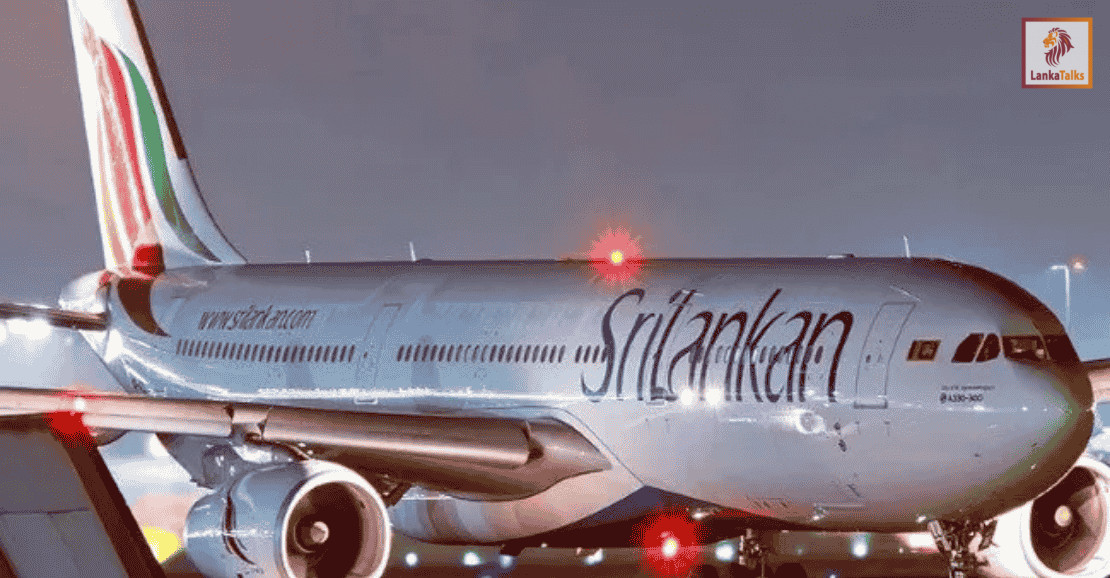
SriLankan: A repeating cycle
The first story was the resignation of the Chairman and several board members of SriLankan Airlines. This is not a story about individuals failing. It is a story about systems failing. Even capable professionals cannot succeed when incentives, governance, and political pressures are misaligned.
We have seen this cycle before. Successive governments have been persuaded that the airline can be ‘turned around’ with the right people and a new plan.
When the current President assumed office as both President and Finance Minister, his first Budget allocated Rs. 20 billion to support the airline based on the board’s recovery plan. Eighteen months later, we have not even managed to appoint a permanent CEO to run a highly technical, fast-moving industry that depends on precision and commercial agility.
This is not new. As far back as the time of J.R. Jayewardene, advice from Lee Kuan Yew was clear: do not run an airline as a state enterprise. Singapore structured its National Carrier under Temasek Holdings, separating ownership from political control and embedding commercial discipline.
Sri Lanka has done the opposite. From one administration to another, the pattern has been the same. Political ownership, weak governance, and repeated capital injections. The debt of roughly $ 510 million was absorbed by the Government, transferring the burden from the airline’s balance sheet to the public. Yet the core problem remains unresolved.
Every new board arrives with a familiar script. Fleet expansion. Optimistic projections. A promise that the airline is ‘rescuable’. But without basic building blocks such as professional management and independence from political interference, these plans collapse. If a government cannot appoint a CEO for its own airline, it raises a more fundamental question. Can the State effectively run any commercial enterprise?
Today, there is discussion of injecting another Rs. 20 billion as the airline struggles to remain a going concern. This is the trap of State ownership. Entering is easy. Exiting is nearly impossible. Selling is politically sensitive. Closing is economically disruptive. The result is a perpetual drain on public finances.
Energy pricing: The real risk
The second story was the electricity tariff revision. It is understandably unpopular, but the real risk lies not in raising prices but in failing to do so.
Energy pricing in Sri Lanka has long been disconnected from market realities. When global prices rise and domestic tariffs remain unchanged, the losses accumulate within institutions such as the Ceylon Petroleum Corporation. These losses do not disappear. They are financed through borrowing, money printing, or delayed payments, all of which eventually return to the public in the form of inflation, currency depreciation, or shortages.
At present, diesel pricing illustrates the problem clearly. Based on current global prices, diesel is being sold at a significant loss, estimated at around Rs. 163 per litre. Even if the Government were to remove the entire tax component, there would still be a gap. This is not sustainable.
Meanwhile, private players such as Lanka IOC and Sinopec are operating under the same administered pricing structure. The sharp increase in super diesel prices to around Rs. 600 signals that underlying costs are much higher than the retail price of standard diesel.
At the refinery level, the difference between diesel and super diesel is relatively small, often in the range of $ 0.05–0.15 per litre. In rupee terms, this would typically translate to a gap of around Rs. 45–50. The current price difference of nearly Rs. 190 suggests that standard diesel prices are significantly underpriced.
Underpricing has consequences. It creates implicit subsidies that are neither targeted nor efficient. In Sri Lanka, around 70% of fuel is consumed by the wealthiest 30% of the population. When diesel is sold below cost, the benefit disproportionately accrues to those who consume more, while the cost is borne by the broader population.
This is why the real conversation should shift. While prices must be adjusted to reflect market realities, the policy effort should focus on strengthening the social safety net. The objective is not to suppress prices artificially, but to protect the most vulnerable directly.
We cannot protect the poorest of the poor by keeping prices low. In fact, rising food prices, especially of essentials like rice, have already hit them the hardest. Broad subsidies on fuel do little to help them. Instead, they drain public resources.
The better approach is targeted support. Increase cash transfers to the poorest households so they can weather this period of high prices. Strengthen the social registry. Improve targeting. Ensure that assistance reaches those who genuinely need it, rather than being spread thinly across the entire population.
This also preserves fiscal space. Instead of subsidising consumption for higher-income groups, resources can be redirected to those who are most vulnerable. It is both economically efficient and socially just.
The link to electricity is direct. As water levels decline and hydro generation falls, the system shifts towards thermal power, relying on diesel and coal. If diesel prices remain artificially low, the losses in the energy sector widen. If prices are corrected, electricity tariffs must adjust accordingly. The alternative is power cuts or a return to the fiscal and monetary instability that triggered the last crisis.
The uncomfortable truth is that market-reflective pricing is not a choice. It is mandatory. Ignoring it does not protect consumers. It postpones the cost and amplifies it.
The high price of ignored signals
Both stories from last week point in the same direction. Governments are not designed to run commercial enterprises. When they try, inefficiencies and losses accumulate. Prices that ignore market signals create distortions, shortages, and fiscal pressure.
The solution is not complicated, though it is politically difficult. Exit from commercial activities where the State has repeatedly failed. Establish clear, rules-based pricing mechanisms for energy that reflect global costs. At the same time, build a stronger, better targeted social safety net that protects the poorest from the impact of these adjustments.
Markets are not perfect. But they are far better at signalling reality than administrative decisions. When those signals are ignored, reality eventually asserts itself, often at a much higher cost.
source: The Morning