

 Breaking News
 LankaTalks
 LankaTalks
 Mar 20 2026
 456
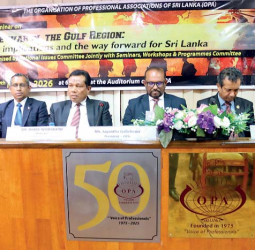
456Organisation of Professional Associations of Sri Lanka (OPA) hosted a seminar titled “The War in the Gulf Region: Its Implications and the Way Forward for Sri Lanka,” recently.
The event featured Rear Admiral Y. N. Jayaratne (Retd) and Dhananath Fernando, Chief Executive Officer of the Advocata Institute, as guest speakers, Bhanu Wijayaratne, OPA Vice President and Chairman, National Issues Committee as the moderator, and was attended by OPA President Jayantha Gallehewa, along with office bearers and members.
Dhananath Fernando provided a broader geopolitical perspective, observing that history demonstrates the inevitability of conflict when major powers compete for dominance, often resulting in prolonged proxy wars. He remarked that the present conflict in the Middle East lacks a clear rulebook, suggesting a protracted period of geopolitical instability.
He warned that the economic impact of the conflict would be particularly severe for vulnerable economies like Sri Lanka. Rising global energy prices are expected to drive up the cost of living, while tourism may decline—albeit partially offset by extended stays of stranded travelers.
He further noted that approximately 40% of Sri Lanka’s foreign remittances originate from the Middle East, and economic disruptions in that region could significantly reduce inflows. Export markets may also weaken as global demand contracts amid rising prices.
Questioning the adequacy of the government’s response to the looming fuel crisis, Fernando pointed out that fuel accounts for nearly 20% of Sri Lanka’s import bill.
He argued that the 2022 fuel crisis was not resolved by the QR code system alone, but rather through external financial assistance, including loans and currency swaps from countries such as India and China. In contrast, the current challenge lies in supply constraints despite the availability of foreign exchange.
He advocated for a substantial increase in fuel prices to reflect true costs and curb demand, noting that existing pricing mechanisms have not been consistently followed.
He also highlighted rising insurance premiums and stressed the importance of implementing targeted safety nets to protect vulnerable groups. Emphasizing long-term thinking, he observed that 70% of fuel consumption is attributed to the wealthiest 30% of the population, suggesting that price adjustments could encourage more efficient consumption patterns.
Fernando also outlined potential opportunities arising from the conflict. With the Middle East traditionally serving as a hub for global wealth, the current instability could prompt capital to seek alternative destinations such as Sri Lanka.
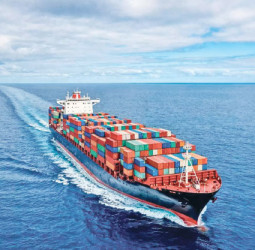
Admiral Jayaratne pointed to missed economic opportunities for Sri Lanka. He noted that past disruptions in key shipping routes had led to increased activity at local ports. However, a lack of strategic foresight and leadership had prevented the country from fully capitalizing on such developments. He cited the underutilization of oil storage facilities in Trincomalee—originally constructed in 1925—as a prime example of untapped potential due to inadequate planning.
During the question-and-answer session, the experts underscored the importance of investing in renewable energy to address future energy crises.