

 Breaking News
 A.R.B.J Rajapaksha
 A.R.B.J Rajapaksha
 May 25 2026
 95
95The average person will unlock their phone 96 times today. They will remember perhaps three of those moments.
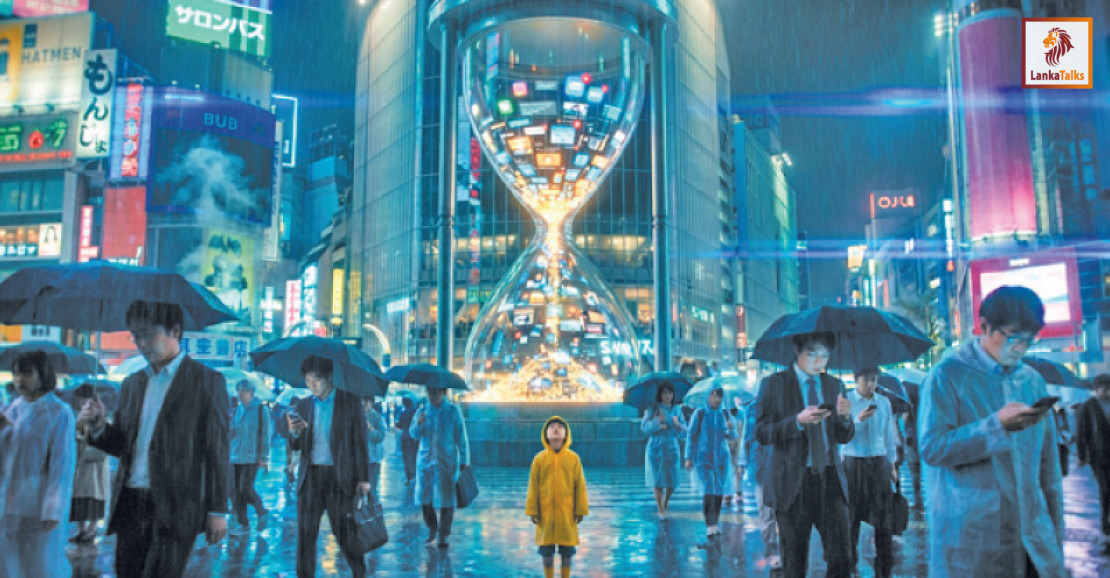
The rest will vanish into a neurological fog that the industry quietly calls “engagement” — a word clinical enough to obscure what it actually describes: the systematic dismantling of your capacity to concentrate on anything at all.
This is not accidental. It is engineered. The attention economy — built on the insight that human focus is scarce, tradeable, and monetisable — has spent two decades refining its extraction techniques. What began as banner advertising has evolved into an arms race of algorithmic precision in which the prize is not your money, but your mind.
“The platforms did not steal your attention in a single act. They dissolved it, one scroll at a time, until sustained thought began to feel like effort.”
The architecture of the eight-second world
TikTok did not simply popularise short-form video. It industrialised dopamine at a scale no previous medium had attempted. Its recommendation engine does not ask what you want. It observes what you cannot stop watching, and feeds you an endless succession of it.
Instagram Reels and YouTube Shorts followed, adopting the same logic: compress the content unit, eliminate friction, autoplay the next piece before the current one is processed. The average attention span of a human adult has declined to approximately eight seconds — one less than a goldfish.
The neurological mechanics are not mysterious. Each notification chime, each pull-to-refresh delivers a micro-burst of dopamine — the same reward pathway activated by gambling, sugar, and social approval. Repeat the stimulus thousands of times daily, and the brain recalibrates.
Slower content feels unrewarding. Reading an argument to its conclusion becomes uncomfortable. The medium has not just changed how we consume content. It has changed what the brain is willing to tolerate.
Brands shouting into a hurricane
For marketers and businesses, this represents a structural collapse of the old bargain. The premise that paid placement earns attention no longer holds. Consumers are not skipping advertisements because they are poorly made — they are skipping them because their brains have been reconditioned to dismiss interruption.
Spotify’s podcast experiments, Netflix’s pre-roll testing, and Apple’s Screen Time — which routinely confronts users with the revelation that they spent six hours staring at a device — are symptoms of the same contradiction: platforms profiting from overstimulation while selling tools to manage its consequences.
OpenAI and the generative AI wave have compounded the crisis by flooding the ecosystem with volume no editorial filter can process. The result is a paradox: richer in quantity, thinner in meaning, impossible to navigate without algorithms that are themselves optimised for engagement rather than insight.
Notification fatigue is measurable and mainstream. Consumers are muting, unsubscribing, and deleting apps in growing numbers. The creator economy is seeing a quiet correction, with long-form newsletters and considered podcasts attracting audiences who value the cognitive demand the content makes of them. Digital detox retreats are fully booked. Dumb phone sales are rising.
Focus as the next competitive frontier
For brands and business leaders, the implications are profound. Companies still building engagement models around interruption — the pop-up, the autoplay, the notification barrage are betting on an infrastructure beginning to crack under its own weight.
The brands that will define the next decade are those grasping a fundamental inversion: in a world drowning in content, restraint has become differentiation. Meaning has become the new reach.
Attention is not something to be grabbed. It is something to be earned — slowly, through consistency and the willingness to offer something worth a consumer’s finite cognitive resources. A customer who reads your message to its conclusion is worth more than ten thousand passive eyeballs that register nothing.
The future of advertising is not louder. It is quieter, more deliberate, and radically more human. Focus — the capacity for sustained, undistracted thought — is becoming the rarest resource in the digital economy. Those who learn to cultivate it, rather than exploit its absence, will hold the most consequential advantage of the coming decade.
In an age when every algorithm competes for the next eight seconds of your attention, the most radical act available to a brand — or a person — may be the simplest: to stop, think slowly, and choose deliberately what is worth focusing on. The question is not whether the algorithm has stolen your attention. It is whether you have decided, yet, to take it back.
The writer is Head of Marketing at CrossBorder Payments (Pvt) Limited.
Source - Sunday Obserber