

 Breaking News
 LankaTalks
 LankaTalks
 Apr 07 2026
 274
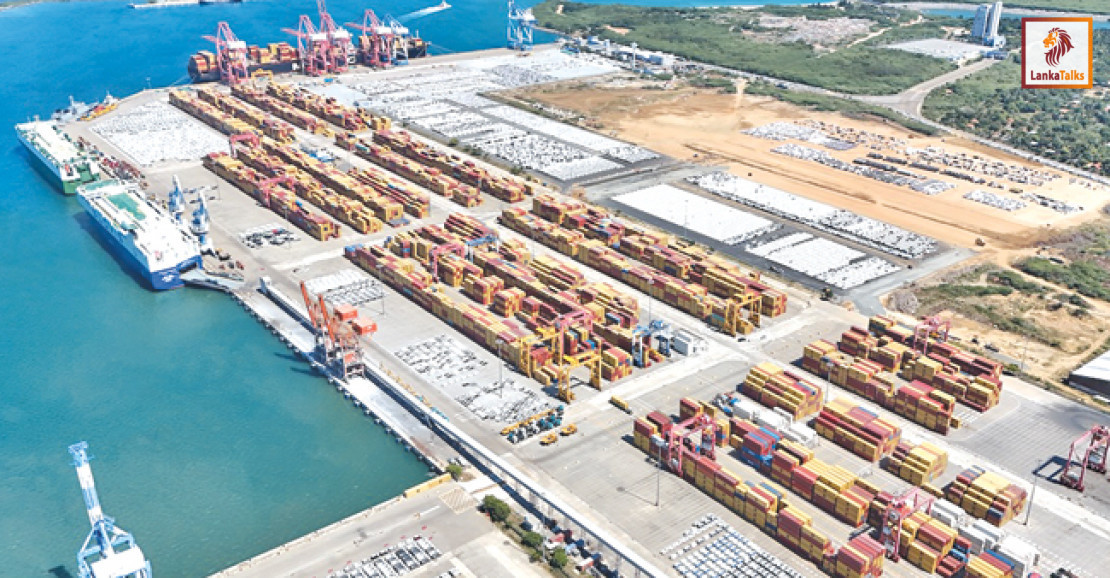
274The Hambantota International Port (HIP) has significantly expanded its operational capacity in response to a surge in global shipping volumes driven by the ongoing crisis in the Middle East, strengthening its position as a key alternative hub along the East–West maritime corridor.
HIP authorities said the facility has doubled its Roll-on/Roll-off (RoRo) yard capacity while increasing its container yard capacity by 30%, as shipping lines divert operations away from disrupted routes in the Middle East in search of more stable and efficient alternatives.
The increase in activity has pushed yard utilisation levels to the highest in the port’s history, reflecting both rising vehicle transhipment volumes and a notable uptick in container traffic.
Hambantota International Port Group (HIPG) CEO Wilson Qu said the current developments signal a broader transformation in global shipping dynamics.
“What we are witnessing today is a structural shift in global shipping patterns. At HIP, we have focused on building the capacity and operational agility to respond to such changes,” he said, noting that the port’s strategic location enables it to support global shipping lines when reliability becomes critical.
Located just 10 nautical miles from the main East–West shipping route, HIP offers vessels the ability to divert with minimal deviation, helping maintain schedule integrity amid ongoing disruptions.
To accommodate increased throughput, the port has rapidly expanded yard space across both RoRo and container segments. Officials said the expansion was carried out within a short timeframe despite the operational and technical challenges associated with upgrading facilities in a live port environment.
The development required close coordination across management, engineering and operational teams, alongside significant investment, to ensure that capacity enhancements kept pace with rising demand while maintaining efficiency and minimising congestion.
Port officials attributed the surge in volumes largely to geopolitical tensions in the Middle East, which have disrupted traditional shipping routes and increased demand for alternative transhipment hubs in the Indian Ocean region.
The latest expansion underscores Hambantota International Port’s growing role as a resilient logistics platform, positioning it to capture a larger share of regional transshipment volumes while supporting the continuity of global supply chains.
Source: Daily News