


 Breaking News
 A.R.B.J Rajapaksha
 A.R.B.J Rajapaksha
 May 13 2026
 250
250Avurudu may have come and gone, but the feeling rarely leaves all at once. It lingers, not in obvious ways, but in quieter, more familiar moments. In the memory of a table that felt fuller than usual, in the rhythm of a kitchen that stayed busy for days before the celebration itself, and in that unmistakable craving for one more piece of kevum or kokis.
What remains is not simply the food, but everything that surrounded it. The preparation, the time spent together, the sense of anticipation that built gradually and then seemed to pass too quickly. For many, that is what is hardest to let go of. Increasingly, however, that feeling does not end when the season does. It shifts. It finds new spaces to exist in. Through platforms like TikTok, what was once contained within the home can now continue beyond it, carried through recipes, visuals, and shared experiences that extend the life of Avurudu in subtle but meaningful ways.
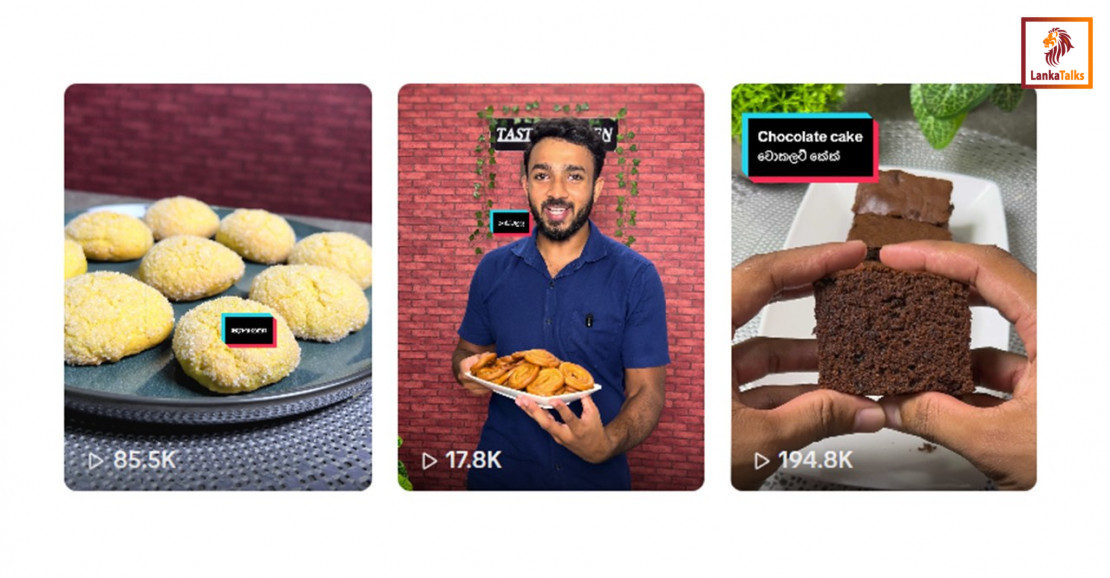
For those still holding onto that feeling, creators like Kavish Nimalka offer a way back to it. Through his TikTok page Tasty Kitchen, he shares recipes that keep #Avurudu alive beyond the season, allowing people to return to familiar dishes, revisit the process, and recreate a small part of that experience in their own homes through TikTok.
A Practice That Became Visible
Kavish’s approach to cooking is shaped by the absence of formal structure. There is no professional training behind it, no institutional framework guiding how he cooks or what he chooses to share. Instead, it is built on interest, repetition, and a willingness to learn through doing.
“I have not done any hotel or professional cooking courses. It’s just something I enjoy doing”, says Kavish, who believes that foundation is important, because it determines how his content is perceived. On a platform like TikTok, where audiences are often drawn to content that feels relatable and accessible, this lack of formalization or perfectionism becomes an advantage rather than a limitation.
His entry into sharing content can be traced back to the COVID period, when time at home created both the opportunity and the need to develop new routines. Cooking became one of those routines, not as a deliberate pursuit, but as something that gradually became part of his everyday life.
The decision to share that process on TikTok followed naturally. The platform’s structure, built around short, visual, process-driven content, aligned closely with what he was already doing. Recipes could be broken down into clear steps, captured in segments, and presented in a way that required no formal framing.
As with many creators, what sustained this was not a sudden shift in ambition, but a gradual accumulation of response.
How TikTok Shapes What Is Seen and Shared
What TikTok introduces is not just reach, but format. Kavish’s content, like that of many creators on the platform, is shaped by the expectations of short-form viewing. Recipes are broken down into concise, visually driven sequences that prioritise clarity and pace. Each step is designed to be understood quickly, without losing essential detail.
“During the season, I mainly upload Avurudu food recipes, and I explain everything clearly.” This clarity is particularly relevant during Avurudu, when viewers are actively searching for guidance. TikTok surfaces content that aligns with user interest in real time, meaning seasonal recipes gain visibility precisely when they are most needed.
Beyond structure, the platform’s features play a significant role in how content is consumed. Close-up shots highlight texture and detail, making food visually engaging. Quick transitions condense longer processes into digestible segments. Trending sounds and familiar audio cues create an immediate sense of recognition, drawing viewers into the content within seconds.
For creators, tools such as the TikTok Creative Center provide further insight into what is resonating. From trending sounds to popular formats, these tools allow content to be shaped in ways that align with audience behaviour, without requiring changes to the core subject itself.
In addition, features like saves, shares, and comments transform how recipes function. A video is not just watched once, but revisited, referenced, and used. Viewers may return to it while cooking, pause at specific steps, or share it with others who might find it useful.
Through this ecosystem, what Kavish creates does not remain static. It moves. It circulates. It becomes part of a wider pattern of interaction where traditional recipes continue to evolve in how they are experienced.
What Remains, Even After
What becomes clear is that platforms like TikTok do not replace the experience of Avurudu, but they do change its duration. For those who find themselves missing the season once it has passed, the ability to return to parts of it, through a recipe, a method, or even a familiar visual, carries significance. It offers a way to reconnect, not by recreating everything exactly as it was, but by holding onto what felt most meaningful.
Through his content, Kavish does not attempt to preserve Avurudu in its entirety. Instead, he makes it accessible in fragments, each one rooted in something real, something lived. And in that, the experience does not feel entirely over. It simply shifts, settling into a form that can be revisited, shared, and continued, long after the season itself has passed.