


 Breaking News
 LankaTalks
 LankaTalks
 Apr 08 2026
 765
765The United States is seeking a recalibration of its economic engagement with Sri Lanka, pushing for stronger two-way trade flows and greater reciprocity as the island’s post-crisis recovery improves investor confidence.
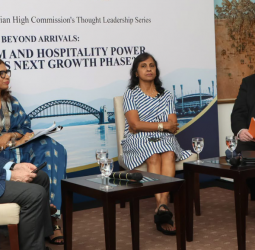
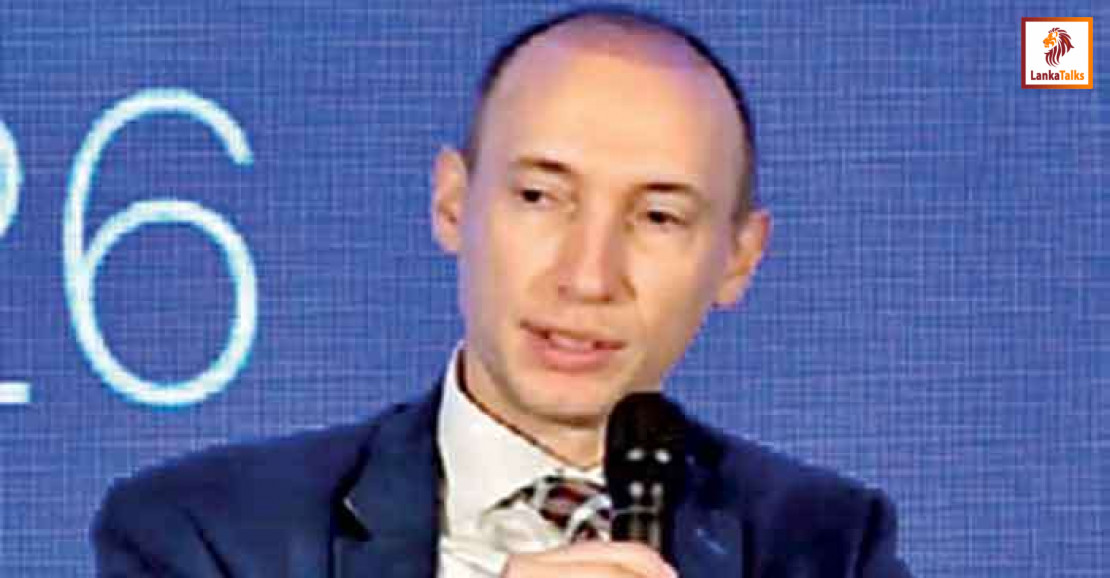
Speaking at a recent AmCham CEO Forum in Colombo, US Embassy Economic Unit Chief Zachary Bailey said US businesses are increasingly optimistic about Sri Lanka’s trajectory, but signalled a clear expectation for deeper commercial integration, including higher imports of US goods and outbound Sri Lankan investment into the United States.
“There has been a remarkable transformation since the financial crisis,” he said, noting that US firms operating in Sri Lanka are “a lot happier today than they were a few years ago” and expressing “cautious optimism” about the market outlook.
Against that backdrop, Bailey said the next phase of engagement must move beyond traditional patterns where developed economies tolerated trade asymmetries with developing markets. That approach, historically rooted in development considerations, is now shifting toward a more reciprocal framework, particularly following changes in US trade policy thinking in recent years.
“We would also really like to see more US exports coming to Sri Lanka,” he said, pointing to sectors ranging from agricultural commodities to machinery and pharmaceuticals.
The US is Sri Lanka’s largest export market accounting for $ 3 billion in 2025 out of a total $ 17.2 billion export earnings that year. The US accounted for just 2% of the $ 1 billion total FDIs in 2025.
He noted that the US has historically run trade deficits with Sri Lanka and argued there is scope to expand market access for American products while strengthening overall commercial ties.
At the same time, Bailey emphasised that the relationship must be two-directional, with Sri Lankan firms encouraged to explore investment opportunities in the United States.
“I also want to talk about the other way around, for Sri Lankan companies to invest in the United States and deepen that two-way trade relationship,” he said, adding that US agencies are open to facilitating such discussions.
Despite improved sentiment, he cautioned that Sri Lanka must address structural issues to remain competitive in attracting global capital.
US investors, he said, are primarily focused on regulatory consistency, tax clarity, customs processes and ease of doing business, alongside broader macroeconomic stability.
“They want to be able to plan one year out, five years out, ten years out,” Bailey said, stressing that long-term visibility is critical given the scale of investment commitments.
He added that labour conditions, fiscal stability and monetary policy credibility also factor into investment decisions, alongside confidence that capital will be secure and returns achievable without excessive administrative friction.
Sectorally, the US sees opportunities across the economy, including strategic infrastructure such as ports, where recent engagements between US investors and Sri Lankan stakeholders have explored potential collaboration.
Source: Daily FT