


 Breaking News
 Tracy
 Tracy
 Oct 20 2026
 19
For years, Sonali Dharmawardena has understood something the wider luxury industry is only now beginning to fully recognise: the story behind an object can be as valuable as the object itself. Long before digital identities, QR codes, and product passports entered the conversation, storytelling was already embedded in the way Sonali worked. She knew where her materials came from. She understood every stage of production. She worked closely with artisans, valued traditional knowledge, and spoke openly about the processes, people, and cultural influences behind her work.
For Sonali, these stories were never an added layer of marketing. They were part of the product itself. In many ways, technology has simply caught up with her.
When Sonali joined the We Are Legacy international pilot program, the opportunity was not to invent a new story around her work, but to explore how the story she had been telling for years could become permanently connected to the object itself. That process also required a different kind of openness. Translating years of knowledge, relationships, materials, processes, and decisions into a digital identity meant documenting and sharing aspects of her practice that had previously been communicated personally or remained within the studio.
What initially felt exposing soon revealed something important: transparency was not a vulnerability. It was an asset. "What I realised was that transparency wasn't something to fear," says Sonali. "It was actually my greatest strength. The things I thought everyone was doing, caring about materials, respecting makers, documenting the process, were exactly what made my work different."
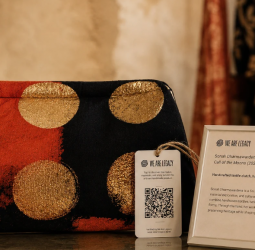
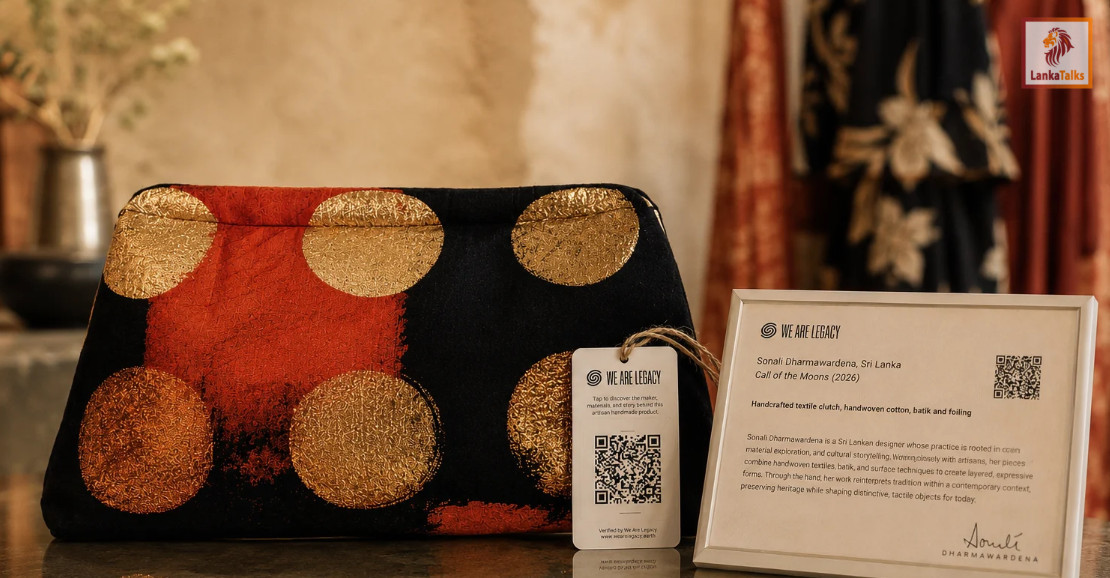
As one of the first makers selected for the We Are Legacy international pilot program, Sonali's handcrafted bag now carries its own digital identity. By scanning a QR code or tapping the digital tag, customers can move beyond the finished object to discover the people, materials, craftsmanship, processes, and stories behind its creation.
The difference is subtle but significant. Sonali no longer has to be standing beside the product to tell its story. The object can now carry that story with it. The piece was presented internationally at XTANT 2026 in Mallorca, as part of an exploration into how handcrafted objects can move beyond anonymous products and become living records of culture, creativity, provenance, and human knowledge.
This shift is becoming increasingly important as consumers ask more difficult questions about the things they buy: Where did this come from? Who made it? What skills were involved? What materials were used? And what, beyond a brand name, makes it valuable? For craft and luxury, these questions present an enormous opportunity.
Authenticity has traditionally been communicated through branding and storytelling. Increasingly, it can also be supported by evidence. Provenance, process, maker identity, materials, and cultural knowledge can travel alongside the object, allowing consumers to understand not only what they are buying, but why it matters.
Robert Meeder, Co-founder of We Are Legacy and international specialist in craft innovation, believes this represents a major opportunity for Sri Lanka: "Sri Lanka possesses some of the richest craft traditions in the world, but too often we've sold the product instead of the value behind it. Sonali has understood the power of storytelling for years. Technology now lets us connect that story directly to the object, so it can travel with it. Luxury today is increasingly about trust, provenance, scarcity, and human connection. When we make the maker and the process visible, we make that value visible too."
For Meeder, digital identity is not about replacing craft with technology, nor is technology itself the story. It is infrastructure. It gives makers a way to carry knowledge, provenance, authorship, and evidence with an object wherever it travels, creating a more direct relationship between maker and consumer while opening new possibilities for premium international markets.
Lesley Pennington, CEO and Co-founder of We Are Legacy, sees Sonali's journey as representing something much bigger than a single product: "We couldn't be prouder of what Sonali has achieved. She embodies so much of what We Are Legacy stands for: authenticity, generosity, openness, and a belief in the value of the human story behind what we make. Our vision is to build a future where handcrafted objects can carry their own identities, connecting makers, communities, brands, and consumers in ways that are fairer, more meaningful, and ultimately more valuable."
Anyone who encounters Sonali's bag can now scan it and enter the world it came from. The finished object becomes the beginning of the story rather than the end of it. And perhaps this is where the future of luxury is heading. Not toward more elaborate stories invented around products, but toward better ways of revealing the extraordinary stories that already exist behind them.
For Sonali, that philosophy is nothing new. She has spent years telling the stories behind her work. What has changed is that technology can finally help those stories travel further, remain connected to the objects they belong to, and provide evidence of the people, knowledge, and processes behind them. Sonali has always understood the power of the story. Now, for the first time, the product can tell it too.