


 Breaking News
 Tracy
Tracy Tracy
Tracy Mar 20 2026
 1002
1002Soon after the United States and Israel started bombing Iran on February 28, Sri Lanka’s booming stock market took a hit.
The bourse has plunged 12.7 percent so far through March 20, erasing 1.07 trillion rupee worth capital in just 14 days.
It plunged over 5 percent with a temporary trading halt when it opened for trading for the first time on March 3 after the attack.
The market has been waiting for some good news from both local and external fronts.
Locally, the return of fuel queues and possible power crisis threatens investor sentiment, while uncertainty over cessation of the conflict weighs from the external front, analysts say.
“Interestingly, compared to other markets like India, Europe and so on, Sri Lanka’s market has reacted the most,” Raynal Wickremeratne, Head of Strategy at Softlogic Stockbrokers told EconomyNext.
“Most countries faced a 4-7 percent drop, while we are down almost 14 percent. This could be due to factors like investors seeing fuel queues outside as soon as they leave their offices.”
Fuel Queues Return
Immediately after the attack, Sri Lanka witnessed long queues across the country as most believed there could be a shortage, even before Iran closed the Strait of Hormuz.
Sri Lanka’s experience of a three-decade conflict and 2022 economic crisis led some motorists to stay in queues, not to fill their tanks, but to collect and store extra fuel.
Analysts say investors are nervous because Sri Lanka’s experience of 2022 power cuts, cooking gas queues, and closure of public institutions followed by such queues with an ultimate result of economic slowdown.
A slowdown coupled with closure of transit hubs like Dubai and Doha mean Sri Lanka’s booming tourism industry could be at a risk of receiving lower number of arrivals.
Sri Lanka is in its peak tourism season and had been targeting 3 million tourists for the whole year.
But arrivals have fallen 19.4 percent in the first 18 days of March, official data showed.
Daily average tourist arrivals plunged 39 percent in March to 6,000 from approximately 10,000 in February 2026.
This drop was reflected on listed tourism shares; between February 27 and March 17, Ceylon Hotels Corp fell 29.7 percent, Palm Garden Hotel dropped 24.7 percent, and Aitken Spence Hotel Holdings declined 23.8 percent, Softlogic Stockbroker reports showed.
Market heavyweight John Keells Holdings dropped 3.74 percent through March 17, which analysts attributed to its tourism sector.
Softlogic Stockbrokers in its report said Jetwing Resorts reported an occupancy decline of 5–10 percent, while Heritance Ahungalla recorded notable cancellations in long-stay European bookings.
“For the 3 million plus arrival target to be met, the industry must pivot toward direct Asian connectivity and move away from its historic “hub-and-spoke” reliance on the Middle East,” Navin Ratnayake, Head of Research at John Keells Stockbrokers, told Economynext.
“Sri Lanka is stuck between budget, mass market destinations like Vietnam and Thailand, and luxury destinations like Maldives. This “middle positioning” is strategically vulnerable.”
Hard Hit on Tea
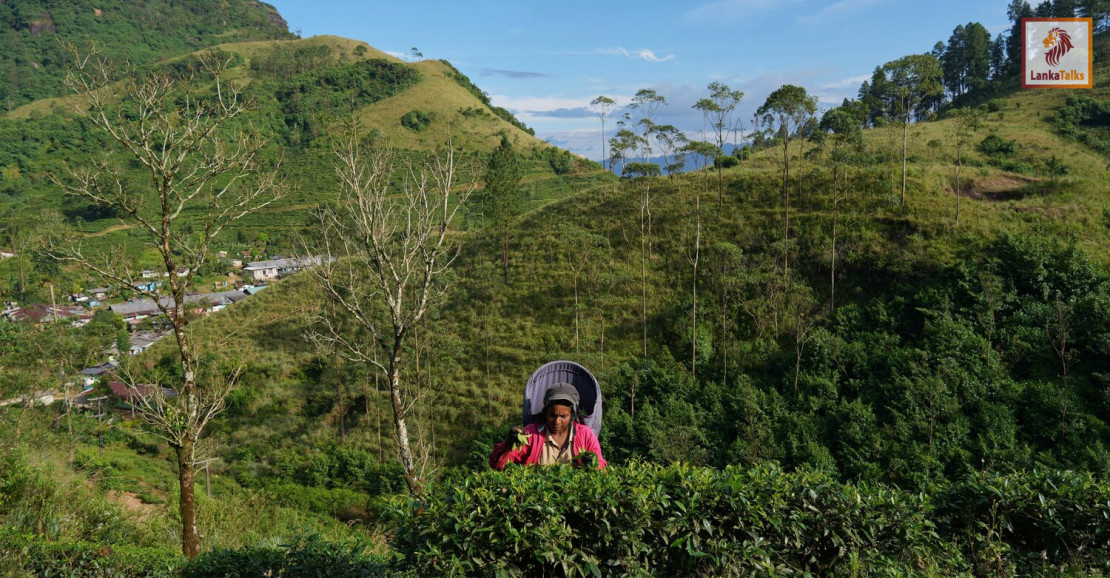
Along with tourism, Sri Lanka’s exports led by tea has been hit hard by the ongoing conflict in the Gulf region.
Gulf countries are the top buyers of Sri Lanka’s branded ‘Ceylon Tea’, with Iraq leading the way with 23.3 percent, as per 2025 data.
In Sri Lanka’s weekly tea auction, the price fell 4.3 percent and the volume declined 13.2 percent in the first week after the attack.
That also led some tea stocks to fall as much as 30 percent after the attack, amid unaffordable shipping costs, leading many exporters to face delays in delivering their orders on time.
The Tea Exporters Association (TEA) estimates a weekly revenue loss of US$10-15 million.
As a result, tea stocks in listed firms have fallen.
Namunukula Plantations plunged 30.6 percent, between February 27 and March 17 while Agalawatte Plantations fell 22 percent.
Industry leaders like Akbar Brothers indicated that while they can still buy and process tea, but they are unable to ship it, leading to warehouses being occupied with packed cargo.
“Certain ships don’t berth here… there’s a total blockage,” an official from Akbar Brothers stated, noting that freight charges have spiked significantly.
This particularly impacts the high-value low-grown tea (kahata) favoured by Middle Eastern and Russian markets.
With exporters becoming less active in the auction due to shipment delays, there are concerns regarding the sustainability of premium tea prices.
Textiles Plunge
In the apparel sector, listed firms like TJL are rerouting shipments to Europe and the US via the Cape of Good Hope, avoiding the Red Sea, according to Softlogic stockbrokers.
The shares in TJL plummeted 20.6 percent on the first day of trading after the Iran bombing by the U.S. and Israel.
While buyers currently bear the additional freight costs, companies face incremental costs for raw materials like yarn and fabric imported from China and India.
Hayleys PLC, which has significant logistics and export interests, saw its share price falling 6.4 percent on the first day of trading after the conflict erupted in the Middle East.
Hayleys Fabrics shares, a garment exporter and subsidiary of Hayleys PLC, have fallen 17.2 percent since the Middle East conflict.
Ports, Bunkering Shares Gain
Analysts say South Asia Gateway Terminals (SAGT) and West Container Terminal (WCT) in the Colombo Port could see increased throughput as cargo originally destined for the Middle East is rerouted or offloaded in Colombo.
The top conglomerate John Keells Holdings (JKH) has stakes in both terminals.
Analysts said JKH shares have been resilient due to expectations of its terminal and bunkering businesses doing better.
Bunkering operations are also seeing short-term gains. As Brent crude rose to $109.2 per barrel as of 1633 hours on March 20, a 49.62 percent increase since the conflict began, operators can sell existing inventory at improved margins, reports showed.
JKH’s bunkering business, which operates on a cost-plus basis, is particularly well-insulated, according to experts.
As a conglomerate involved in multiple sectors that are suffering due to the conflict, its bunkering operations could potentially shield the company from the losses made in the tourism sector.
In the agribusiness sector, Sunshine Holdings PLC is benefiting from higher global palm oil prices, which have risen 12 percent since the start of the war, which offsets some of the losses made in their tea trade through Watawala Tea and Zesta, Softlogic Stockbrokers said in its report.