



 Breaking News
 Tracy
Tracy Tracy
Tracy Feb 15 2026
 1110
1110- Proposals to be invited within next 2–3 months
- Involves 61 oil tanks
- TPTL considers operating farm as petroleum terminal catering to foreign markets
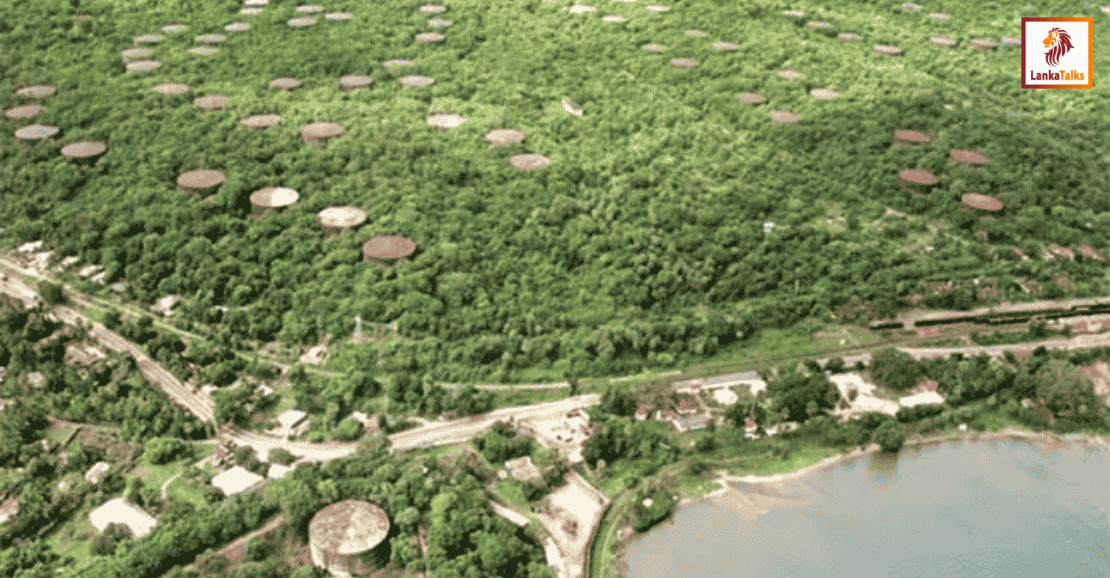
Sri Lanka is set to call for proposals within the next two to three months from interested parties for the development and operation of the 61 tanks of the Trincomalee Oil Tank Farm, held by Trinco Petroleum Terminal Ltd. (TPTL), as it contemplates operating the facility as a petroleum terminal catering to foreign markets.
Speaking to The Sunday Morning Business, Ceylon Petroleum Corporation (CPC) Managing Director Mayura Neththikumarage revealed that they would be commencing a Request for Proposal (RFP) process for the development and operation of the 61 oil tanks at the Trincomalee Oil Tank Farm in about two to three months.
He further stated that they were presently seeking only a prospective operator to undertake the development of the Trincomalee Oil Tank Farm under a build-and-operate arrangement, under which such an operator would be entitled to operate the farm for a period of around 20 years.
He further asserted that they were not seeking any equity investment and that the existing ownership structure of TPTL, being a joint venture between Lanka IOC (LIOC) and the CPC, shall remain unchanged.
Neththikumarage further stated that one of the criteria to be applied in the evaluation of proposals received pursuant to the RFP process would be the projected revenue to be generated thereunder.
“In the RFP, one of the selection criteria is the possible revenue that can be generated,” he stated.
Commenting further on the proposed business plan in respect of the Trincomalee Oil Tank Farm, he stated that they intended to utilise it for the petroleum terminal business, in a manner akin to the operations of Ceylon Petroleum Storage Terminals Ltd., albeit as a common-user facility primarily catering to foreign markets.
Neththikumarage further revealed that TPTL would be providing the Trincomalee Oil Tank Farm to traders for storing and supplying their petroleum products to the external market.
“We will be giving it to traders who can offer their petroleum products wherever they wish. We will not be engaged in the marketing aspect,” he said.
Commenting further on the storage capacity of the Trincomalee Oil Tank Farm, Neththikumarage stated that each of the 61 tanks had an individual capacity of 12,000 MT.
He added that they possessed additional adjoining lands in the surrounding area, thereby affording them the flexibility to undertake future expansion if required.
The Trincomalee Oil Tank Complex Development Project was approved by the Cabinet of Ministers on 4 January 2022.
Accordingly, it was decided that 24 of the 99 tanks would be given to the CPC, 14 tanks to LIOC, and 61 tanks to TPTL – the latter on a 50-year lease, with the CPC having the majority stake in the subsidiary.
Consequently, LIOC and the CPC entered into an agreement on 6 January 2022 for the development of the 61 tanks held by TPTL as a joint venture. The CPC holds a 51% stake in the company while LIOC holds a 49% stake.
The Trincomalee Oil Tank Farm, built by the British as a refuelling station during World War II, is located on 850 acres of land and originally contained 101 tanks, each with the capacity to hold 12,100 MT of oil.
Out of the original 101 tanks, two were destroyed in a kamikaze attack during a Japanese air raid on Trincomalee on 9 April 1942 and when a Royal Ceylon Air Force plane crashed in the early 1960s.
Source: The morning