


 Breaking News
 Shalini
 Shalini
 May 08 2026
 488
488- Claim Rs. 2.5 b per month owed since Dec. 2025 by CEB/NSO
- Seek Prez, Treasury and Finance Min. intervention
In a backdrop where the Government is spending major money on generating thermal power, the Federation of Renewable Energy Developers (FRED) urged the President, the Treasury and the Finance Ministry to allocate a grant to the National System Operator (Private) Limited (NSO) Company so that they would also be able to pay their dues to renewable energy suppliers.
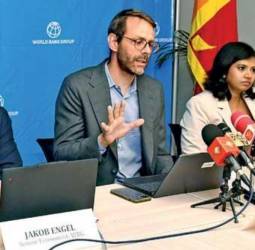
Addressing the media, FRED Vice President Prabath Wickramasinghe said yesterday (7) that payments for the renewable energy supplied to the national grid had been halted since December of last year (2025) with the NSO having to pay Rs. 2.5 billion per month for the supply of renewable energy. He noted that the default payment had totaled a whopping Rs. 10 billion by April of this year (2026). He lamented that the issue had been precipitated by the non-performance of the substandard coal which had been imported so that the energy sector is now tilted more towards the production of thermal power.
He said however that the current predicament has led to renewable energy suppliers facing severe issues as a result. He noted that the situation had led to banks being reluctant to lend them any funds with no guarantee that they would be able to pay them. Further, the situation would only lead to them being unable to pay up the loans that have already been taken, which would contribute to creating a spate of non-performing loans in the banking sector, he lamented. Wickramasinghe said that there is also a massive threat to the livelihood as the company owners themselves had exhausted their personal funds. “Therefore, if the NSO does not issue the payments immediately, thousands of employees including technical staff, electricians, mechanics, engineers, labourers and administrative staff working in these renewable energy companies would not be paid their wages”. He lamented that without proper revenue, the operators would also not be able to purchase essential spare parts, required in routine maintenance, leading to plant breakdowns and the reduction in the availability of renewable energy. Also, it would shake the faith of prospective investors and risk sovereign credibility with international funding organisations, Wickramasinghe warned.
FRED President, Manjula Perera noted that under the current situation of non-payment, there were also machinations to curtail renewable energy from about 9 a.m. to 3 p.m. every Sunday and on every mercantile holiday for the past one year. “Payments have not been made even for this curtailed energy. The situation facing renewable energy providers was better than this even when the economic crisis hit the country in 2022 and 2023,” he observed.
Perera said that priority was given to the payments for diesel and heavy fuel based power generation. Fielding questions, he noted that the only way to prevent the situation turning into a catastrophe is for the President, the Treasury and the Ministry to intervene in lending funds to the NSO as collateral so that it would be able to make the necessary payments to renewable energy developers.
The FRED warned that unless the Government steps in to resolve the financial crisis that the industry is in due to the payment defaults by the NSO, the domestic renewable energy sector faces a natural death. Payments for renewable energy supplied to the national grid have been entirely halted since December 2025. With Rs. 2.5 Billion falling due each month, the defaults have ballooned to an unsustainable Rs. 10 Billion as of April 2026.
According to senior officials at the NSO, the primary reason for this liquidity drain is the prioritisation of payments for diesel and heavy fuel power generation to operate approximately 100 megawatts (MW) to 150 MW of daily supply shortfall arising from inefficiencies and shortfalls in coal power generation since December. Driven by the ongoing geopolitical conflict between Iran and the United States, the cost of generating this thermal power has skyrocketed to exorbitant levels, nearing or exceeding Rs. 100 per kilowatt hour.
“It is fundamentally unfair that conventional power generators receive preferential treatment for disbursements while the renewable energy sector is completely forgotten,” the FRED said.
The FRED demanded that the exact same payment priority afforded to coal, diesel, and heavy fuel operators must be extended to renewable energy developers and warned that prioritising payments for expensive fossil fuel power plants, and defaulting on the renewable energy developers who provide significantly cheaper and cleaner energy, can have a backlash if those operators are forced out of business, leaving a bigger supply shortfall.
It called for immediate Treasury intervention and grant allocation as well as Cabinet of Ministers intervention to avert the “complete collapse of the renewable energy sector and prevent reciprocal damage to the broader economy”.
The FRED warned that immediate financial relief is non-negotiable to keep the lights on today.
Source: The morning