


 Breaking News
 Sheron
 Sheron
 Mar 30 2026
 949
949Walk into any supermarket in Colombo and you will find the shelves lined with chicken marketed as "natural" and "farm-fresh", or some claiming as zero-antibiotics. What you will not often find is proof. The poultry industry, like much of the food sector, has long operated on the implicit understanding that consumers will accept a claim if it sounds credible enough.
New Anthoney's Farms has spent the better part of a decade challenging that assumption. Now, it has done something no other poultry producer in Sri Lanka has attempted: handed its own claims over to an independent university laboratory and said, verify this.
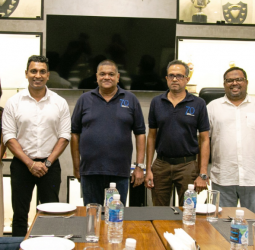
The Memorandum of Understanding signed in February 2026 with the University of Peradeniya is not a marketing exercise. Under the five-year agreement, the Food Safety and Quality Assurance Laboratory of the Faculty of Veterinary Medicine and Animal Science, the only ISO/IEC 17025-accredited laboratory within the Sri Lankan university system, will conduct systematic testing of New Anthoney's chicken at multiple stages of broiler production. The purpose is straightforward: to verify that antibiotics are genuinely absent, not just claimed to be.
"Consumers shouldn't have to take anyone's word for it. They deserve proof." That line, delivered by CEO Neil Suraweera at the MoU signing, cuts to the heart of what makes this partnership significant. In an industry where antibiotic-free labelling has become a competitive differentiator rather than a verifiable standard, New Anthoney's is drawing a line between assertion and evidence.
A Decade Ahead of the Industry
New Anthoney's eliminated antibiotics across its entire production in 2018. Not reduced. Not restricted to certain product lines. Eliminated entirely. Seven years on, it remains the only Sri Lankan poultry producer to have done so. That solitude at the top of the standard is itself a telling commentary on the industry.
Producing antibiotic-free chicken is not simply a decision to stop buying one input and substitute another. It requires a wholesale restructuring of how a farm operates. New Anthoney's maintains heightened biosecurity protocols to prevent the infections that would ordinarily be managed with medication. Its in-house veterinarians and nutritionists have built alternative health management programs using probiotics and essential oils. Every production cycle demands continuous monitoring. And unlike conventional producers who can treat a sick flock and move on, New Anthoney's absorbs the cost of doing things differently.
"What we're doing is harder and more expensive," Suraweera acknowledges. "But the cost of doing nothing is measured in human lives."
That is not hyperbole. Antimicrobial resistance has moved from a specialist concern to a mainstream public health emergency with alarming speed. Global projections estimate that without coordinated intervention, AMR could kill 10 million people annually and cost the world economy US$100 trillion by 2050. Agriculture is widely identified as a primary driver: the routine, prophylactic use of antibiotics in livestock does not just treat disease in animals, it accelerates the development of resistant bacteria that can and do transfer to humans.
The University Partnership: What It Actually Means
The significance of the Peradeniya MoU lies not just in what it does, but in what it rules out. Internal testing, however rigorous, is always subject to the criticism that a company is marking its own work. Third-party certification bodies offer an improvement, but they are commercial entities with ongoing relationships and commercial incentives. An ISO/IEC 17025-accredited university laboratory operating under a formal five-year MoU is a different category of scrutiny altogether.
The MoU was signed on behalf of the University of Peradeniya by Prof. Terrance Madhujith, Vice Chancellor, and Mr. K.A.B. Damunupola, Acting Registrar, signalling institutional, not merely departmental, commitment. For New Anthoney's, this is consequential. The company is not contracting a testing service; it is entering a formal research and verification relationship with the country's leading veterinary science faculty.
Testing will be conducted at different stages of the broiler production cycle, meaning verification is not a one-off snapshot but a systemic, ongoing process. If antibiotics appear at any stage, the data will show it. That is precisely the point.
Certifications as a Pattern, Not a Checklist
The Peradeniya partnership sits within a broader pattern of accreditation and external verification that New Anthoney's has built since its founding in 1986. The company holds FSSC 22000 certification, a globally recognised food safety management standard, and was the first Sri Lankan poultry producer to achieve it. It has ISO 14064-1:2018 greenhouse gas verification from Control Union, animal welfare certification from the National Chicken Council of the United States, and was the first producer in South Asia and Sub-Saharan Africa to adopt the Sustainable U.S. Soy label.
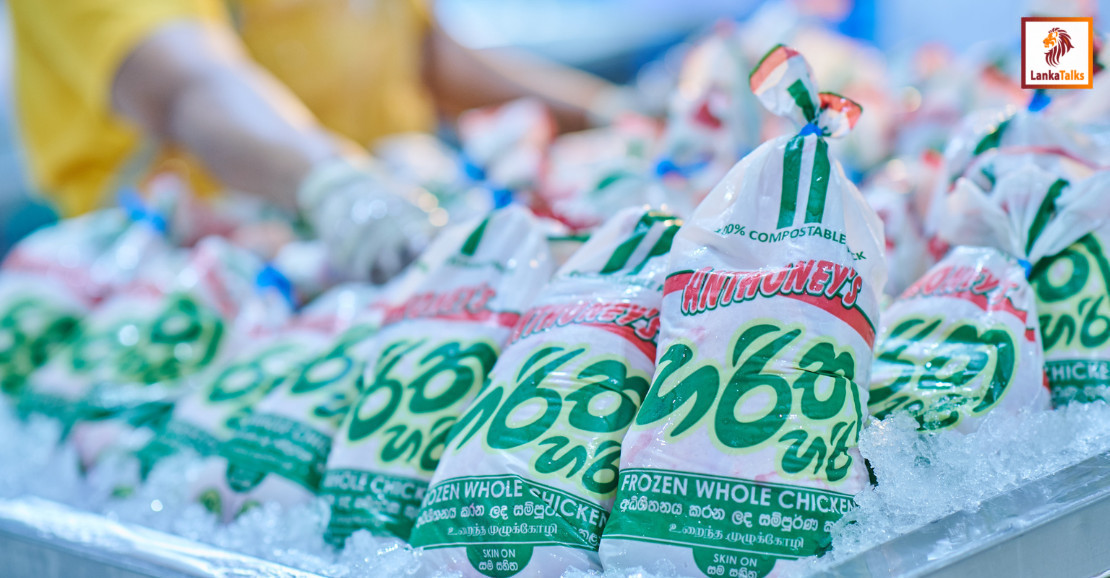
Its HarithaHari brand goes further still: 100% compostable packaging, a first in Sri Lankan poultry. Each of these accreditations represents an external party affirming a claim that the company could simply have made and hoped consumers would accept. The cumulative picture is of a business that has consistently chosen verification over assertion.
Beyond the Farm Gate
New Anthoney's engagement with the AMR issue extends beyond what happens in its own facilities. In November 2025, the company co-convened the Forum on Antimicrobial Resistance alongside the Ministry of Health, bringing together more than 100 stakeholders from policy, industry, healthcare, veterinary science, and development organisations. It has run AMR awareness programs with university students and invested in employee education across its operations.
This is not the behaviour of a company treating antibiotic-free production as a marketing positioning exercise. It is the behaviour of a company that believes the broader industry needs to change and is willing to put resources behind that belief, including the uncomfortable step of inviting scrutiny that most competitors have so far declined to invite.
The Question the Industry Cannot Ignore
What New Anthoney's has done with the Peradeniya MoU is set a benchmark that will be increasingly difficult for the rest of the Sri Lankan poultry industry to ignore. As consumer awareness of food safety and antibiotic resistance grows, the gap between a company that can point to independent, accredited laboratory verification and one that cannot will widen.
The question is no longer whether antibiotic-free production is possible at commercial scale. New Anthoney's has answered that question by doing it for seven years. The question now is whether the industry will treat this as a niche competitor to be tolerated or a standard to be adopted.
In a category where trust is typically built on packaging claims, New Anthoney's has taken the harder road: build it on data. For Sri Lankan consumers, that distinction is becoming easier to see.