


 Breaking News
 Puvanya
 Puvanya
 Nov 26 2026
 19
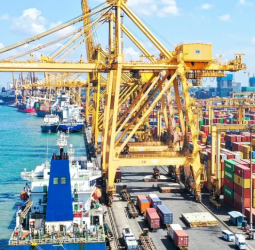
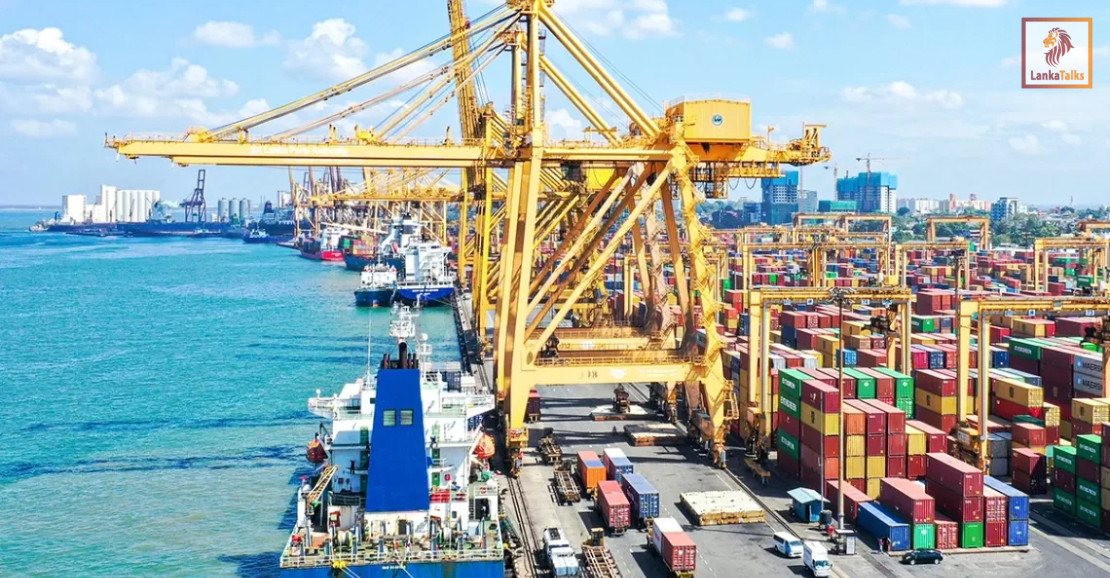
The Port of Colombo is seeking to increase the economic value generated from each container handled through its operations from the current $ 50-100 to as much as $ 2,000-3,000 by attracting a greater share of container traffic for domestic value-added activities, Deputy Minister of Ports and Civil Aviation Janitha Ruwan Kodithuwakku said yesterday (25).
Speaking on Ada Derana’s Big Focus programme, Kodithuwakku said: “We know that when a container enters our country and we perform only transhipment, the value generated for us amounts to just $ 50–100. In other words, the value addition to our country is minimal. However, we handle nine million such containers. If we could capture even 5-10% of that volume for the domestic economy, the value derived from a single container would increase from $ 50-100 to as much as $ 2,000-3,000.”
He said the Government intends to steer the Sri Lanka Ports Authority towards a new phase of development focused on value addition, logistics centres and free ports, rather than concentrating solely on increasing container volumes.
“While we aim to increase the volume to 30 million, value addition must also take place; that is how we can derive the greatest benefit,” he said.
As part of this strategy, the Government is preparing to move forward with the proposed Colombo Port Logistics Hub, with the Ministry expected to submit a Cabinet paper within the next week or two.
“We are already in the process of making preparations. In all likelihood, we will submit a Cabinet paper within the next week or two. We intend to promptly call for investments to initiate this project, Colombo Port Logistics Hub, though this project alone will not be sufficient,” he said.
Kodithuwakku also pointed out opportunities arising from the Middle East situation, saying: “Given the current situation in the Middle East, a significant opportunity has emerged for us in the area of value addition.”
Meanwhile, he outlined a phased timeline for expanding terminal capacity, saying the first 15 straddle carriers are expected to arrive around September 2027. By that time, the infrastructure required to operate at 50% capacity is expected to be in place.
“We expect the first 15 straddle carriers to arrive by around September next year. By that time, the infrastructure required for 50% capacity will be in place,” he said.
He said: “We aim to complete the procurement process for the remaining 15 units within the next four months.”
Kodithuwakku further said: “If that goes according to our plan, we will reach 100% capacity four months after that. In other words, the infrastructure required for 100% capacity will be fully developed by the first quarter of 2028, within a timeframe of about 13-14 months. We expect that by around mid-2028, it will be possible to bring this to a level where it operates at full capacity.”