


 Breaking News
 A.R.B.J Rajapaksha
 A.R.B.J Rajapaksha
 Feb 20 2026
 757
757- Notes gulf between AI capable nations and others, and its impact on development
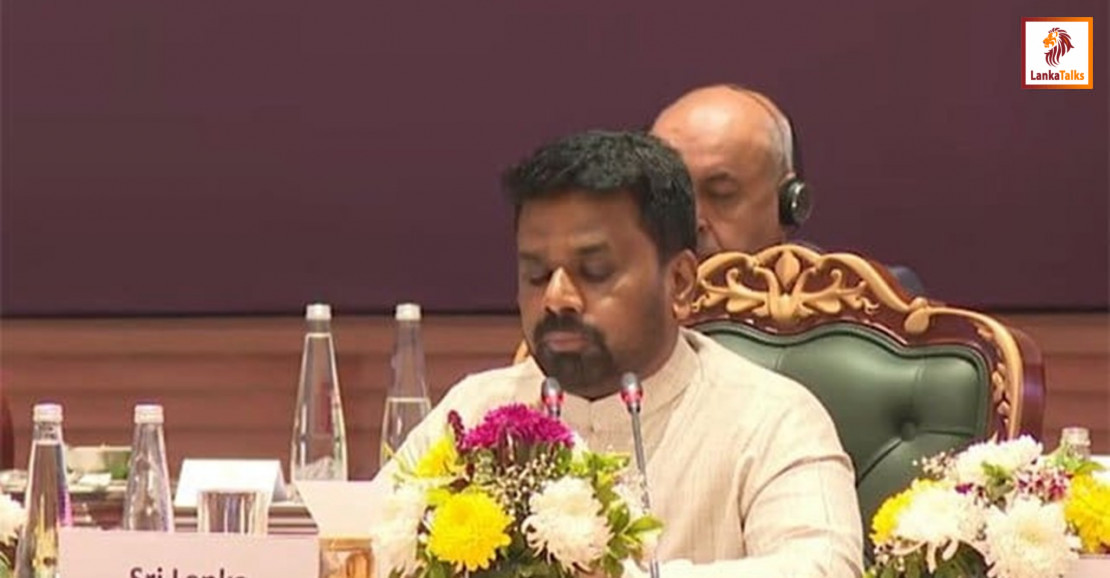
Sri Lanka still does not possess advanced infrastructure to gain the maximum benefit of artificial intelligence (AI) technology, President Anura Kumara Dissanayake stated.
President Dissanayake made this assertion while addressing the leaders’ plenary as part of the ‘AI Impact Summit 2026’ in New Delhi. The leaders’ plenary hosted by Indian Prime Minister Narendra Modi brings together world leaders for strategic discussions on the future of AI.
During his address, President Dissanayake also highlighted the urgent need for international collaboration to develop AI in an equitable, culturally respectful and accessible manner. The President stressed the widening gap between nations with advanced AI capabilities and those without poses significant risks to global development and inclusion. President Dissanayake stated that Sri Lanka is prepared to share common values on AI, ensuring that no one is left behind and to move forward collectively through mutual learning based on ethical principles. Highlighting that Sri Lanka’s vision for AI is not one of isolated success, the President noted the country views AI infrastructure as the next frontier of economic and cultural cooperation. Accordingly, he proposed regional cooperation built upon four key pillars: affordable access, centrally governed language datasets, common evaluation mechanisms and security tools, and integrated capacity development. “This is a defining moment when AI is transforming economies, governance systems and societies. AI is a transformative force that will have a profound impact on national development trajectories. However, the widening gap between countries empowered by AI and those lacking such capabilities poses a serious risk of fragmentation in the digital economy. Countries that fall behind could face further marginalisation from global growth and emerging economic opportunities, thereby jeopardising the inclusive, equitable and sustainable development goals. Sri Lanka has yet to fully establish the infrastructure required to harness the full potential of AI. Therefore, a decisive moment has arrived for us to act with clarity of purpose and confidence. Sri Lanka possesses a technologically skilled young human resource base. We also have a strong legal framework and an economic culture linked with international partnerships. We are updating legal frameworks on personal data protection and cyber security, continuing to invest in digital public infrastructure and strengthening institutions that safeguard public trust while encouraging innovation. A critical dimension is cultural alignment. These technologies must be utilised to further promote the cultural values and capabilities of humanity. If global AI systems are confined to only a few languages and viewpoints, there is a risk of eroding our unique cultural diversity. For countries such as Sri Lanka, language and culture are not only matters of pride but also foundations of trust. Achieving such cultural alignment requires broad inclusion and preservation. Our local languages and cultural knowledge must be digitised and integrated into AI systems. At the same time, maximum attention must be given to safety and security, with mechanisms established to protect our cultural values from the potential adverse impacts of AI. Our vision is not one of isolated achievement, but of integration. We view AI infrastructure as the next frontier of economic and cultural cooperation. Accordingly, Sri Lanka proposes regional collaboration based on four core elements: affordable access, centrally governed language datasets, common evaluation frameworks and security tools, as well as integrated capacity development. Through this endeavour, the benefits of AI can be accessed more broadly and equitably by all. Sri Lanka is exploring the development of data infrastructure with AI capabilities that can meet both national and regional needs. By working closely with other nations that are emerging as global leaders in digital public infrastructure and technological skills, Sri Lanka has significant potential to establish sustainable, secure and future-ready regional AI data centre capacities. No country can build an AI-ready future alone. The joint declaration agreed upon in Delhi, reflecting the views of many nations of the world and the region, underscores the importance of such cooperation. Therefore, Sri Lanka stands ready to share common values on AI, ensuring that no one is left behind, to learn mutually and to move forward collectively on an ethical foundation.”
President Dissanayake attended the Summit on the special invitation of Modi, and he arrived in Delhi on Tuesday (17).
The Summit is the first Summit of its kind to be hosted in the Global South. At a time when emerging technologies are reshaping economies and societies, Sri Lanka’s participation reflects the depth and priority of the India-Sri Lanka partnership, and the shared commitment to ensuring that innovation remains inclusive, responsible and people-centred, the Sri Lankan High Commission in India said in a statement. Building on the joint vision of “Fostering Partnerships for a Shared Future”, Sri Lanka and India have sustained momentum across connectivity, economic engagement, digital cooperation, capacity building and people-to-people ties. The Summit brings together global leaders, policymakers, technology companies, innovators, and experts to showcase and deliberate on the transformative potential of AI across governance, innovation, and sustainable development. The Summit which kicked off on Monday (16) in Delhi with the attendance of world leaders from across 20 countries will conclude today (20).
Meanwhile, during the visit to India, President Dissanayake is also expected to hold bilateral discussions with Modi and several other leaders.
Source - The Morning