


 Breaking News
 Tracy
 Tracy
 Oct 22 2026
 15
Sri Lanka’s retail consumer sector is navigating significant changes in consumer behaviour and business operations. New customer segments are emerging, while geopolitical developments and supply-chain disruptions are increasing operational complexity. These shifts are prompting businesses to reconsider where future growth can come from and how capabilities developed in Sri Lanka can support both stronger domestic performance and regional expansion. For retailers and consumer brands, strengthening brand equity, channel execution and customer insight can provide a stronger platform for regional growth.
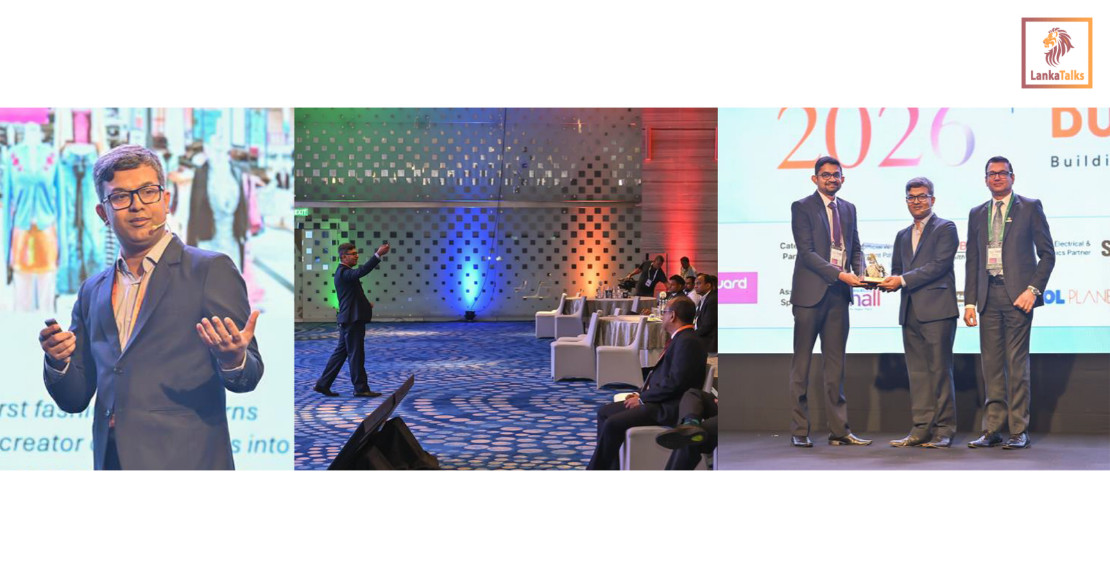
These themes were explored at the Sri Lanka Retail Forum 2026, organised by the Sri Lanka Retailers’ Association on 10th September at Cinnamon Life at City of Dreams Sri Lanka, Colombo. Delivering the keynote under the theme “Retail as a Growth Engine,” Soumya Dwibedi, Senior Director, Strategy & Business Design at Deloitte South Asia, discussed how market expansion, business model transformation and operating model changes can contribute to strengthening Sri Lanka’s retail growth and competitiveness.
Soumya noted, “While winning locally and winning globally are two different strategic objectives, the fundamental capabilities, the muscle, you need to win at both are very similar.”
Dwibedi highlighted that the retail sector is being reshaped by three interconnected forces: demand, supply and the data and AI layer between them. Consumers are no longer driven by price alone and are increasingly defining value through a combination of quality, convenience and experience. As a result, brands at both the value and premium ends of the market are gaining traction, while the middle segment faces growing pressure. Consumers are also placing greater trust in private-label products, viewing them as credible quality alternatives rather than lower-priced options. He noted that younger consumers discover and evaluate products differently, moving fluidly between platforms, influencers, and physical stores, compressing the traditional path to purchase.
While international expansion is often viewed as a growth opportunity, organisations can benefit from first strengthening the core capabilities that drive sustainable performance locally. Sri Lanka's retail consumer sector still has scope to deepen customer understanding through better product innovation, sourcing decisions, and supply chain investment. A business that lacks the capability to understand, serve and retain customers is unlikely to succeed elsewhere. Domestic depth is not a smaller ambition than international expansion; it is the foundation for achieving it.
Building these capabilities increasingly requires organisations to embed digital and AI technologies across the enterprise. Many Sri Lankan retailers already have elements in place, including loyalty applications, recommendation engines and online ordering platforms. However, the challenge is integrating these capabilities across the enterprise rather than allowing them to remain isolated initiatives.
Closely linked to this is the need for genuine omnichannel integration. A common challenge across the sector is the inability to connect in-store and digital customer interactions, limiting engagement and conversion opportunities. Addressing this requires a single customer view that integrates data across physical and digital touchpoints, enabling a seamless and personalised customer experience while reducing lost opportunities between channels.
The real opportunity lies not simply in collecting data, but in converting it into customer insights and data-driven capabilities that strengthen competitive advantage. That same data can also become an innovation platform for products. Sharper customer insights enable retailers to collaborate with suppliers on new products and more targeted promotions, allowing them to play a strategic role in product innovation and customer engagement.
Physical stores continue to play an important role, with their value increasingly shifting from transaction to experience. This is relevant for Gen Z consumers, who value product discovery, sensory engagement and human interaction alongside digital convenience. A Sri Lankan wellness and lifestyle retail brand demonstrates this well. Its stores are built around immersive customer experiences, combining sensory engagement, product discovery, storytelling and personalised service. Having refined this concept domestically, the brand successfully scaled internationally to more than 130 stores across 27 countries. Demonstrating how a distinctive retail experience can evolve into an exportable growth platform.
Underpinning these capabilities is the supply chain, where visibility, agility and resilience are critical to growth. Retailers with greater visibility across sourcing and inventory are better positioned to manage perishables, reduce wastage and maintain quality, while agility and resilience enable faster responses to changing demand and disruption. Emerging on-demand grocery models in Sri Lanka demonstrate this discipline, with rapid delivery requiring continuous, real-time visibility into inventory and supply availability.
When Sri Lankan companies consider international expansion, they can pursue exporting, online direct-to-consumer (D2C), partnerships, franchising, joint ventures, acquisitions or direct investment. For brands, expansion should build on a distinctive and authentic identity rather than attempting to appear international, while ensuring the proposition remains globally legible and relevant to consumers across markets. In countries with strong digital and e-commerce infrastructure, D2C can provide a route to test demand through content, community and commerce, supported by a fit-for-purpose supply chain, without initially investing in brick-and-mortar infrastructure. The most appropriate route depends on the company’s capabilities, desired level of control and understanding of the target market.
Partnerships, franchising, and acquisitions allow Sri Lankan companies to access capabilities they may not yet possess, rather than spending years developing them. Franchising, as demonstrated by Sri Lankan food and beverage and fashion brands expanding into India, transfers many of the practical challenges of international expansion, including real estate, legal setup, recruitment and operations, to partners with established local knowledge. At the same time, the Sri Lankan brand can retain greater control over its product and identity.
Joint ventures and distribution partnerships address a different challenge: gaining market access at scale. Partnerships between Sri Lankan consumer goods companies and established regional distributors illustrate how local distribution networks can help brands access large and fragmented markets such as India. Even a strong product may struggle to achieve significant market penetration without distribution infrastructure. Partnering with an established local company can therefore reduce the time, capital, and resources required to build distribution capabilities independently.
Acquisitions take this approach further by purchasing an existing operation rather than building one incrementally. Instead of developing these capabilities over several years, companies can acquire an established platform for growth.
Companies are more likely to attract credible partners and franchisees, or pursue successful acquisitions, when they have already demonstrated a competitive product, a viable business model, and transferable capabilities. Market evaluation of regulatory requirements, cross-border taxation, import laws and investment regulations, supported by reliable long-term partnerships, remains essential. Companies also need a clear long-term plan, patience to build new markets and the financial capacity to sustain expansion over three to five years.
Providing a Sri Lankan perspective, Amaranthi Casseer, Strategy, Risk & Transactions, Mergers & Acquisitions, Deloitte Sri Lanka, highlighted the importance of building strong domestic capabilities before pursuing international expansion. She noted, “The businesses we see succeeding internationally are not the ones that rushed abroad, they are the ones that used data and technology to genuinely understand and win their customer at home first, and only then looked outward. Even then, the smartest ones are not trying to do it alone. Whether it's a franchise partnership, a joint venture, or an acquisition, the common thread is finding ways to share capability you do not yet have rather than building everything from scratch. Winning locally is not a delay before going global, it is what actually makes going global possible.”
Pursuing regional or cross-border growth requires businesses to align ambition with execution capabilities. Decisions around market strategy, customer proposition, operating model, technology, supply chain, transactions and tax must work together to support sustainable expansion. Deloitte’s multidisciplinary and regional experience can help bring these considerations together and support a coordinated path from strategy to execution.
For Sri Lanka’s retail consumer sector, the opportunity is not simply to enter more markets, but to build businesses that are adaptable, competitive and capable of sustaining growth. Businesses best positioned for regional growth will be those able to translate their domestic strengths into advantages that remain relevant to different markets.
About Deloitte Sri Lanka and Maldives
Deloitte Sri Lanka and Maldives is a multidisciplinary professional services firm that is part of the Deloitte network. Deloitte offers a range of services, including Audit & Assurance, Tax, Strategy, Risk & Transactions and Technology & Transformation.
Deloitte is among the largest professional services networks globally, with a presence in over 150 countries and comprising more than 450,000 professionals.