


 Breaking News
 Krishani
 Krishani
 Nov 27 2026
 18
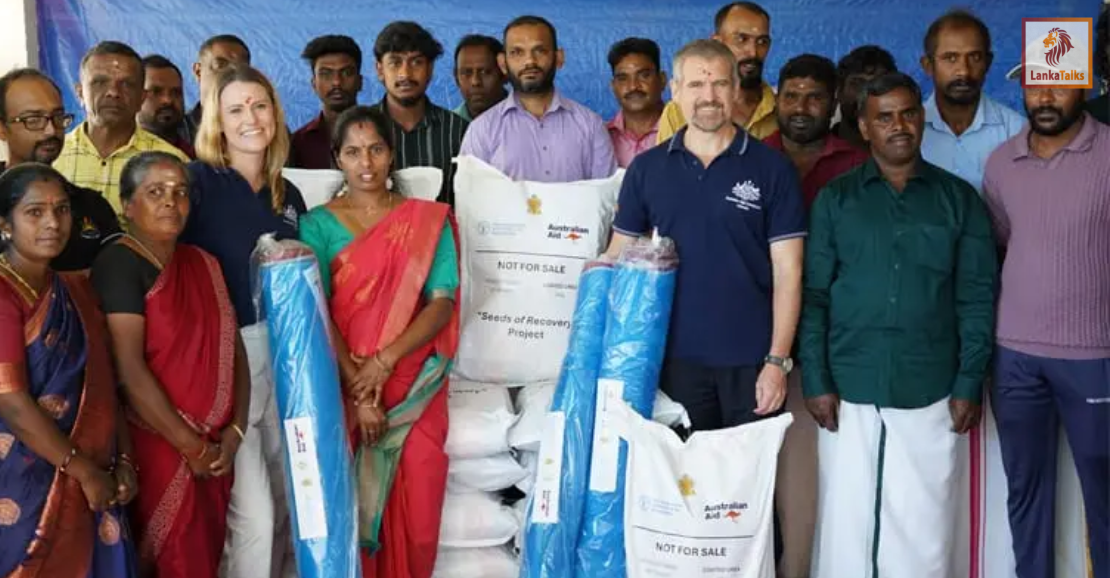
The Food and Agriculture Organization of the United Nations (FAO), with funding from the Australian Government through the Department of Foreign Affairs and Trade (DFAT), is supporting smallholder farmers in Nuwara Eliya and Badulla districts to restore vegetable production following the damage caused by Cyclone Ditwah.
Through the 12-month project, Seeds of Recovery: Restoring and Transforming Vegetable Production Systems in Cyclone Ditwah-Affected Areas of Sri Lanka, FAO is working with the Department of Agriculture and Provincial Departments of Agriculture to restore local seed production systems, improve access to quality planting materials and promote Climate-Smart Good Agricultural Practices (CSGAP).
Cyclone Ditwah caused significant damage to vegetable cultivation in Sri Lanka's central highlands, affecting farmland, agricultural assets and the livelihoods of smallholder farming communities. The project is addressing these impacts through targeted interventions in bean seed and seed potato production, alongside farmer training, technical assistance and improved access to agricultural inputs and markets.
The project aims to support 800 bean seed farmers in Nuwara Eliya District, organized into 40 farmer clusters to facilitate knowledge-sharing, collective action and the implementation of Farmer Field Schools (FFS).
As part of the first phase, 280 bean seed farmers in the Mathurata region received certified bean seeds. The distribution is part of efforts to restore local bean seed production and strengthen farmer-led seed systems in the district.
The programme also included technical sessions conducted by the Seed and Planting Material Development Centre (SPMDC) on quality bean seed production. Officials from the Seed Certification Service (SCS) provided guidance on national seed certification procedures, quality standards, field inspections and good practices for certified seed production.
The second phase of the intervention is scheduled to commence in December 2026. Through training and technical assistance, the initiative aims to strengthen farmers' capacity to produce quality bean seeds, reduce reliance on external seed suppliers and create opportunities to participate in local seed markets.
The project also aims to support 800 farmers in restoring potato production across Nuwara Eliya and Badulla districts, with 400 farmers selected from each district. Under this intervention, each selected farmer receives 2,500 quality seed potato tubers to support the re-establishment of cultivation and household agricultural production.
The first phase began in August 2026 in the Ragala range of Nuwara Eliya District, covering 38 farmers from two Grama Niladhari divisions.
The next phase of distribution is scheduled to commence towards the end of November 2026, extending support to the remaining selected farmers in Nuwara Eliya and Badulla districts. In addition to seed potatoes, the project provides agricultural inputs and technical guidance to support improved crop establishment, productivity and produce quality.
The project is expected to contribute to the restoration of vegetable production in Cyclone Ditwah-affected areas while strengthening local seed production systems and farmers' technical capacities. Through continued collaboration with national and provincial agricultural authorities, FAO and the Australian Government aim to support farmers in rebuilding their agricultural livelihoods and strengthening the resilience of vegetable production systems to future climate-related shocks.