



 Breaking News
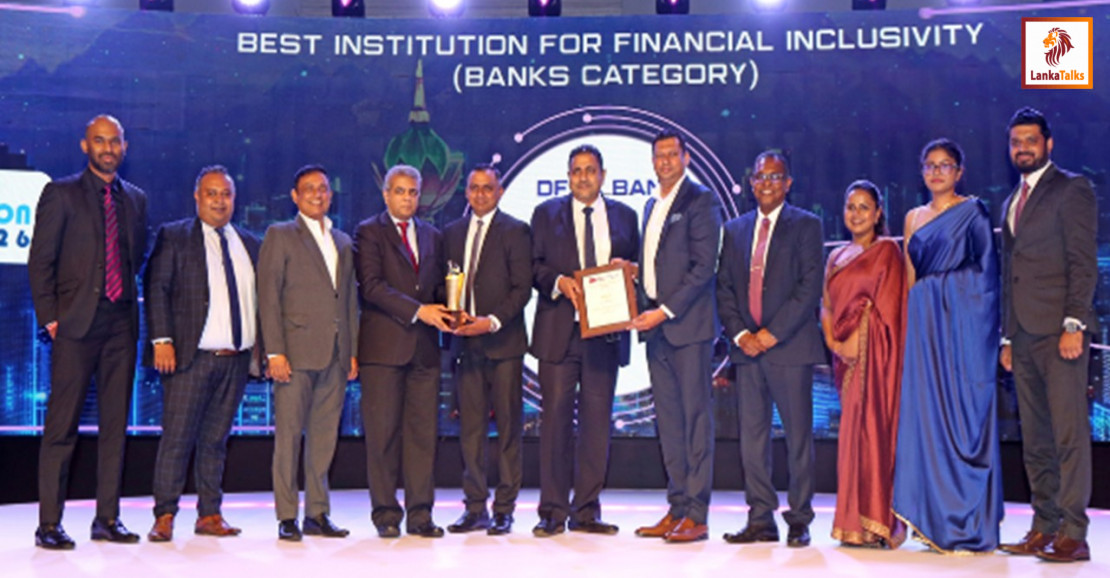
 A.R.B.J Rajapaksha
 A.R.B.J Rajapaksha
 Apr 07 2026
 964
964Over the past few years, something subtle has changed in how people interact with their banks.
What used to be a series of steps - visiting a branch, filling out forms, waiting for confirmations, is increasingly expected to happen instantly, often without speaking to anyone at all. Transfers, payments, onboarding, even problem resolution are now judged by how quickly and smoothly they can be completed.
That shift is not just about convenience. It is redefining what customers consider “good banking”.
It is within this context that DFCC Bank’s recognition at the LankaPay Technovation Awards 2026 becomes more meaningful.
The Bank received a Gold Award for Financial Inclusivity and a Merit Award for Customer Convenience - two categories that, increasingly, define how digital progress in banking is being measured. Not by how advanced the technology is, but by how effectively it improves access, simplifies interactions, and removes friction from everyday banking.
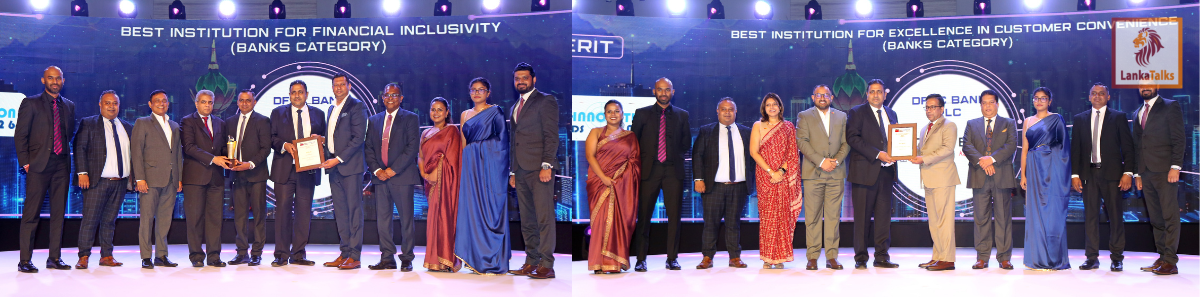
Organised by LankaPay, the Technovation Awards recognise institutions that are shaping Sri Lanka’s digital financial ecosystem. In recent years, the focus of these awards has also evolved, reflecting a broader industry shift from innovation as capability to innovation as usability. The emphasis is now on inclusion, accessibility, and real-world impact.
That shift mirrors the direction DFCC Bank has set its ambition on: to become the most customer-centric bank and the easiest to work with.
Achieving that ambition requires more than incremental digital upgrades. It calls for a more fundamental transformation in how banking services are designed, delivered, and experienced. It means simplifying processes, reducing dependency on physical touchpoints where appropriate, and creating seamless journeys across digital and branch networks.
Over the past year, DFCC Bank has continued to build towards this model. Platforms such as DFCC ONE and DFCC MySpace have been enhanced to provide customers with greater control over transactions, faster access to services, and the ability to manage their financial lives with minimal friction. These are not standalone solutions, but part of a broader effort to integrate digital convenience with responsive human support.
At the same time, financial inclusion remains a central priority. Digital capability, when deployed effectively, can extend banking services to customers who may otherwise face barriers to access, whether due to geography, time, or familiarity with traditional banking processes. In this sense, inclusion and convenience are no longer separate objectives. They are increasingly interconnected.
The recognition at the Technovation Awards reflects this convergence.
It signals that the conversation around digital banking in Sri Lanka is moving beyond infrastructure and into experience. It is no longer just about enabling transactions, but about making those transactions simpler, faster, and more intuitive for a broader segment of the population.
For banks, this creates a different kind of challenge.
Sustaining relevance will depend not only on investing in technology, but on continuously refining how that technology is applied. Customer expectations will continue to rise. Interfaces will need to become more intuitive. Processes will need to become more transparent. And the distinction between digital and physical banking will continue to blur as time goes on.
Growth, in this context, is closely tied to adaptability.
For DFCC Bank, the direction is clear. As it enters its eighth decade, the focus is on building a banking experience that is not only digitally capable, but also consistently aligned with the needs, behaviours, and expectations of its customers.
Recognition, in this sense, is not an endpoint.
It is an indication that the journey is moving in the right direction.