


 Breaking News
 Shalini
 Shalini
 May 28 2026
 627
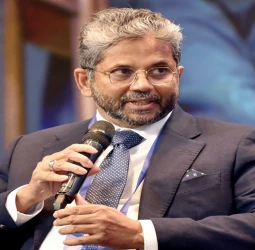
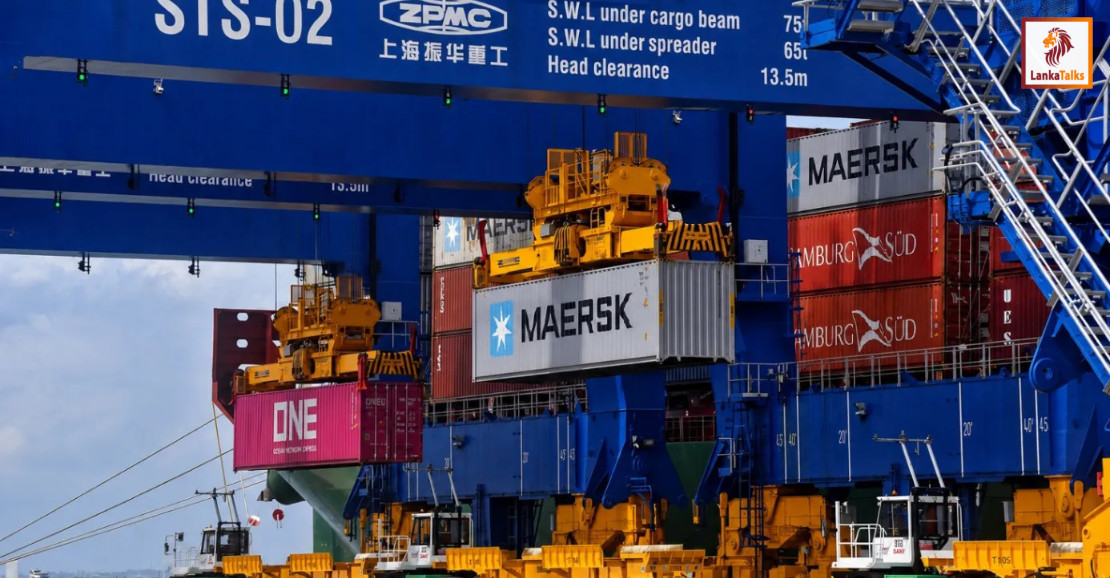
627With the unexpected rise in transhipment container volumes handled by Colombo Port this year due to the Middle East conflict, Sri Lanka is on the cusp of processing a volume of at least 10 million (m) Twenty-foot Equivalent Units (TEUs) in 2026, Standard Chartered Sri Lanka Chief Executive Officer Bingumal Thewarathanthri said at a Verite Research panel discussion held earlier this month.
"We are going into something like 10 m TEUs this year. That was not planned for this war, but we are now reaching 10 m – actually crossing 10 million TEUs this year," Thewarathanthri said, speaking on Verite Research's "From Recovery to Growth: Attracting Quality FDI in a Shifting Global Economy" panel discussion.
Comparing the projected volumes with Singapore – which processed 39.01 m TEUs in 2024 (not 44.66 m as previously stated; 2025 final figures are not yet published) – he added:
"That's one quarter of Singapore's size, right? Just to give you perspective. In Singapore this contributes something like 7% of the GDP."
In 2025, Sri Lanka's Colombo Port processed 8.29 m TEUs – a 14% year-on-year growth from volumes processed in the previous year.
President Anura Kumara Dissanayake, during the 2025 budget speech, said that logistics contributes around 2.5% to the nation's GDP.
"We contribute only 2.3%. Why? Because we don't have the entire ecosystem. We don't have storage, warehousing, single window for trade. You've been talking about it all the time."
In the first four months of 2026, the Port of Colombo handled 2.91 mTEUs, a 13.9% increase in TEUs processed compared to the same period last year.
This increase in container volumes is attributed to the detour of cargo lines away from the Red Sea and the entrance into the Persian Gulf through the Strait of Hormuz, due to the ongoing conflict between the US and Israel with Iran, and Houthi rebel activity in the Red Sea.
Ever since the escalation of the conflict, cargo lines have been utilizing the Port of Colombo as a drop-off location for shipments meant for India and the wider region that cannot be directly accessed without incurring additional shipping charges.
"The customs policies, procedures, entrepot trade – that whole part is missing. We're just a port. It's a great outcome. We're just a port for India. We're doing a great job. But we can do a lot more in this new world order. I'm not talking too much about the Red Sea and all of that, but Sri Lanka will see that trade opportunity," Thewarathanthri concluded, answering a question posed to him on Sri Lanka's current opportunities.
The Port of Colombo continues to primarily function as a transhipment hub, with transhipment making up at least 80% of its total operations, particularly with imports originating from India.
"Now Sri Lanka is again seeing this opportunity, because we've seen opportunities many times in the last 70 years, again we are seeing a new opportunity, a new economic cycle. Now what do we do about it? Naturally, since we are a hub and our location, shipping and logistics is a huge opportunity," Thewarathanthri said.
Source: The morning