


 Breaking News
 LankaTalks
 LankaTalks
 Apr 19 2026
 771
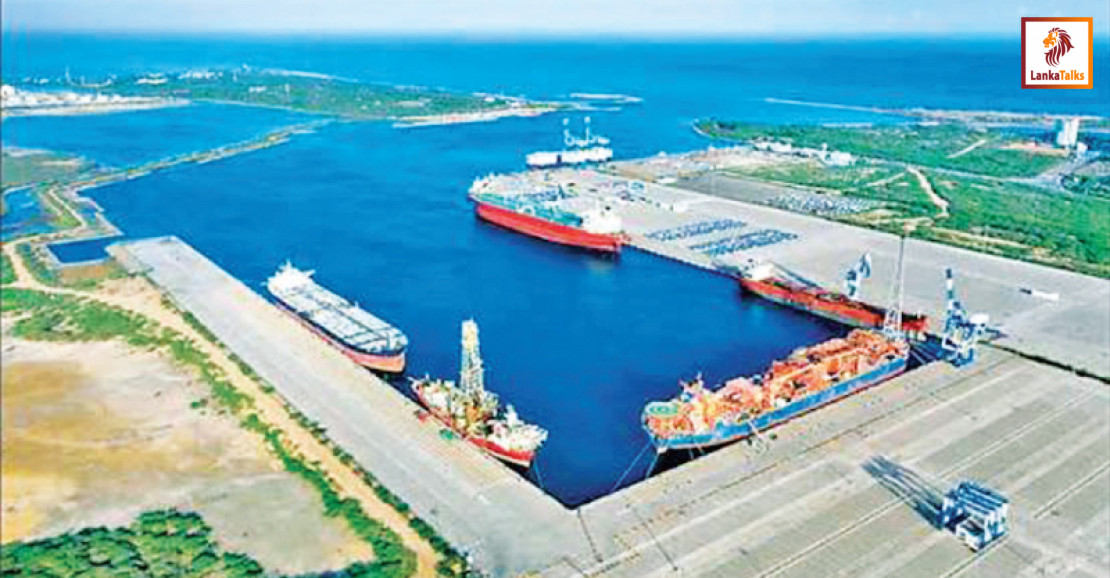
771A Few locations in the Indian Ocean sit as close to the world’s busiest shipping routes as Hambantota.
Just a few nautical miles from the East–West maritime corridor linking Asia, the Middle East, and Europe, the Southern Sri Lankan port occupies a geographic position that many trading nations would envy. The question today is whether Hambantota can move beyond being a strategic location and evolve into something more significant — a nerve centre of economic activity in the Indian Ocean.
For centuries, the southern coast of Sri Lanka has been part of the living geography of the Indian Ocean. Long before modern trade agreements and geopolitical debates, ships moving along the Maritime Silk Road passed these waters carrying not only goods, but also culture and connection. Today, Hambantota sits on this same maritime crossroads, offering Sri Lanka a renewed opportunity to translate geography into economic relevance.
A nerve centre is more than a physical port. It is a node where logistics, industry, services, and human networks intersect. If developed strategically, Hambantota can become such a node. The port already has the potential to function as a multi-purpose logistics hub supporting vehicle transshipment, bulk cargo handling, ship services, and industrial activity within surrounding economic zones. Over time, these activities can generate not only trade flows but also knowledge transfer, skills development, and new business ecosystems.
The economics behind the Port
However, this transformation is not purely a matter of infrastructure. It is also shaped by what may be described as emotional economics — the role of trust, perception, and social capital in shaping economic outcomes. Large-scale projects often arrive faster than communities can absorb them. For many in Southern Sri Lanka, Hambantota’s development has been a symbol of national ambition and a source of uncertainty. Fishermen, small businesses, and young professionals are still negotiating what the port means for their livelihoods and identities. Its success will depend not only on global shipping patterns, but also on how meaningfully local communities are integrated into its growth.
Beyond geography, Hambantota’s economic potential lies in its capacity to develop into an integrated logistics and industrial hub. The port is equipped to handle diverse cargo, including vehicle transshipment, bulk commodities, and container traffic.
Vehicle transshipment has already shown steady growth, with hundreds of thousands of automobiles moving through the Port annually for redistribution to regional markets. With global manufacturers seeking efficient maritime routes across Asia, Hambantota could gradually position itself as a specialised centre for automotive logistics in the Indian Ocean. The surrounding industrial zone presents an opportunity to move beyond a traditional cargo-handling model.
Strategically developed industrial and logistics parks could attract manufacturing, warehousing, and value-added processing activities that benefit from proximity to major shipping lanes. This could generate employment in transport services, engineering, supply chain management, and port-related industries, creating a multiplier effect for the regional economy.
Equally important is Hambantota’s role in strengthening Sri Lanka’s position within regional maritime networks. As trade across the Indian Ocean continues to expand, ports that combine efficient operations with strong logistics ecosystems are likely to emerge as critical nodes in global supply chains. Hambantota’s long-term success will depend on complementary services, skilled human capital, and effective institutional coordination.
A moment shaped by global disruption
The urgency of Hambantota’s transformation is heightened by the shifting realities of the global economy. Ongoing geopolitical tensions, particularly in the Middle East, have disrupted trade routes, increased shipping costs, and exposed the vulnerability of global energy supply chains.
For Sri Lanka, the fuel and gas crisis is a stark reminder of how deeply the country is affected by external shocks, revealing structural dependence on fragile logistics systems.
Despite these disruptions, energy flows through key maritime routes such as the Strait of Hormuz have continued, though in more selective and geopolitically sensitive ways. Major energy-importing countries, including China, have maintained supply chains through long-term partnerships, diversified sourcing, and strong maritime logistics networks.
This reflects a broader shift: access to energy is increasingly shaped not only by markets, but also by strategic relationships and control over logistics pathways.
In this context, Hambantota presents an immediate opportunity. Its proximity to major shipping lanes positions Sri Lanka to play a more active role in regional energy and logistics flows, including fuel storage, bunkering, and maritime support services. Strengthening operational partnerships with established maritime players could help accelerate these capabilities, contributing not only to long-term growth but also to improving Sri Lanka’s resilience to external disruptions.
History shows that ports thrive when they become places where people and cultures interact as much as goods. The great port cities of the Indian Ocean were not only trade gateways, but social crossroads. Hambantota has the potential to rediscover that tradition in a modern form.
China’s role in developing the port has drawn global attention, but Hambantota’s long-term significance may lie beyond geopolitical narratives. If managed with transparency, inclusivity, and strategic focus, the port can become a platform where international investment, local enterprise, and community aspirations converge.
Hambantota’s future is, therefore, not only about ships and cargo, but also about whether Sri Lanka can transform a strategic location into a living economic ecosystem. If that balance is achieved, Hambantota may evolve from a peripheral harbour into a strategic nerve centre — not only for trade, but also for resilience in an increasingly uncertain global economy.
The writer who holds a Bachelor’s degree in Information Technology and a Master of Business Administration, is a Doctoral candidate at the University of Colombo. She specialises in international business, with a focus on geopolitics and market expansion in emerging markets.
Source: Sunday Observer