


 Breaking News
 Krishani
 Krishani
 Sep 29 2026
 279
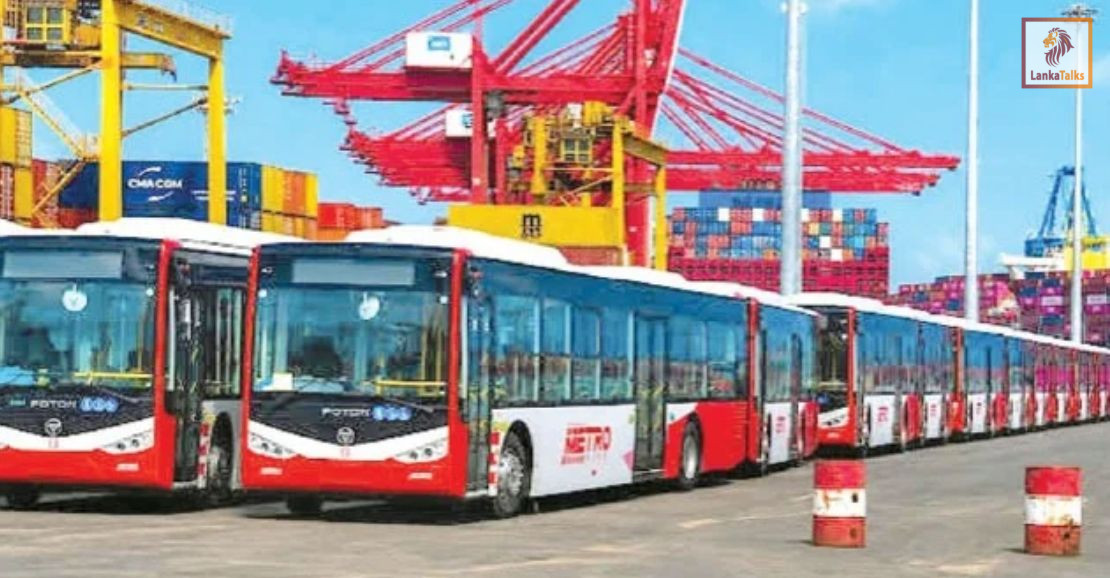
279The real test of Sri Lanka’s newest public transport experiment will not be how many buses are put on the road, but how many cars, motorcycles and taxis it can eventually persuade commuters to leave behind. Thousands of commuters use public transport services to travel to and from work on a daily basis. Public transport services may leave commuters with a sense of uncertainty by requiring them to wait for an unknown period of time to board a service that may not even stop at their destination, let alone offer them a level of service that satisfies their needs. The government of Sri Lanka has founded Lanka Metro Transit to modernise the public transport services in Sri Lanka. The company is owned and operated by the Sri Lanka Transport Board. The company initiated its services with a small number of low-floor buses to evaluate the acceptability of the public Harder Commuter to convince
An important goal of modernising public transit systems is to wean the populace away from using private vehicles. It is pointed out that a large number of vehicles each day transport a single passenger into Colombo, and it is hoped that better public transit systems will change this.
This may not happen soon.
Using a private vehicle to commute is vitally important to many people for multiple reasons. For one, it provides a sense of control over one’s time. Privacy and social status are also tied to a person’s means of transportation.From a financial standpoint, individuals may be indifferent to using private vehicles because they do not fully absorb the costs of doing so. For example, most of the private or state sector employees who drive to workare given allowances to offset the costs of using the vehicle.
People may also be indifferent to the costs of using public transit because they are alleviated of those costs by a third party, for example, by the employer.
There is aobvious convenience of being able to travel door to door. Passengers leave in a car when they want and are delivered directly to their destination. Public transport requires passengers to walk and sometimes wait to make additional connections.Because of this, improving public transport, and specifically the Metro, requires behavioral changes from the population as well.
Just because Sri Lanka has the Metro system doesn’t mean that behavioral changes needed for effective use of the system will not take a long time.
While Singapore has a comprehensive public transport system, it has defined goals to encourage the use of public transport and reduce the use of private transport (i.e. a “car-lite” strategy). Singapore has goals to increase public transport use to 75% during peak hours by 2030.
Given this, the changes that Sri Lanka expects the Metro to bring in its early years will be unrealistic.The kind of changes that the Metro is expected to bring may occur within the current users of other public transport as well as three-wheelers and taxis.