

 Breaking News
 A.R.B.J Rajapaksha
 A.R.B.J Rajapaksha
 Apr 27 2026
 227
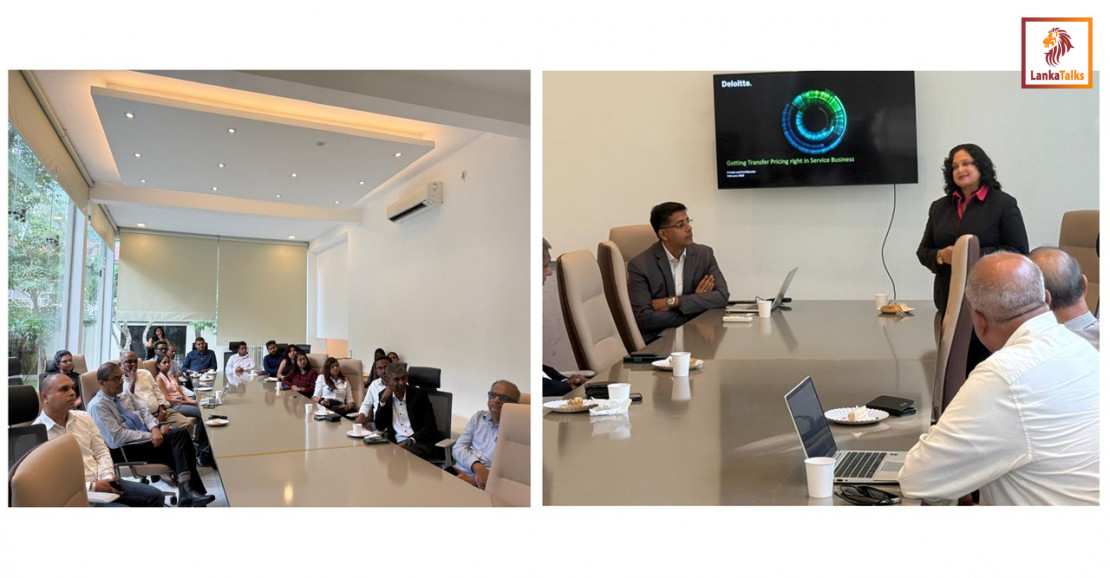
227At a pivotal moment for Sri Lanka’s Knowledge and Innovation sector, Deloitte Sri Lanka recently shared key insights at a focused industry session organised by the Sri Lanka Association of Software and Services Companies (SLASSCOM). Held during a period of significant regulatory and economic shifts including the transition away from tax holiday regimes and the introduction of the Inland Revenue Department’s Advance Pricing Agreement (APA) framework in early 2025, the session brought together CFOs and senior finance leaders to examine how transfer pricing (TP) must evolve in response.
Against this backdrop, the Government is placing greater emphasis on ensuring that all intra-group transactions adhere to the arm’s length principle, enabling taxable profits to be appropriately recognised within Sri Lanka. This transition is expected to strengthen tax revenue while also supporting foreign currency inflows, given the sector’s growing contribution to national export earnings. For businesses, this increased scrutiny means that TP policies must be more robust, defensible, and closely aligned with actual conduct, reducing gaps between documentation and operational reality.
The session featured Charmaine Tillekeratne and Srivatsan Raghavan of Deloitte, who provided in-depth perspectives on value chain alignment, intangible asset recognition, billing models, cost structures, compliance requirements and dispute management. They also highlighted emerging pathways to certainty through Sri Lanka’s formalised Advance Pricing Agreement (APA) framework.
Charmaine Tillekeratne, Partner – Head of Tax, Deloitte Sri Lanka and Maldives, highlights: “As Sri Lanka’s Knowledge and Innovation sector continues to evolve, businesses need to move beyond viewing transfer pricing as a compliance requirement and instead embed it into core business strategy. Aligning transfer pricing with actual value creation will be critical to managing risk, improving transparency, and sustaining long-term growth in an increasingly competitive global environment.”
Deloitte notes that the timing is particularly significant following the issuance of the APA Guide by the Inland Revenue Department in January 2025. The framework provides businesses with a structured mechanism to obtain prospective certainty on TP methodologies, key assumptions and expected profitability outcomes. Typically covering up to four years, with provisions for rollback under consistent conditions, APAs are increasingly seen as a vital tool to reduce tax audit exposure, mitigate double taxation risks and enhance predictability for cross-border operations. From a strategic standpoint, this presents an opportunity for businesses to proactively manage tax risk and gain certainty, rather than reacting to audits after the fact.
The session highlighted the need to align transfer pricing with actual business operations. Intercompany pricing should reflect where decisions are made, risks managed, and activities performed. This requires a holistic review of value chains, distinguishing legal and economic ownership (e.g., in contract R&D and software development) and assessing contributions across sales and delivery. Strong documentation, supported by Functional, Asset and Risk (FAR) analysis, is essential, especially to capture DEMPE activities and support value creation. In practice, businesses should revisit structures to ensure decision-making, functions, risk, and financial outcomes are aligned across jurisdictions.
The discussion stressed aligning billing models with functional profiles using time-and-material or cost-plus where appropriate, and profit-split or revenue-sharing for more complex, value-sharing arrangements. It also emphasised careful evaluation and consistent treatment of cost components (e.g., FX, ESOPs, exceptional costs) to strengthen compliance and audit defensibility.
From Deloitte’s perspective, organisations are required to adhere to Sri Lanka’s TP documentation framework, including the filing of the TP Disclosure Form (TPDF) and the preparation of the Local File, Master File and Country-by-Country Report where applicable. Maintaining robust supporting documentation such as organisation structures, detailed functional analyses, time records, cost base calculations, arm's length mark-ups, segmentation schedules and intercompany agreements, is essential to demonstrate economic substance and support value creation across the group. Beyond compliance, well-prepared documentation also serves as a strategic defence mechanism, enabling businesses to clearly articulate their value story to tax authorities and other stakeholders.
The session also addressed common sources of dispute, noting that litigation risk often arises from issues relating to functional characterisation, intragroup service substantiation, margin computations, foreign exchange treatment, ESOPs, reimbursements and free-of-cost services. Benchmarking challenges, including comparability, selection criteria and economic adjustments, continue to be areas of scrutiny. Strengthening FAR and benchmarking analyses, alongside maintaining robust documentation, was highlighted as key to mitigating such risks. For businesses, early identification of these risk areas can significantly reduce the likelihood of disputes and associated costs, while preserving management time and reputation.
The forum ultimately highlighted a clear shift in Sri Lanka’s regulatory and business landscape; transfer pricing is no longer a purely compliance-driven exercise but a strategic priority. As cross-border transactions grow in scale and complexity, businesses must ensure closer alignment between pricing policies and economic substance, while proactively managing risks through strengthened governance frameworks and tools such as APAs.
Deloitte remains committed to supporting organisations through this transformation, combining deep technical expertise with practical, industry-informed insights to help businesses navigate complexity with confidence. As Sri Lanka’s Knowledge and Innovation sector continues to evolve, Deloitte stands ready to partner with businesses in shaping resilient, forward-looking transfer pricing strategies that not only ensure compliance but also unlock sustainable value and long-term competitiveness in the global marketplace.
About Deloitte Sri Lanka and Maldives
Deloitte Sri Lanka and Maldives is a multi-disciplinary professional services firm that is part of the Deloitte network. Deloitte offers a range of services, including Audit & Assurance, Tax, Strategy, Risk & Transactions, and Technology & Transformation. Deloitte is among the largest professional services networks globally, with a presence in over 150 countries and comprising more than 450,000+ professionals.