

 Breaking News
 A.R.B.J Rajapaksha
 A.R.B.J Rajapaksha
 May 04 2026
 616
616- Those born after 2010 face lifetime cigarette restrictions
- UK-style age ban with strict enforcement
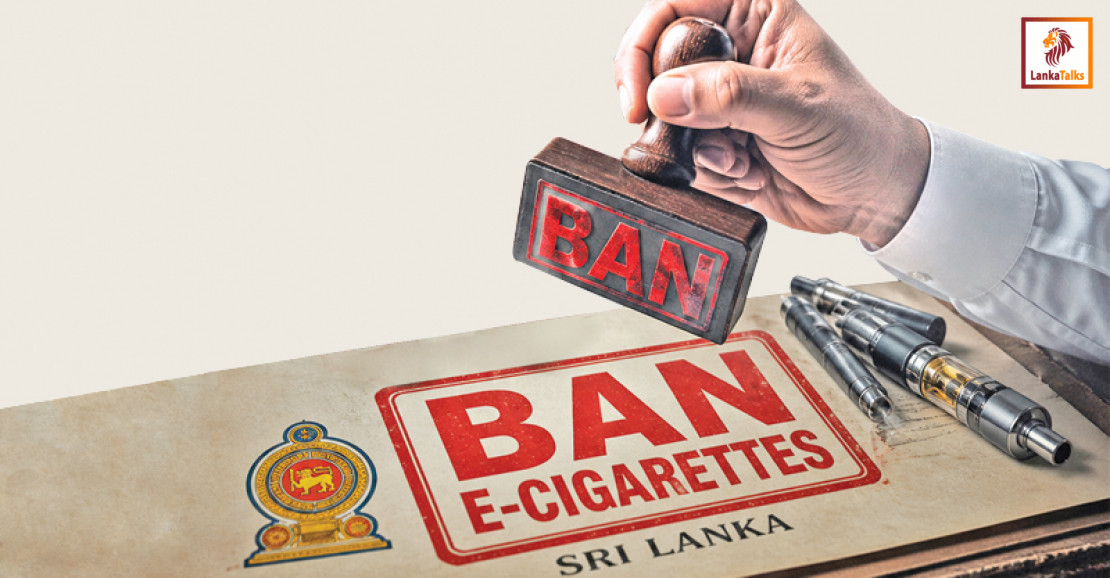
The Ministry of Health will strengthen the country’s already tough regulatory stance on nicotine products with moves under way to ban e-cigarettes as part of sweeping reforms to create a tobacco-free generation.
Chairman of the National Authority on Tobacco and Alcohol (NATA), Dr. Ananda Ratnayake told the Sunday Observer yesterday that legal recommendations have been presented to Health and Mass Media Minister Dr. Nalinda Jayatissa to close any gaps in the existing legislation.
The proposed amendments seek to eliminate the use of all types of e-cigarettes and vaping devices, strengthening laws that already prohibit their sale, import and manufacture. Dr. Ratnayake said Minister Dr. Jayatissa had welcomed the move, which forms part of a broader policy to ensure that all children born after 2010 will become a “tobacco-free generation”.
Under the plan, now being drafted as amendments to the National Authority on Tobacco and Alcohol Act No. 27 of 2006, anyone born after 2010 could face a lifetime ban on buying cigarettes if the legislation is passed by Parliament. Vendors will have the authority to demand a valid ID and verify the age of customers at the point of sale. Such measures have already been implemented by the Maldives (for those born after 2007) and the United Kingdom (for those born after 2009). Canada is also mulling similar action.
“This is to minimise the harm caused by tobacco and alcohol and protect future generations,” he said, adding that the Government had already begun work on the legal framework in line with NATA’s recommendations. The authorities are also studying how the Maldives and the UK are enforcing the law in this regard. The approach mirrors the recently agreed final draft in the UK, where lawmakers plan to raise the legal smoking age incrementally each year to prevent younger generations from taking up the habit.
Referring to the legal position on vaping, Dr. Ratnayake said that while the law clearly bans the supply side of e-cigarettes, the issue of use and possession (of smuggled devices) remains less explicitly defined. “Even now, people can get into trouble,” he said, adding that the authorities have the power to seize devices and initiate action under broader provisions.
The country’s enforcement record has already signalled a zero-tolerance approach. Customs officials at the Bandaranaike International Airport (BIA) routinely confiscate vaping devices from tourists and locals attempting to bring them into the country.
Dr. Ratnayake said the proposed amendments would bring Sri Lanka close to stricter international models. In Singapore, for instance, the use of e-cigarettes is illegal, with fines running into thousands of dollars and enforcement carried out rigorously. Most countries also ban “flavoured” e-cigarettes which have attracted young people.
“This is exactly the direction we plan to move in,” he said, and added that the country’s next phase of tobacco control will rely not only on legislation but also on firm enforcement. If passed, the measures would mark a significant escalation in the country’s anti-tobacco campaign — shifting from regulation to outright prohibition for future generations, while closing the remaining loopholes in the laws governing vaping.
Source - Sunday Observer