

 Breaking News

 Sheron
 Sheron
 Mar 20 2026
 382
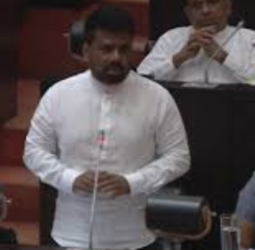
382For every one-dollar increase in global oil price, the cost at local pumps must rise by approximately 2 rupees, Sri Lanka’s President Anura Dissanayake told parliament, noting that price volatility has outpaced projections.
Sri Lanka’s fuel prices face severe upward pressure from spiking global oil rates and surging supplier premiums triggered by the conflict, Dissanayake said.
He warned of a double blow as global benchmarks rise alongside tender costs, with suppliers demanding higher security guarantees for regional shipments.
Between March 2 and 18, he said that, prices 95 Octane Petrol had Increased by 65 percent, surging from 153 dollars to 252 dollars a barrel, Standard Petrol had risen by 55 percent in the same two-week window while Auto Diesel jumped 74 percent, moving from 114 to 195 dollars, and Crude Oil Increased by 40 percent, climbing from 81 to 114 dollars a barrel.
Beyond base costs, Sri Lanka is also struggling with a surge in global premiums, he said.
Historically, long-term tenders were awarded at a premium of around 2.50 dollars over the Singapore flat rate.
Driven by conflict-induced competition for limited supplies, these premiums have skyrocketed. “The premium that used to be 2.5 dollars is now going for 40 dollars.”
Dissanayake informed the House that some rates have hit 45 dollars as suppliers demand massive security guarantees.
The president noted that state-level stockpiling has made it difficult for smaller economies to negotiate favorable terms.
He said the strong US dollar and rising shipping insurance costs are directly impacting livelihoods.
Addressing calls to cut taxes for consumer relief, Dissanayake said such moves would primarily benefit high-volume users.
“Fuel prices should go to the market price, but we must give a subsidy to the targeted community.”
The government is currently weighing two intervention paths he said: a targeted subsidy for vulnerable groups or broader relief for all citizens. Dissanayake said a final decision on the subsidy structure and subsequent price adjustments must be resolved quickly.
source: Economy Next