

 Breaking News
 LankaTalks
 LankaTalks
 Apr 28 2026
 242
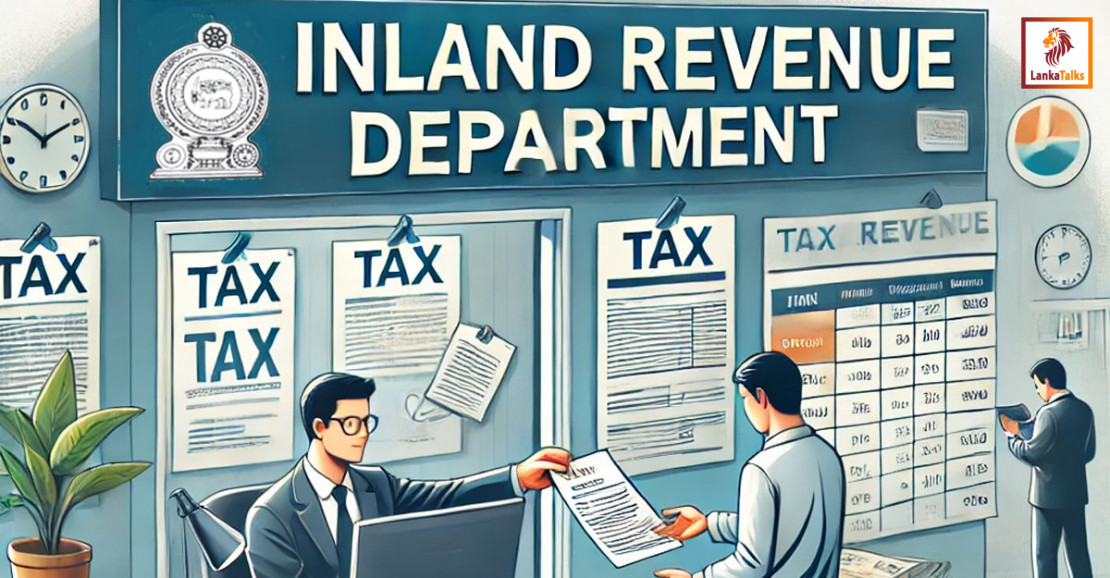
242Sri Lanka President Anura Kumara Dissanayake and top officials at the island nation’s Department of Inland Revenue discussed ways to broaden the tax net, maximise tax compliance, and recover outstanding tax arrears, the President’s Media Division (PMD) said in a statement.
Sri Lanka’s tax revenue reached a record high last year and the government has been in the process of increasing it further this year in line with the IMF target.
“During the meeting, attention was focused on programmes aimed at enhancing the capacity of the Inland Revenue Department, including broadening tax revenue, maximising tax compliance and recovering outstanding tax arrears,” the PMD said in a statement.
“Extensive discussions were also held on the institutional restructuring and digitalisation processes required within the department to achieve these objectives.”
The discussion also focused on the progress of introducing the national e-invoicing system and the related legal provisions.
“President Anura Kumara Dissanayake instructed officials to ensure that the entire project is completed within the stipulated timeframe.”
Since the economic collapse of 2022, Sri Lanka has undergone a massive structural shift in its tax policy, moving from a low-tax regime to one of the most aggressive fiscal consolidation efforts in its history.
These reforms have been largely driven by the IMF’s Extended Fund Facility (EFF) program, aimed at restoring debt sustainability by dramatically broadening the tax net and increasing collection efficiency.
The tax collection has nearly doubled in the last three years.
The government’s Fiscal Strategy Statement for 2026 targets lifting total revenue to above 15% of GDP, a level not seen in over 15 years.
In absolute terms, tax revenue is projected to have reached approximately USD 16.8 billion by the end of 2025.
To achieve these targets, the state has implemented several hard measures to bring more citizens and businesses into the formal tax system.
The tax-free threshold was significantly lowered in 2023, and progressive tax rates (ranging from 6% to 36%) were introduced.
This move effectively tripled the number of registered taxpayers within a year.
As of 2025/2026, the Inland Revenue Department (IRD) has mandated electronic filing for most individuals.
However, as of April 2025, senior citizens were granted a reprieve, allowing them to choose between manual and electronic filing.
The Inland Revenue (Amendment) Act of 2026 has broadened the scope of withholding tax (WHT) to include independent service providers such as social media specialists, brand ambassadors, therapists, and even event photographers, ensuring that the gig economy is captured in the tax net.