


 Breaking News

 Natasha
 Natasha
 Jun 05 2026
 61
61Walk into any poultry section in Sri Lanka and you will find shelves full of chicken. What you will rarely find is honesty about how it was raised. The industry has spent years marketing words like natural, fresh, and farm-raised, while quietly relying on antibiotic use that consumers know nothing about. Against that backdrop, one producer has chosen a categorically different path. And it has the verified science to back it up.
The World Food Programme does not soften what is at stake: “Nearly one-third of children under 5 are malnourished. Meanwhile, over 40 percent of women aged 18-60 are overweight or obese, due to poor dietary diversity and lack of access to nutritious food.” Those are not statistics about a distant country. That is Sri Lanka, today. And while much of the food industry has responded with silence, New Anthoney’s Farms has responded with a zero-antibiotic production commitment that is now being verified through an ongoing MoU with the University of Peradeniya.
New Anthoney’s Farms is the only poultry producer in Sri Lanka that can say, without qualification, that not a single bird in its supply chain is raised with antibiotics. Not at the feed stage. Not during rearing. Not at any point between hatch and harvest. That is not a marketing claim. It is a production standard that has been subjected to independent laboratory scrutiny by one of Sri Lanka’s most respected academic institutions. No other poultry producer in this country can say the same.
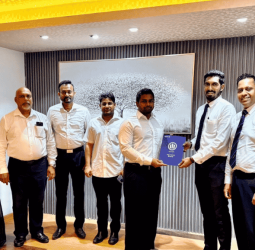
That verification has a name and a formal structure. The Memorandum of Understanding signed with the University of Peradeniya places New Anthoney’s antibiotic-free production claim under continuous independent testing by the Faculty of Veterinary Medicine and Animal Science, the only ISO/IEC 17025-accredited laboratory within the Sri Lankan university system.
Nutrition Without Compromise
The production infrastructure at New Anthoney’s is designed around a principle the wider industry consistently underinvests in: genuine food safety that runs from farm to final product. Biosecure facilities, rigorous veterinary oversight at every stage, full production traceability and an unbroken chain of accountability across every flock. These are not credentials assembled for a brochure. They are the operational backbone that makes the zero-antibiotic commitment hold, and makes the nutrition claim something a consumer can actually rely on.
Chicken is one of the most effective and affordable answers to Sri Lanka’s nutritional gap. It delivers the full range of essential amino acids, the ones the human body cannot synthesise and must obtain through food. For a growing child, this is not optional nutrition. It is the building block of physical and cognitive development. A company that raises its broiler birds entirely without antibiotics is not simply selling chicken. It is demonstrating what a healthier national food system can look like.
Built for Sri Lankan Kitchen
Traditional Sri Lankan kitchen preparation for chicken is labour-intensive, time-consuming and, for many busy households, a barrier to eating well consistently. New Anthoney’s has resolved that directly. The precut, kitchen-ready range removes the most cumbersome steps of the cooking process without sacrificing freshness, hygiene or quality. Every portion is consistent, clean and accurately sized. Less time at the chopping board. Less waste. More meal on the table.
Bird Welfare Is Not a Side Note. It Is the Business.
Before a single product reaches a consumer, New Anthoney’s has already made decisions that most other poultry producers in Sri Lanka have chosen not to make. Bird welfare is not a section in a company brochure at New Anthoney’s. It is a production philosophy with direct and measurable consequences for what ends up on the plate. The prevailing approach across much of Sri Lanka’s poultry sector has long been to prioritise volume and speed. New Anthoney’s has built its entire operation on a different logic.
From day one, every stage is managed with precision. No artificially compressed growth cycles. No overcrowded housing. No corners cut in the name of throughput. Birds are raised at appropriate stocking densities, in well-ventilated facilities, on natural timelines. When the industry norm is to do the opposite, this level of commitment has a direct cost. New Anthoney’s absorbs that cost because it understands what it produces downstream: a categorically superior bird.
Even transport is managed with the same rigour. Adequate space, calm handling, and strict protocols during transit. Stress at the point of slaughter measurably affects meat quality. New Anthoney’s accounts for that at every stage. It is a standard that much of the broader industry does not apply.
Better welfare produces better birds. Better birds produce better chicken. That is not a slogan. It is the logic that runs through every operational decision New Anthoney’s makes, and it shows in the product.
Sri Lanka’s protein problem will not be solved by companies that are content to do the minimum. It will be addressed by producers with the conviction to invest in the right methods, even when the easier, cheaper alternatives are sitting right in front of them. New Anthoney’s Farms has made its choice. The country’s health is better for it.