

 Breaking News
 A.R.B.J Rajapaksha
 A.R.B.J Rajapaksha
 Dec 31 2025
 627
627SLT-MOBITEL’s post-Cyclone Ditwah response reinforces its role as the National ICT Solutions Provider
In the aftermath of Cyclone Ditwah, SLT‑MOBITEL led one of the most extraordinary national connectivity restoration efforts in recent years, mobilising the full breadth of its operational network, technical expertise, and emergency response systems to safeguard Sri Lanka’s digital lifeline.
The cyclone caused extensive flooding, landslides, and infrastructure damage throughout several districts, disrupting multiple layers of the national network. Yet within days, SLT‑MOBITEL mounted one of the fastest and most comprehensive recovery operations in the company’s history, reaffirming the organisation’s role as the country’s telecommunications backbone.
From the earliest hours of the disaster, SLT‑MOBITEL activated a coordinated national response, drawing on its regional operational structure, specialised engineering teams, and emergency governance mechanisms. The Sri Lanka Backbone Network (SLBN), the country’s most critical digital artery, signalled excellent resilience, with only a handful of nodes affected and restored within 24 hours. As the National ICT Solutions Provider, SLT-MOBITEL prioritised restoring connectivity for other network operators and users, while simultaneously extending comprehensive support to its own customers, ensuring that mobile services were swiftly re‑established across the country.
The rapid restoration of SLT-MOBITEL’s islandwide core network served as a critical catalyst in accelerating the recovery of both fixed and mobile services across nearly all disaster-affected areas. This swift action also enabled other operators affiliated with SLT-MOBITEL to speedily restore their services, reinforcing the continuity of nationwide connectivity. To drive this effort, SLT-MOBITEL established a centralised ‘War Room’, operating under close management oversight, to coordinate telecommunication network restoration and rehabilitation across the country. Initial assessments indicate recovery and network upgrade costs of approximately LKR 5 to 6 billion.
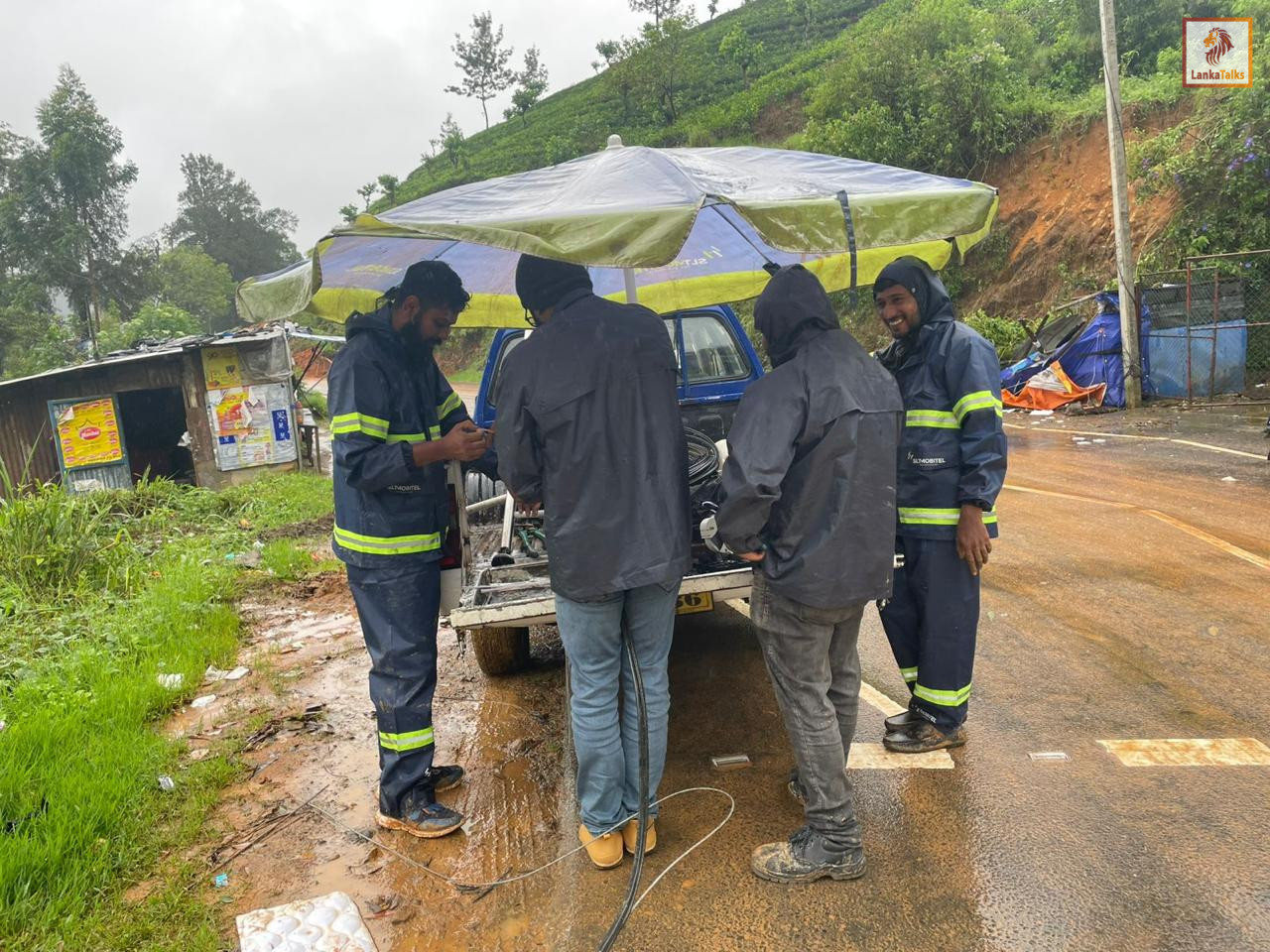
SLT‑MOBITEL teams worked around the clock to repair damaged fibre routes, recover flooded cabinets, and restore thousands of access nodes affected by the cyclone. In areas where fibre infrastructure was severely damaged, the company deployed temporary Fixed Wireless Access (FWA) facilities, helping communities, emergency responders, and essential services stay connected. Priority restoration was extended to hospitals, government agencies, and enterprise customers, helping with the continuity of critical national operations during the emergency.
SLT‑MOBITEL also launched the 247 National Medical Helpline, a dedicated, round‑the‑clock support service introduced in collaboration with the University of Colombo. Within the first week of the launch, the medical helpline received a large volume of calls as the initiative provided immediate initial medical guidance to individuals facing injuries, infections, waterborne diseases, and other health complications. The service was powered by SLT‑MOBITEL’s national connectivity backbone and a team of medical professionals arranged by the University of Colombo. The helpline became a vital public service, demonstrating the company’s commitment to supporting Sri Lankans in crisis and recovery through resilient infrastructure and accessible, people‑centred communication. More importantly, the service was made available to all network providers, guaranteeing no one was excluded from receiving medical assistance islandwide.
SLT‑MOBITEL worked closely with the Ministry of Defence, serving as the connectivity solutions provider for national disaster response efforts. With the support of the Sri Lanka Army, field teams were able to swiftly access affected sites, enabling faster repairs, safer operations, and the restoration of services in some of the most challenging terrains. The partnership highlighted the critical role of telecommunications in national security, emergency coordination, and public safety, with the Army’s contributions acknowledged with gratitude.
In addition to network restoration, SLT‑MOBITEL extended critical national‑level support to various government institutes, sustaining essential public services during the disaster period. As a result of the services provided, SLT‑MOBITEL secured uninterrupted operations and dependable connectivity for these vital national institutes.
Within one week of the cyclone, SLT‑MOBITEL had successfully restored over 98 percent of the sites impacted by the cyclone, with only a small number of locations in the most severely affected districts, pending access clearance. The company continues to address individual customer connections and any remaining access nodes, despite significant human resource and environmental challenges. Throughout the recovery period, customers demonstrated commendable patience and understanding, which greatly supported the restoration efforts.
The disaster has also highlighted the urgent need for long‑term national network resilience. SLT‑MOBITEL is advocating for the accelerated undergrounding of high‑risk fibre routes, prioritised access to bridge ducts, and fast‑tracked power restoration protocols during emergencies. The company is also advancing the migration of copper‑based access networks to fibre.
As Sri Lanka’s National ICT Solutions Provider, SLT‑MOBITEL is committed to keeping the nation connected in every crisis. The rapid restoration efforts, cross‑government support, and dedication to public service reiterates the company’s mission to rise above commercial operations, upholding the role as the country’s trusted digital lifeline.