


 Breaking News
 A.R.B.J Rajapaksha
 A.R.B.J Rajapaksha
 Dec 18 2025
 790
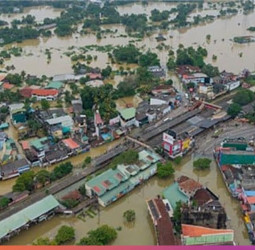
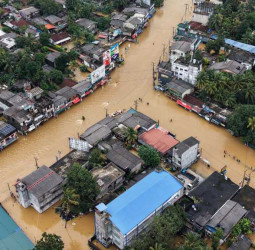
790Cyclonic storm Ditwah struck the heart of Sri Lanka a couple of weeks ago, claiming numerous lives. Many were caught in the relentless downpour and fierce winds, seeking shelter wherever they could. As torrents of water swept through villages, many people were rescued just in time, their lives spared by timely assistance.
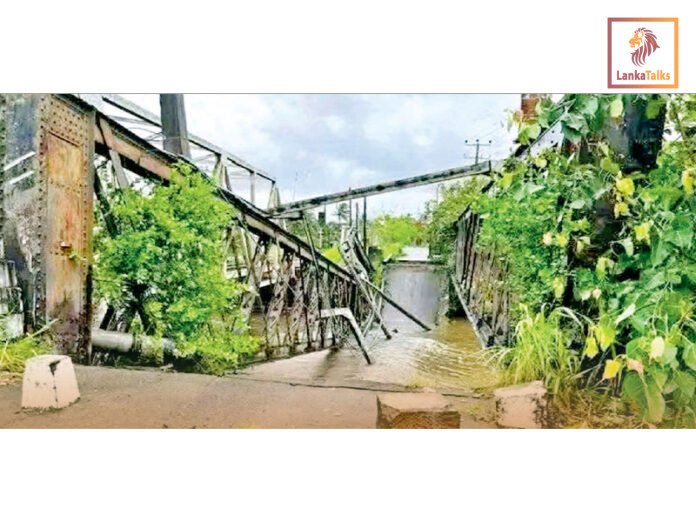
This unprecedented calamity affected the entire country, prompting historians to record new accounts alongside old ones of past disasters. In some areas, it was the heavy rain that caused havoc, while in others, it was the fierce gusts that wrought destruction. Amid it all, power outages, landslides, collapsed roads, floods, property damage, and broken trees inflicted hardships even on those who had never previously faced such natural catastrophes.
While it was known that pressure systems were forming in the surrounding seas, no one anticipated that a storm of this magnitude would cause such widespread devastation. Despite increasing extreme weather events around the world, the scale and intensity of this disaster mark it as the most powerful natural calamity Sri Lanka has encountered in recorded history.
It’s not just nature
The destruction cannot simply be attributed to natural forces alone. It is also the consequence of the cascading effects of climatic disruption. This is a repercussion of climate anomalies. Although there have been signs over time that the surrounding Indian Ocean waters were warming, the full impact of this warming had not been fully realised, according to Professor Saman Seneviratne, former Chairman of the National Science Foundation.
In conversation with Ceylon Today, he said, during the cyclone, the winds were not as strong as might have been expected, which somewhat limited the damage. Nevertheless, the country experienced rainfall exceeding 300 millimetres in a single day, an unprecedented occurrence in Sri Lanka’s history. Relative to the annual rainfall, approximately 25 per cent fell within just one day—a truly extraordinary event.
Because there had been no prior planning for such extreme conditions, many rescue operations and relief efforts were delayed, drawing criticism from various quarters.
This disaster was driven largely by climate anomalies, with one significant factor being the warming of the Earth’s surface. Over recent years, the surrounding regions have experienced rising temperatures. Along the Indian Ocean coast, temperatures have reached as high as 28 degrees Celsius. This warming contributes to the formation of intense pressure systems and, combined with high humidity, has produced unusually heavy rainfall in a short period.
Similar effects are likely in the future for nearby countries and island nations, and the rising ocean levels could further exacerbate the impact on coastal regions.
Even some of the buildings in Sri Lanka were not constructed according to proper planning standards. No matter how much rain fell, water could not drain effectively. Existing canals and streams were blocked, and in many cases, construction itself impeded natural water flow. These factors worsened the problem. With a dense population, diverting water safely becomes even more challenging.
Looking ahead, careful and strategic thinking will be essential. If we fail to manage these issues properly, it will be difficult to cope with extreme weather and climate variability in the future. This is only the beginning. For many, this was their first direct experience of such an event. However, such storms, sudden floods, and cyclones are set to become more frequent.
Must prepare now
As a nation, Sri Lanka must prepare now. In the future, intense short-term rainfall is likely to become commonplace, and we need to develop new methods to manage and mitigate these impacts effectively.
Many people in our country die as a result of air pollution. In some places, it is difficult to even understand how certain buildings received approval, as they do not meet any proper standards. This is why air pollution occurs in so many areas. The lack of effective regulation has led the country into this situation. To address this, either new laws must be enacted or existing regulations strengthened to find a solution. If not, climate changes will only create further problems.
One of the main reasons we face so many challenges is the delay in climate forecasting. Several factors contribute to this. There are doubts about the reliability of our weather forecasts at times. It seems that changes in the Indian Ocean region, rising temperatures, and other factors have not been fully incorporated into our forecasts. This is not something we can manage alone; support from other countries in the region is essential.
We must quickly enhance the accuracy of our weather forecasts using modern technology and expand early warning systems. At the same time, this information must be communicated to the public as swiftly as possible.
Data on recent rainfall, wind patterns, and affected areas will be invaluable in the future. It is crucial for the survival of our agricultural sector. The recent heavy rains destroyed all farmland in a single day, affecting food security at its core. If we can anticipate such events in advance, even to a small extent, we can adjust our agricultural practices and protect crops against climate changes. This would allow us to carry agriculture forward despite these challenges. Without such preparation, food security could be seriously compromised.
We also need to pay attention to the ‘Indo-Pacific Warm Pool,’ a vast region stretching thousands of miles, which significantly influences storms, intense rainfall, and prolonged dry periods. We have already observed these changes, and an ongoing study is required to incorporate them into forecasts. As a nation, Sri Lanka is particularly vulnerable due to its location. This issue is rarely discussed, but urgent attention is needed as soon as possible.
Human interference
Although people have experienced much in relation to climate changes, many are reluctant to accept that human interference is a major cause of these disasters. During this severe natural disaster, many of the areas that suffered damage were sites of unauthorised construction. In places where hills were cut and land flattened, water flow was obstructed, causing flooding in areas downslope. Even where trees stood, providing some natural protection, unauthorised construction left these areas unstable.
Throughout the past period, there have been various discussions about climate changes, yet no proper planning has been implemented on the ground, according to Hemantha Withanage, Chairman of the Centre for Environmental Justice.
He criticised the fact that many proposals remained confined to paper, aggravating the problem further.
“The issue of climate adaptation has been discussed since 2015, yet nothing significant has been done in Sri Lanka. Even formal inquiries have been conducted, and numerous documents and proposals have been prepared and submitted. Yet not one of these proposals has been put into practice. A proper plan for climate adaptation is essential. It is not just bridges and culverts that require attention; rivers, tanks, and reservoirs must also be properly maintained. Interventions to reclaim land illegally must be stopped.
“The National Building Research Organisation must ensure that people are immediately relocated from designated high-risk areas. Forest areas must be preserved. When heavy rain falls, water should flow naturally into the land and rivers; tanks must be maintained and repaired. Without doing these basic things, all other efforts are futile.
“Our project planning should respond to global environmental conditions, not political agendas. Projects implemented to meet today’s environmental needs are still largely absent. Exhibitions or minor projects carried out by a handful of people do not suffice.
“This government, for instance, tried to distribute forest land to people, removed some elephants, and cleared certain areas. But no efforts were made to build an agricultural system compatible with climate anomalies. The one positive decision was the protection of a few reservoirs. Beyond that, decisions considering the environment, climate anomalies, and biodiversity have not been made.”
Greater intensity
In the past, floods were anticipated with forecasts spanning more than 150 years, and various plans were developed accordingly. Today’s situation is different. The impacts are occurring continuously and with greater intensity than before. Both rainfall and wind patterns have changed. Yet development projects have not been adapted to meet these changes, and there has been little discussion about disaster management. At times like this, there is no comprehensive disaster management system in place. The only thing that can be done is to try to save lives as rivers overflow.
This is why planning must take place before disasters strike. Procedures must be developed based on data and reliable information. Unlike in the past, these are not simple storms—they are cyclones linked to climate anomalies, accompanied by heavy rain. To face them effectively, our agricultural sector, infrastructure, hospital system, canal network, provincial and local councils, and government institutions all need to operate under a coordinated, integrated plan. Without this, there are no short-term solutions to these problems.
Even after several days, the full extent of the damage caused by Cyclone Ditwah cannot yet be properly assessed. What is visible is only a fraction; far more loss and devastation have occurred. Monetary compensation for lives lost or property damaged cannot begin to restore what has been lost to those affected. Today is different from yesterday, and tomorrow will be different again. The scale and nature of what may occur cannot be predicted with certainty. In the future, there must be a realistic, actionable plan in place to enable people to recover and continue even in the face of climate-induced disasters.
Source - Mawbima