


 Breaking News
 A.R.B.J Rajapaksha
 A.R.B.J Rajapaksha
 Apr 21 2026
 975
975Q1: Sun Siyam Pasikudah has earned Travelife Gold Certification, covering 147 criteria from energy and water to wildlife and community welfare. What did that journey genuinely push the property and the wider group to do differently?
Earning Travelife Gold was never just about getting the certificate. Working through 147 criteria covering energy, water, waste, wildlife, and community welfare made us look hard at ourselves and ask whether we were truly doing enough in each of those areas.
What it really pushed us to do was move beyond compliance. We tightened our conservation practices, improved how we manage waste, and put more deliberate effort into biodiversity and community programmes. But perhaps the most meaningful shift was weaving sustainability into the guest experience itself, making it visible and accessible without ever compromising on comfort or quality.
At the group level, Pasikudah became a working model. The practices we refined here have since been adapted and adopted across our other properties, creating a culture where sustainability is not a side project managed by one department but something that shapes how every team member thinks and works. It reinforced what Sun Siyam Care stands for: that responsible hospitality is not a goal we work towards. It is simply who we are.
Q2: Most of the Sun Siyam story has been written in the Maldives. How does Pasikudah write its own chapter, given how different the setting, the coastline, and the community around it are?
When the civil conflict in Sri Lanka's Eastern Province ended in 2009, our founder Ahmed Siyam Mohamed saw something in Pasikudah Bay that many others had not yet noticed. The calm, shallow waters and unspoiled beaches were extraordinary, but he also saw a region ready for renewal and an opportunity to be part of that through responsible tourism.
The property opened in 2014 as a 34-room luxury boutique resort, quietly introducing refined hospitality to Sri Lanka's east coast. Then came COVID-19 and the country's economic crisis, two of the hardest back-to-back challenges any hospitality business could face. Rather than simply wait it out, General Manager Mohamed Arshed Refai led a comprehensive transformation of the property.
The refurbishment was guided by international design firm Studio 67, but its real character came from a very deliberate decision: every single material used was locally sourced, and Sri Lankan artisans and craftspeople were involved throughout the process. It was not just a renovation. It was a recommitment to the region and the people in it.
That is what sets Pasikudah apart within the Sun Siyam family. The Maldives properties have their own extraordinary identity, but Pasikudah's chapter is distinctly Sri Lankan. From post-conflict rebuilding to post-crisis renewal, it is a story of courage, community, and the belief that investing in a place means investing in its people.
Q3: There is an organic farm on the property growing over 38 varieties of fruits, vegetables, and herbs. Tell us about that. It feels like it says something bigger about how the resort thinks about its place here.
The farm is a fairly direct expression of how we think about our responsibility to this place. At least 30 percent of our menu is plant-based, and being able to grow a meaningful portion of that on the property makes that commitment tangible rather than theoretical. Guests receive their welcome drinks made with fruit grown here. The chefs know exactly where their produce comes from and what it took to grow it.
We also have what we call climate-conscious dishes on the menu, options designed around sustainable food principles that prompt guests to think about what they are eating and where it originated. Beyond the farm itself, we source a significant share of our ingredients from local farmers and producers in the surrounding community. That reduces food miles and carbon emissions, but it also means the resort is actively supporting the local food economy rather than bypassing it.
Put simply, the farm is not a marketing feature. It reflects a commitment to operating in a way that is connected to this land and these communities, rather than sitting apart from them.
Q4: More than nine in ten people working at Pasikudah are from the Eastern Province communities. In a region with its own story of rebuilding, what does that commitment look and feel like beyond the number?
When tourism first arrived in this region, it felt unfamiliar to many local families. There was no established culture of hospitality employment here. Over time, through consistent effort to open our doors, share skills, and build trust, that has changed significantly. People from the surrounding communities now see the resort not as something happening nearby but as something they are genuinely part of.
Local hiring is only the starting point. We invest in skills development and create real career pathways, so that people who join as entry-level team members have a clear route to supervisory and management roles. Many of our current leaders came up exactly that way.
Gender inclusion is also something we take seriously. Hospitality was historically not a sector where women in this region had many opportunities. We have worked to change that, supporting women's employment, leadership development, and financial independence. The impact of that extends well beyond the resort itself.
The number is meaningful, but what it represents is more so: a model of tourism that shares its benefits with the community rather than extracting from it.
Q5: Sun Siyam Care is the sustainability identity across all your properties. If a guest checks in at Pasikudah knowing nothing about it, how do they leave feeling it?
They feel it in the small things first. The welcome drink made with fruit from the garden. The thoughtfully chosen amenities in the room. The meal that comes with a story about where its ingredients were grown. None of it is presented as a lecture about sustainability. It is simply how things are done here.
Then, if guests are curious or want to engage more directly, they can. Beach cleanups, tree planting, biodiversity initiatives, conversations with team members about what the resort is doing and why. Sun Siyam Care is not a programme guests are asked to opt into. It is the texture of the entire experience.
Behind all of that, there is real measurable work: reduced energy and water consumption, a shift away from single-use plastics, renewable energy investment, community employment and empowerment. Guests rarely see all of it, but they leave with a sense that their stay mattered beyond their own enjoyment. That, for us, is the goal.
Q6: The beach cleanup at Pasikudah Bay brought together staff, guests, and local families. How did that come about, and is community-led conservation like that becoming part of the regular rhythm at the property?
Plastic pollution is a crisis that does not stop at property boundaries, so our response to it cannot either. We removed single-use plastics from guest rooms as a starting point, but we also recognised that the beaches and coastline around us need consistent attention and that the resort alone cannot provide it.
The cleanups bring together our team, guests who want to participate, local families, and community partners. They are not set-piece events staged for a photo opportunity. They are collaborative efforts that build relationships with the surrounding community and reinforce a shared sense of responsibility for this coastline.
Guests who take part often describe it as one of the most memorable parts of their stay, not because it was remarkable in itself, but because it connected them to the place in a way that simply lying on the beach does not. That connection is something we want to keep building.
Q7: CarePhant is a beautiful commitment. Elephant welfare work alongside the Department of Wildlife Conservation, from a coastal resort. What is the story behind Pasikudah being part of that, and where does it stand today?
Kalo was rescued from an abandoned well in the Anuradhapura District in early 2024, at around eight months old. He was brought to the Elephant Transit Home, where he has been receiving expert care from wildlife veterinarians working under the Department of Wildlife Conservation. When we heard his story, the connection felt natural. His release back to the wild is planned for 2029, and through the CarePhant project, we have committed monthly support from the Sun Siyam Care Fund to help fund his care throughout that period.
A display board at the Transit Home tells Kalo's story to visitors, and that element of awareness-raising matters to us as much as the financial contribution. We want guests and the wider public to understand the role that responsible tourism can play in wildlife conservation.
For a coastal resort, taking on the welfare of an inland elephant might seem like an unusual step. But Sun Siyam Care was never meant to be defined by geography. It is about impact. Kalo's journey, and what it takes to bring him safely back to the wild, is exactly the kind of long-term commitment that reflects what we genuinely believe in.
Q8: Guests come to Pasikudah for a luxury experience. How do you make sure sustainability adds to that rather than quietly asking them to give something up?
The honest answer is that we do not see those two things as being in tension. Luxury has changed. Guests who can afford to stay anywhere are increasingly choosing based on authenticity, meaning, and the quality of their entire experience, not just the thread count of the linen.
Farm-to-table dining is a good example. Sourcing locally means fresher ingredients, better flavour, and a meal that connects guests to the region in a real way. That is not a compromise. That is a better product. The same logic applies to eco-friendly amenities, community experiences, and nature-based activities. We are not asking guests to accept less. We are offering them something more considered and more meaningful.
Guests leave Pasikudah feeling rested, but many also leave feeling genuinely inspired. They know their stay contributed something. That is a feeling that a conventionally luxurious hotel, focused purely on the guest's immediate comfort, cannot easily replicate.
Q9: Looking at Pasikudah and the group as a whole, what is the next chapter on this journey? What are you working towards that is not yet done?
The phrase we keep coming back to is net-positive hospitality. The idea that we should not just reduce our negative impact, but actively give more back to the destinations we operate in than we take from them. That is a high bar, and we are nowhere near done working towards it.
Some of the recent milestones have been genuinely significant. We established the first plastic upcycling centre in the Maldives, supported by the World Bank through CLEAN Maldives. We introduced a food waste prevention programme in partnership with PLEDGE. These are not small things, but they are steps, not the destination.
Looking ahead, we want to go deeper in our partnerships with NGOs, government agencies, and local communities, because the challenges we are trying to address, plastic pollution, biodiversity loss, economic inequality, are far bigger than any single resort group can solve alone. We also want to keep pushing on what a Sustainability Management Plan can look like in practice, moving it from a document that guides decisions into something that demonstrably transforms outcomes.
The work is ongoing. That is not a disclaimer. It is the point.
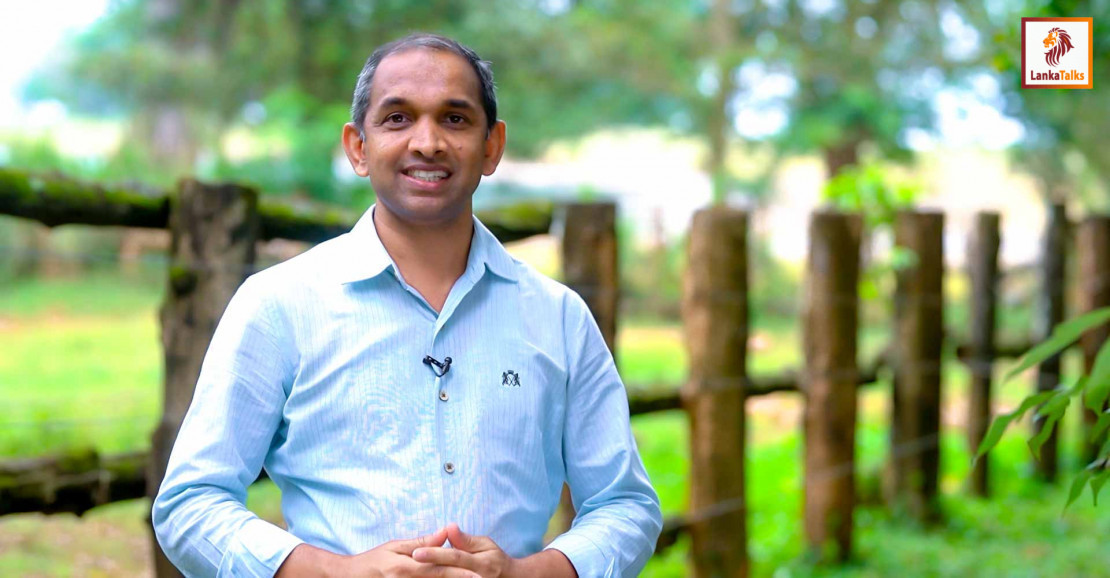
Photo Caption - Upul Kumara, Group Sustainability Manager, Sun Siyam Resorts