


 Breaking News
 Tracy
Tracy Tracy
Tracy Dec 24 2025
 1025
1025Cabinet Spokesman and Minister Dr. Nalinda Jayatissa yesterday said Sri Lanka has not yet fully assessed the overall economic impact of Cyclone Ditwah, stressing that the damage estimates released so far are based only on an initial assessment and that a comprehensive evaluation would take at least another four weeks.
Responding to queries at the post-Cabinet meeting media briefing, Dr. Jayatissa noted that the recent findings released by the World Bank reflect a rapid, preliminary assessment carried out soon after the disaster, and should not be interpreted as the final cost to the economy.
He pointed out that the true economic impact would likely be much higher once indirect losses and longer-term recovery needs are taken into account.
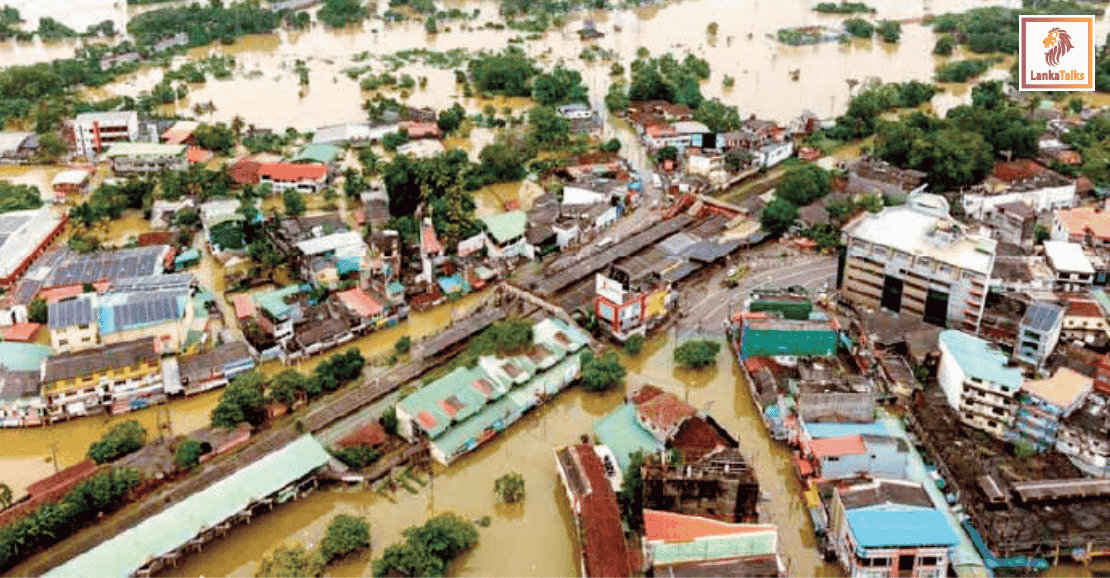
According to the World Bank’s Global Rapid Post-Disaster Damage Estimation (GRADE) report released on Monday, Cyclone Ditwah has caused an estimated $ 4.1 billion in direct physical damage, around Rs. 1.3 trillion equivalent to roughly 4% of Sri Lanka’s gross domestic product. The damage spans buildings, agriculture and critical infrastructure across the country, marking one of the most destructive climate events in Sri Lanka’s recent history.
The cyclone has affected nearly two million people and around 500,000 families across all 25 districts, severely disrupting livelihoods, public services and economic activity countrywide. The World Bank noted that the estimate accounts only for direct physical damage to assets and does not include income losses, business interruptions or the full cost of recovery and reconstruction.
The report also excludes future-oriented investments aimed at “building back better,” which are often required to enhance resilience against increasingly frequent and severe climate-related disasters. As a result, total recovery and reconstruction needs are expected to be significantly higher than the current headline figure.
The GRADE assessment, which relies on rapid, remote and model-based analysis, is intended to provide timely insights to guide immediate emergency response and early recovery planning, as well as to inform longer-term disaster risk reduction strategies.
However, Dr. Jayatissa reiterated that a more detailed, ground-level assessment was essential to accurately quantify the broader economic shock and to shape fiscal, financial and policy responses in the weeks ahead.
He said the Government would continue to work with the World Bank and other international partners and relevant institutions to complete a comprehensive damage and needs assessment, which would form the basis for mobilising resources and designing recovery programs aimed at restoring economic stability and protecting vulnerable communities.
Source: Daily FT