


 Breaking News
 Krishani
 Krishani
 Sep 29 2026
 217
217Nearly 250 children from Sri Lanka’s plantation communities have entered local universities over the past two years, marking the highest number recorded by the sector and signalling a significant shift in the educational prospects of plantation families The achievement reflects decades of investment in education, healthcare and child development by Regional Plantation Companies (RPCs), the Government and plantation-sector trade unions through the Planters’ Human Development Trust (PHDT), established in 1992. The transformation is particularly visible in early childhood care. Traditional estate “Pulle Madu” facilities, where infants were once cared for while their mothers worked, have gradually been replaced by fully equipped Child Development Centres (CDCs) staffed by trained officers. Early Childhood Development centres also provide structured, play-based learning and facilities for breastfeeding mothers.
The RPCs collectively spend nearly Rs.720 million annually to maintain CDCs, supporting the educational and developmental foundations of plantation children.
According to sector figures, primary school enrolment among plantation children has reached 100%, while around 2–3% subsequently enter local universities. Among the recent university entrants is a student from Strathspey Estate who is now studying medicine at Eastern University.
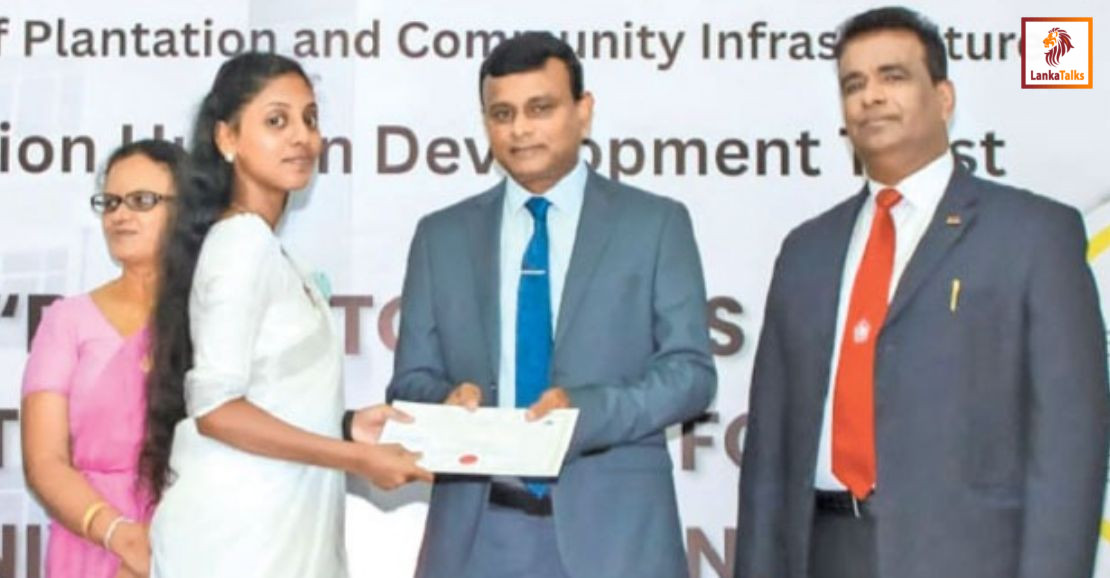
To ensure that students do not lose university opportunities because of financial difficulties, PHDT, together with the Planters’ Association and industry partners, has introduced the Roots to Wings university start-up scholarship programme.
The initiative provides assistance with essential expenses such as laptops, svg books and other requirements at the beginning of university, while RPCs support students through to graduation. The 2024–25 cohort includes students in medicine, engineering, law, ICT, commerce, arts, music, drama, biosystems and other disciplines, demonstrating the widening range of career paths available to plantation youth.