


 Breaking News
 Tracy
Tracy Tracy
Tracy Jun 30 2026
 739
739Mark and Comm (Pvt) Ltd, Sri Lanka’s boutique strategic PR and communications agency named Rest of South Asia PR Agency of the Year 2025 by Campaign, served as Platinum Sponsor of the National Public Relations Summit 2026 (NPRS 2026) held on 18 June and organised by the Department of Mass Communication at the University of Kelaniya.
The summit brought together academics, practitioners, media executives, and government communicators to examine the current state of PR education and professional practice in Sri Lanka. The occasion marked a decade since the University of Kelaniya introduced PR and Media Management as an academic discipline, the first state university in the country to do so.
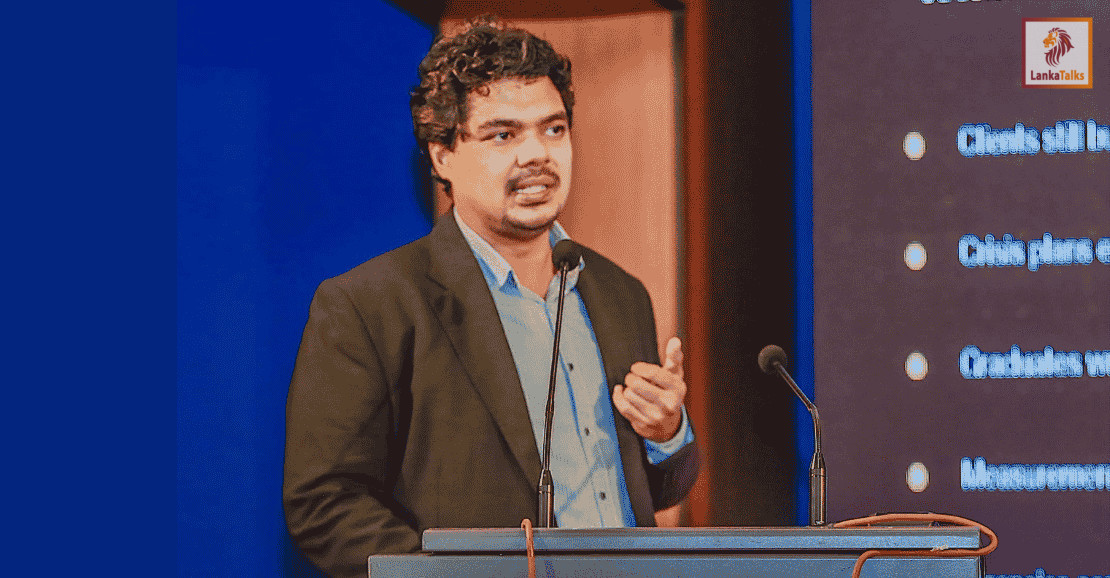
Mark and Comm has spent the past several years arguing, publicly, that the PR industry in Sri Lanka cannot strengthen itself by staying inside its own conversations. The agency’s managing director Thanzyl Thajudeen, who was instrumental in connecting Sri Lanka with the rest of the world in the PR sphere through representation of PRCA, the world’s largest PR body, was also among the panelists discussing the practice, following an invitation from the head of the department, Senior Lecturer Dr. Manoj Jinadasa.
Thajudeen, a Fellow of CIPR and Chartered PR Practitioner, is the only senior PR agency leader in Sri Lanka to sit on the PRCA APAC Board and CIPR International Committee, including the PRCA Education Advisory Board and Membership Committee, and previously on the PRCA Council and CIPR Professional Standards Committee.
His panel session, titled "Is PR Dead, or Did We Just Stop Defining It?", began with how over 80pct of all AI citations now trace back to earned media according to Muck Rack's Generative Pulse Report whilst paid and advertorial content accounted for just 0.3 percent, arguing that if a story cannot earn a journalist's attention, an AI engine will not find it either. The discipline has not shrunk. It has moved upstream.
He also cited Burson's Global Reputation Economy report, published earlier this year, which put the financial value attached to corporate reputation across publicly listed companies at USD 7.07 trillion, with companies carrying strong reputations delivering closer to 5pct additional annual shareholder return. "Reputation is no longer a soft metric. It is a hard asset with a price," Thajudeen told the summit audience. "If PR is dead, someone forgot to tell the balance sheet."
Mark and Comm was the first PR agency in Sri Lanka to connect with PRCA APAC and conduct annual agency surveys and webinars with local and regional PR heavy-weights, and the first to advocate for the media industry through its State of Journalism Report formally presented to the Ministry of Mass Media earlier last year. "We keep pitching to newsrooms this strained without advocating for them. We are mining a resource we never put anything back into. This has to stop. There’s no PR without journalism," said Thajudeen.
On the local PR industry, he was equally direct. Clients still chase behind coverage volume or prominence rather than counsel. Crisis plans exist on paper but not in practice. Graduates are trained to write press releases when they should be learning to advise a CEO. "Agencies compete on rate cards, rarely on strategic judgement," he said, drawing from international benchmarking data that showed corporate reputation and strategic consulting as the fastest-growing service lines globally, ahead of media relations.
For students in the room, his message was unambiguous. The entry-level tasks are already being automated. What does not automate is building a journalist's trust over years, reading a room the client cannot read itself, and advising a CEO who is about to make a mistake. "That is the part PR education should teach well enough," he said.
Mark and Comm's key takeaways from the summit are clear: earned media has never mattered more, with AI engines now drawing overwhelmingly from credible journalism rather than paid content; PR's value lies in strategic counsel, not publicity; narrative intelligence must replace reactive monitoring; purposeful communication is now a baseline, not a bonus; the gap between academia and professional practice needs urgent attention; the media ecosystem the industry depends on deserves advocacy, not just pitches; and measurement must move from clippings to outcomes that hold up in a boardroom.