


 Breaking News
 Tracy
Tracy Tracy
Tracy Feb 23 2026
 747
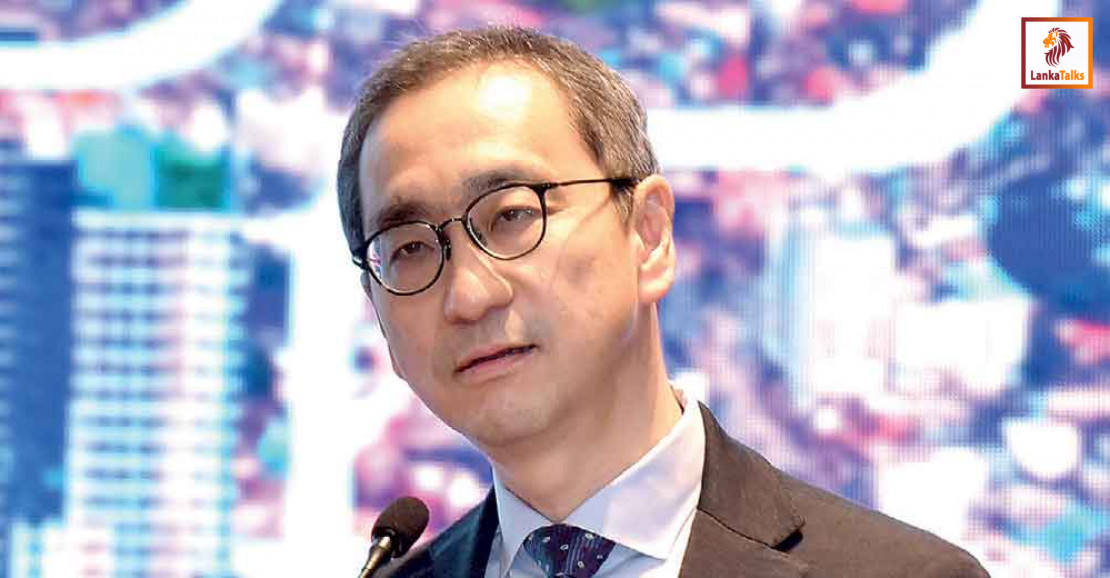
747Global Steering Group (GSG) for Impact Investment Japan Chief Executive Officer Masataka Uo framed impact investing as part of a broader transformation of capitalism itself.
Addressing the first-ever Lanka Impact Investment Summit 2026 in Colombo recently, he said: “Promoting impact investing is not only about creating new financial products. It is about creating a new form of capitalism.”
Referring to Adam Smith’s ‘invisible hand’ theory, he added: “Today, we need to activate the ‘invisible heart’ of the market — the compassion and goodwill of investors, customers and businesses.”
Japan’s impact investment market has expanded from just $ 200 million in 2016 to $ 115 billion in 2024, he said, urging Sri Lanka to build a strong ecosystem to unlock similar momentum.
Masataka commended Sri Lanka’s emerging impact community and encouraged deeper collaboration within the global GSG network, which spans to over 50 countries. “You are not alone, and you should not be alone. The success of impact investment is not just a direct relationship between investors and investees. We need actors who coordinate and build the ecosystem,” he added.
Masataka, who also serves on the GSG Global Board, shared lessons from Japan’s journey, highlighting both structural challenges and rapid progress in mobilising private capital for social good.
“Japan is facing serious social challenges such as an ageing society, low birth rate, rising social security costs, escalating living and housing costs,” he said, noting that the Government is also grappling with one of the world’s largest fiscal deficits.
Although Japan was once primarily an overseas development assistance provider, Masataka acknowledged that many domestic social problems remain unresolved. However, he described a shift in public mindset as a turning point.
“More and more Japanese people are realising that they can no longer rely only on Government authorities. People are starting to think they need to create solutions through business, collaboration and impact investing,” he said.
Masataka explained that when GSG Impact Japan was established in 2014, awareness of impact investing was minimal within the financial sector and Government. “Even ESG investment was not so popular at that time,” he said.
A decade later, the ecosystem has matured significantly, with assets under impact investment growing sharply. However, Masataka cautioned that financial growth alone is not sufficient.
“The number of investment products has increased, but we have not yet seen enough social innovation in daily life. To maximise impact, we need to take more action,” he said.
He stressed that strong national ecosystems are essential to harmonise actors across Government, finance and civil society. In Japan, coordinated efforts helped unlock dormant bank accounts estimated at around $ 1 billion annually, for social investment following legislative reform in 2017.
Masataka also noted that GSG Impact Japan also worked with the Financial Services Agency to convene over 100 financial institutions in a study group that later evolved into an impact consortium, while revisions to JICA regulations last year enabled greater mobilisation of private capital for development.
“These transitions would not have been possible without ecosystem support and global collaboration,” he stressed.
Expressing support for Sri Lanka’s efforts to strengthen its impact investing framework, Masataka said: “Let us collaborate, learn from each other, and make great things happen — in Sri Lanka, in Japan, in Asia and across the world.”
Source: Daily Ft