



 Breaking News
 A.R.B.J Rajapaksha
 A.R.B.J Rajapaksha
 Feb 02 2026
 937
937ri Lanka’s digital economy goals require a modernised public sector Information and Communication Technology (ICT) cadre. While Sri Lanka’s computer literacy rate has risen to 38.4% in the first half of 2025 according to the latest data, the Government sector ICT workforce faces several technical and administrative gaps.
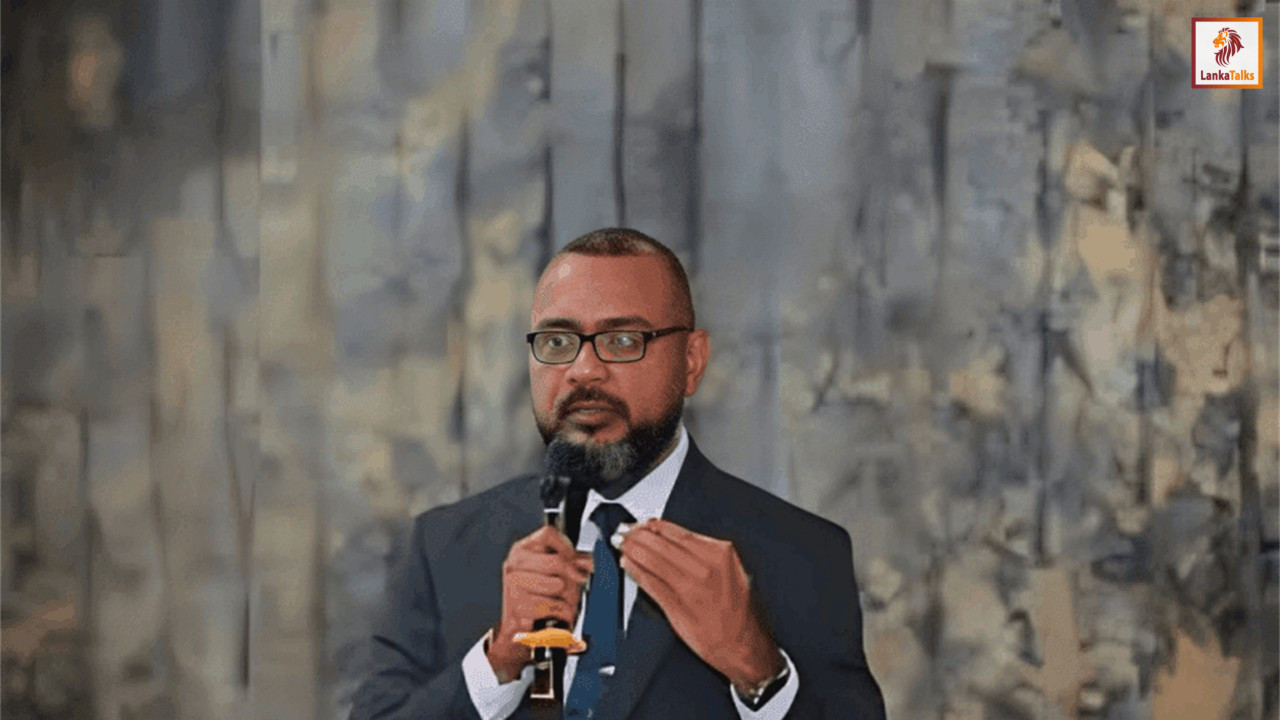
In an interview with The Sunday Morning Business, Government ICT Professionals’ Association (GICTPA) Chairman and ICT Industry Skills Council Director Eng. Thilina Panduka explained that these gaps were driven by a drained technical workforce, which needed to be boosted through competitive salary rates, continuous capacity building, proper technical authority at the decision-making level, and streamlined recruitment processes.
Following are excerpts:
What are the most critical ICT skill gaps within the Government workforce today, based on actual project delays or system failures seen in the last two years?
The current approach to solving these issues often misses the mark because the people identifying the problems are disconnected from the actual work.
The individuals involved identify issues and offer solutions, but they do not understand the underlying workflow. Because they have not experienced the problems firsthand, the solutions they provide do not answer the real questions. To fix these issues, you must understand the internal flow of an institute.
For example, the Information Communication Technology Agency (ICTA) created websites for all the divisional secretariats, but these projects stalled because no one from ICT service staff was officially made responsible for maintenance.
We also see a recurring failure in the handover process where the responsibility is not clearly assigned. Technology is not an obstacle in this day and age. The problem is a lack of administrative policy and leadership. Without a person who is truly responsible for carrying out these projects, they simply become a waste of money.
The shortage of ICT staff is a significant problem. When a non-IT service officer who has some knowledge of IT and is assigned to manage a project gets transferred, they are often replaced by someone who is in the same service but has no knowledge in IT and no interest in learning new systems. Because they are not IT professionals, they cannot take responsibility for the systems running at the office and superiors can’t force them since that is not what they recruited for.
Could you elaborate why this is happening?
Currently, there are only about 100 executive-level ICT professionals from across the entire Government workforce, who are mostly centralised in the Colombo District. While there are around 250 ICT officers and about 2,000 ICT assistants, most ministries do not even have a director-level position for IT.
For some reason, these senior positions are not created when cadres are prepared, which means there is no one at the top to handle the management and verification of these digitisation endeavours at Government institutes. With the ICT sector rapidly evolving, this lack of internal capacity means we cannot manage the services rendered by the private companies that develop our systems.
How do these capacity issues affect the reliability of Government digital services and infrastructure?
We face major infrastructure barriers and reliability problems. If a Government institute wants to host a website or a system, they have to use either their own servers, which are expensive and need special knowledge to maintain, or the Lanka Government Cloud (LGC). However, that cloud is managed by very few technical staff.
For a public service, we need 24/7 operation and 99.9% uptime. However, in this situation, when a system or a website goes down, people must log a complaint via the helpdesk and wait days or weeks for a solution, which is not acceptable. We are hopeful that the newly launched version of the LGC will help to resolve these issues.
On the other hand, a lack of ICT staff acts as a structural ceiling that prevents the Government from moving beyond ‘paper digitisation’ into a truly reliable digital state.
The core issues can be broken down into three main categories. There is an uptime crisis, which includes maintenance gaps and vendor lock-in.
The next category is security deficit, such as unmonitored gateways and policy stalls. For instance, the delay in the National Cyber Security Bill’s implementation is partly a human resource issue as there aren’t sufficient numbers of specialised legal-tech officers to enforce the standards across over 800 Government agencies. The same goes for several other acts.
The technical debt cycle is another issue where non-IT personnel are in IT roles, leading to poorly optimised systems and brain drain. As of 2026, the migration of mid- to senior-level engineers has left a leadership vacuum.
Given these limitations, along with the increase in cyberthreats, how equipped is the Government sector to protect its digital assets?
We have seen several public websites and systems get hacked recently. The issue is that we do not have enough staff and equipment to monitor every website and service.
Although the Sri Lanka Computer Emergency Readiness Team (Sri Lanka CERT) has launched the Security Operations Centre (SOC) recently and has started monitoring a selected number of institutes, I firmly believe that we need people inside the Government who are experts in information security so they can implement safety measures before an attack happens.
If a site is targeted, Government institutes are presently reliant on Sri Lanka CERT for help, but the latter is overwhelmed with hundreds of similar requests. Without dedicated internal staff to manage backups and security protocols, we will remain vulnerable.
There have been major breaches, such as the Pension Department database, which can lead to instances where scammers use this data to target Government employees, especially retired people with low ICT literacy. In such situations, a lack of transparency becomes a critical issue.
We need security experts inside the Government who can implement safeguards before these breaches happen. There is a need to understand the technical necessity of security infrastructure in order to guarantee data protection rather than removing these requirements from annual procurement plans due to budget constraints.
Even within the Government sector, many employees still use personal email for official purposes because they do not have official email accounts. Furthermore, almost no one is using proper digital signatures in office communications.
This is very dangerous because, without any enforcement in relation to using official emails, anyone can copy a signature, forge an official document, and send it via digital means. Proper digital signatures are seen as an unnecessary cost, so this vulnerability persists.
What is the disconnect between software and employees?
There is a disconnect between the software systems procured by the Government and the actual needs of the institute and its employees.
Software systems are often chosen by high-level officials who are not technical and are non-IT. When the software finally reaches the lower-level staff, who must use it every day, they find it is incapable of performing the necessary tasks. Because the software does not solve their problems, they eventually abandon it and go back to manual systems. We are still using payroll programmes from the Windows 98 era which need DOS support to run properly. So I believe that before going for large projects, we should start from there.
For the Government to improve its partnership with private software providers, we need a proper IT professional cadre within the Government that can act as partners to define requirements and manage ownership. When a critical software has a bug, we cannot have a situation where the company does not answer for days. If you don’t have people who understand the local infrastructure, you will continue to invest in technology that isn’t fit for the environment.
In order to avoid these issues, there needs to be a proper, continuous capacity-building programme. In the IT sector, changes take place by the second and thus training must be constant. Every ICT officer should have at least 40 hours of training per year.
However, since 2017, only basic recruitment training and a few general training programmes have been provided. There has been no specialised technical ICT training since then. This has created a significant divide between the capabilities of private sector ICT employees and those of their Government counterparts.
How severely is the salary gap between the public and private sectors impacting the Government sector’s ability to retain talent?
The gap is massive and acts as the primary driver of brain drain. In the current market (2025/2026), private sector ICT salaries are 300% to 1,000% higher than Government rates for similar roles. This gap widens significantly as professionals gain experience.
The breakdown of the monthly income disparity is demonstrated in Table 1.
Even an executive-grade officer in the Government only sees a small annual increment of a few thousand rupees. Most of the talented people have either moved to the private sector or gone abroad.
Years ago, there was a proposal to pay IT staff higher salaries, matching the private sector, but it was blocked because the Government did not want to disrupt the existing salary structure. However, unwillingness to pay a competitive rate means inability to retain top talent within the country.
The Government is proposing a different approach through GovTech. It is trying to bypass standard salary structures to hire a dedicated software team at market rates. Its goal is to have an in-house team of developers creating solutions for the Government. The recruitment process is currently unfolding, and we shall wait and see how well it will work or how these projects will be distributed. On the infrastructure side, we have improvements as well.
People also question whether software should be developed in-house. In my opinion, we must not do so, unless it is a simple case. In critical situations, it should be procured from reputed companies with proper Public-Private Partnerships (PPPs) in order to ensure the system runs. This is because if the developer is unavailable, the system operations could be affected. However, there should be a knowledgeable officer to give the requirement clearly.
On a structural level, how does the lack of data sharing between departments impact digital progress?
Data interoperability is a major problem. Agencies are unwilling to share data with other relevant agencies and maintain their own siloed databases. This results in massive data duplication, requiring more servers and more people to manage the same information.
Without a centralised database, we will continue to see duplication and potential for corruption. Thus, a policy to enforce data sharing is essential, and building an efficient system remains a challenge until that happens.
Beyond the salary gap, what other structural issues are causing talented ICT professionals to leave the public sector?
Another issue regarding the talent pipeline is that the recruitment process is far too slow. For example, those that sit for necessary exams are not recruited for about two years. During that two-year wait, many of the best candidates find jobs in the private sector or move overseas.
This has been a continuous issue. Then, it takes another one or two years to even attempt to fill the remaining slots. This leads to existing staff members overseeing multiple projects at a time. It is nearly impossible for one person to handle all these responsibilities effectively.
Project delays are constant because there are simply not enough people to do the work. Sri Lanka must also establish the right leadership structure in the ICT sector, with the authority to sign off on technical matters.
The lack of geographic flexibility is a major factor. Since almost all ICT executive positions are in Colombo, staff are forced to stay in the city for their entire careers. There are almost no executive positions in their hometowns or outside the capital. This means that talented people who want to return to their families eventually resign.
We are facing an unprecedented crisis where our professionals feel trapped in Colombo without any prospect of transfer or career progression. This happens because the ICT service is positioned in a combined service category instead of an all-island category from the beginning of service establishment, which obstructs the expansion of Government digitalisation and demotivates employees.
The uneven promotional scheme is also a major source of dissatisfaction. If a person from the ICT service and another from the Grade SL-1 all-island service get recruited on the same day, the ICT service executive has to work 17 years to achieve a directorial post where only a handful of cadre positions are available. However, the other officer could reach the same position in 12 years, whereas if he is from the Sri Lanka Administrative Service, it would take even less time, such as around 6–7 years. This issue has also affected departmental executive services and has been recognised as unjust by the Human Rights Commission as well.
In order to address these pressing concerns, the GICTPA, which represents permanent IT service executives, has requested a solution from the beginning, yet it seems to be dragging from one government to another. Despite these issues being brought to the attention of the relevant authorities, solutions are yet to be seen.
Although we highly appreciate the incumbent Government’s digitalisation efforts, until we include technical and ICT experts in the decision-making process and provide a better working structure, we will continue to lose our best people to the private sector and abroad while slowing down the national digitalisation process.
Source - The Morning