


 Breaking News
 Tracy
Tracy Tracy
Tracy Aug 10 2026
 649
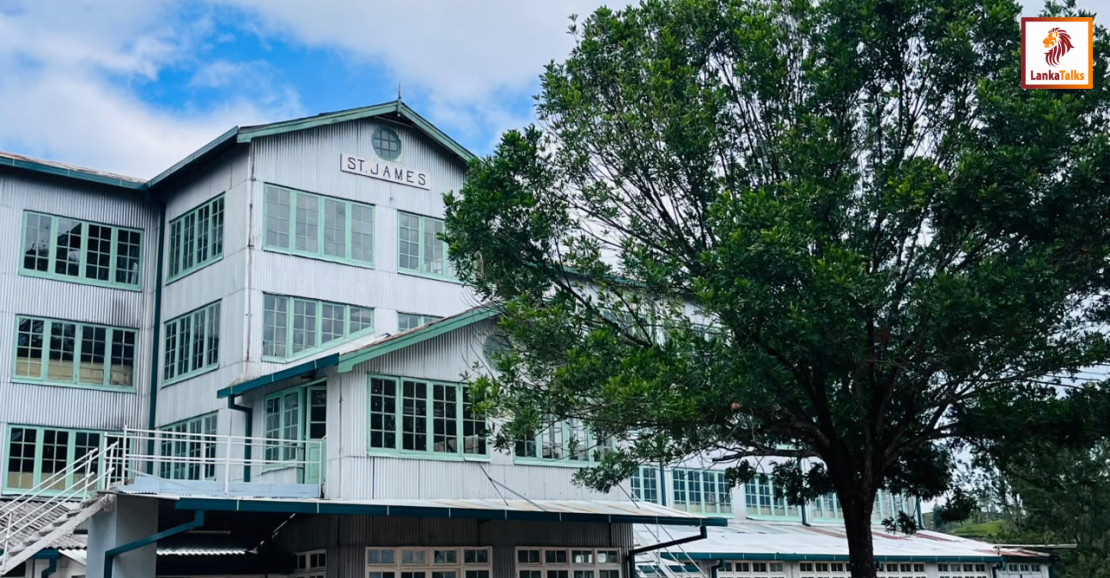
649Since inception the plantation industry has served as a central pillar of the Sri Lankan economy. Tea in particular has been the lynchpin of the industry. Especially for globally renowned Regional Plantation Companies (RPCs) like Malwatte Valley Plantations PLC, whose teas are possessed of a globally unique terroir that emerges from the soil, elevation and dry winds that move through the valley.
Their teas have a distinctively mellow, smooth, and highly aromatic flavor profile that global connoisseurs aggressively seek out. Yet like all other agri-businesses today, the company faces growing threats from a combination of rising costs, crop disease, climate change and global market volatility.
Spread across tea estates in the Uva province and low-country land around Avissawella, Malwatte has built its reputation over decades as one of the nation’s highest quality producers of quality Ceylon tea, rubber, spices, and a growing range of value-added products.
Today, it exports to markets across the Middle East, Europe, Russia, China, Australia, and Japan, and ranks among the nation’s top 20 tea exporters. Increasingly however, what distinguishes Malwatte Valley is not only the quality of it products, but also its entirely modernized approach to plantation agriculture.
That rethinking has been driven, in part, by climate change. Rainfall in the company's low-country areas around Avissawella has climbed to between 7,000 and 10,000 millimetres annually. This, along with the spread of Pesta [Pestalotiopsis Leaf Fall Disease ((PLFD)] rendered traditional rubber cultivation unviable in the region.
Responding to this emerging crisis early, Malwatte moved decisively; diversifying into cinnamon across 400 hectares, establishing 300 hectares of new tea with a supporting factory under construction, and introducing tropical fruits including rambutan and durian.
The transition was not without difficulty given that an earlier attempt to pivot to oil palm ended when a regulatory reversal, which forced the company to abandon nursery stock, and work already undertaken worth approximately Rs. 100 million. However, the company absorbed the setback, regrouped and moved forward with a clearer sense of what the land could support.
Engineering a new kind of plantation through mechanisation
Nowhere is Malwatte's innovation agenda more visible than in the development of its mechanised cinnamon peeling technology. Cinnamon processing is among the most labour-intensive operations in Sri Lanka's agricultural sector, with skilled peelers commanding a premium that can account for upto 50% of the product's final value.
Facing a shortage of experienced peelers at scale, Malwatte took an unconventional approach by tasking engineers from its own renewable energy division; a team recruited out of Moratuwa University that primarily works on solar installations, with developing a mechanical solution.
The result, after extensive experimentation, is a patent-pending machine capable of performing the most complex stage of cinnamon peeling. It enables workers without prior training to achieve output comparable to seasoned peelers; a development that significantly improves productivity and reduces the company's dependence on a dwindling skilled workforce.
In a country that cannot import labour, the ability to build that kind of solution from within speaks to a culture of problem-solving that goes well beyond the plantation industry's traditional boundaries.
Cultivating at a different scale
The same spirit of innovation runs through Malwatte's approach to cultivation. In tea, where Sri Lanka's established planting densities range from roughly 8,000 to 13,500 VP plants per hectare, Malwatte is now planting at 40,000 VP plants per hectare in selected low-country estates, adapting international best practice to local conditions and already seeing bushes reach harvestable maturity considerably earlier than conventional systems allow.
In avocado, the company has pushed well beyond the industry norm of around 200 trees per hectare, planting at approximately 800 and exploring densities above 1,000. Vineyard-style trellising systems are being trialed to simplify canopy management and harvesting. Malwatte is among the first plantation operators in Sri Lanka to pursue commercial avocado cultivation at this scale, opening a category with strong value-addition potential.
Mechanised tea plucking is also another initiative that is current under development. While technical challenges remain, including drone cameras struggling to identify harvest-ready leaves due to rotor wash interference, the company continues to refine its mechanical plucking solutions as part of a broader commitment to reducing manual dependency across its operations.
From field to finished product
Inside the factories, Malwatte has invested in automating conveyor systems, rolling rooms, and sorting processes, with current efforts focused on the withering stage. The company has also consolidated its tea manufacturing into a smaller number of factories designed around automation, built to operate with a leaner workforce and greater consistency than conventional facilities allow.
That drive for efficiency runs alongside an equally deliberate push into new markets. The company is establishing what is expected to be Sri Lanka's first matcha manufacturing facility, Tea Board-approved and equipped with Japanese machinery and technical expertise. Premium green tea will be produced alongside it, giving Malwatte a foothold in high-growth international segments that Sri Lanka has so far had limited presence in.
However, Malwatte's ambitions stretch beyond tea. A cosmetics line comprising face, body & hair care products, mostly formulated with tea and other natural extracts, completes a product portfolio that is already being exported and has a found a home for itself in Germany, highlighting how far the company has come from its plantation roots.
Holding all of this together is an operational foundation built for the long term. Our factories run on renewable energy, the company operates its own warehouse, and field-level traceability is maintained across all operations, meeting the supply chain transparency standards that international buyers now expect as the gold standard.
What Malwatte is building, across its fields, factories, and product lines, is something the plantation sector has long needed: a working model of what technology and innovation can deliver when applied with purpose and consistency. With a 2030 roadmap centered on high-density planting, continued replanting, and deeper value addition, the company is demonstrating that plantation agriculture in Sri Lanka is not standing still. It is evolving, and in Malwatte's case, it is doing so with the kind of drive and ingenuity that could well set the pace for the industry at large.