


 Breaking News
 A.R.B.J Rajapaksha
 A.R.B.J Rajapaksha
 Apr 02 2026
 330
330- Russia’s Deputy FM asks SL to ‘defy White House diktats’
- Signals move away from ‘Dollar dominance’
- Hails ‘radical transformation’ toward a multipolar world order
Russia called on Sri Lanka to pivot away from short-term spot trades in favour of long-term energy partnerships, urging the island nation to prioritise sovereign policy over the shadow of Western sanctions.
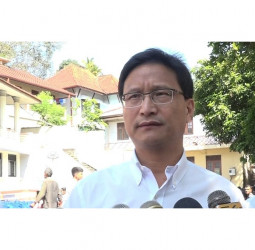
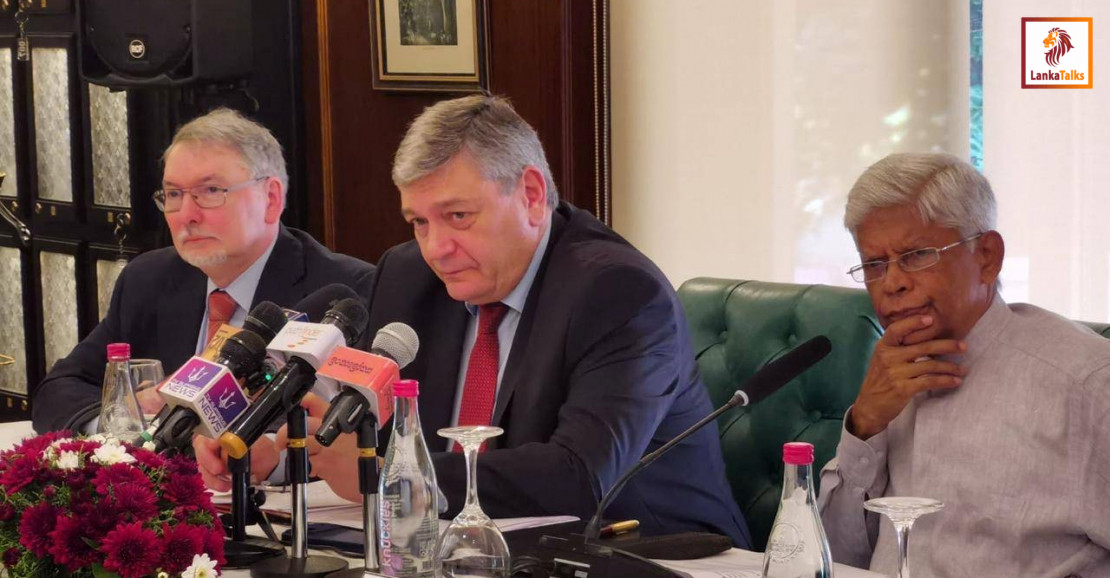
Addressing a gathering organised by the Pathfinder Foundation in Colombo yesterday (1 April), Russian Deputy Foreign Minister, Andrey Rudenko, who is here on an official visit, framed the current global volatility as a ‘radical transformation’ toward a multipolar world. He cautioned Asian nations against being tethered to the shifting decisions of the White House, particularly as Sri Lanka faces a race against time to secure oil supplies.
“If countries of Asia are eager to maintain sustainability and predictability in their energy policies, they should think deeper whether to be dependent all the time on the decision of the White House or build their own sovereign policy with Russia. We would strongly favour the second option,” he asserted.
His comments come as Sri Lanka races against time to conclude arrangements with Russian oil suppliers before the expiry of the US sanctions waiver on 11 April. The Daily Morning reported on 1 April that Janaka Rajakaruna, Chairperson of the Ceylon Petroleum Corporation (CPC), had acknowledged that finalising such agreements within the limited timeframe would be challenging due to procedural and logistical constraints.
Against this backdrop, Rudenko signalled Moscow’s willingness to offer flexible arrangements, including the use of alternative currencies such as the yuan, rouble, and Indian rupee in place of the US dollar or euro, as part of efforts to deepen economic ties and circumvent financial restrictions.
“If there is a desire and a will, we can find a way,” he said, noting a broader global shift away from dollar-dominated trade and highlighting that a significant portion of Russia’s transactions with countries such as China and India are now conducted in national currencies.
To bolster tourism, he specifically pointed to the establishment of reliable payment systems that would allow Russian travellers to use bank cards locally, bypassing the need for physical cash in a restricted financial landscape.
The Russian envoy also framed energy cooperation within a wider geopolitical shift, arguing that the global order is transitioning from a unipolar system dominated by a single power to a multipolar structure where emerging economies, particularly in the Global South, will wield greater influence.
He stressed that Russia does not seek dominance in this evolving order but intends to act as a key stakeholder advocating sovereign equality, while warning that the ongoing transition is marked by instability and geopolitical crises.
Rudenko further linked the current turbulence in global energy markets to escalating conflicts in the Middle East, reiterating Moscow’s position that the war involving Iran must be brought to an immediate end to prevent wider regional and economic repercussions.
He also defended Iran, describing its actions as an ‘imitation of its right of self-defence’ following what he termed an ‘unprovoked and illegal war’ unleashed by the US and Israel. He warned that if the conflict is not halted, the resulting ‘political earthquakes’ will continue to disrupt Asian energy security and migration patterns.
On the international stage, Moscow reaffirmed its support for expanding the UN Security Council to include voices from the Global South, specifically backing India and Brazil for permanent seats. However, Rudenko was firm in his opposition to candidates from the ‘global minority’, such as Germany or Japan.
While acknowledging that Russia’s natural resources are not unlimited and that a ‘line of countries’ is forming for access, the Minister assured that existing contracts with Sri Lanka would be honoured. He concluded that while the transition to a new world order is fraught with crises, Russia positions itself as a key stakeholder ready to share responsibility with those who choose independence over external instruction.
Source - The Morning