

 Breaking News
 A.R.B.J Rajapaksha
 A.R.B.J Rajapaksha
 Jan 22 2026
 413
413Sri Lanka is able to avail itself of the Barbados Implementation Modalities, which can enable direct budget support, direct support via multilateral banks and partnerships with accredited entities, amidst its ongoing expenses for reconstruction, Fund for responding to Loss and Damage Executive Director Mathilde Borde-Laurans said during the High-Level Forum on Climate Finance and Climate-Related Extreme Events in Sri Lanka, held in Colombo, on Tuesday (20).
“It has been three years since the decision to establish this fund, and now we are transitioning to the operationalisation, with the launch of the Barbados Implementation Modalities,” Borde-Laurans said, referring to the operational and financial delivery system of the Loss and Damage Fund.
“On 5 December 2025, we officially opened our very first call for funding requests and governance modalities, which is indeed the starting phase for the Loss and Damage Fund. This means that countries like Sri Lanka can now engage for support.”
The Loss and Damage Fund (LDF) is a global fund established under the UNFCCC to provide financial assistance to developing countries that are particularly vulnerable to the adverse effects of climate change, including extreme weather events (like hurricanes and floods) and slow onset events (like sea-level rise).
The Barbados Implementation Modalities provide countries with three main pathways to access funds. Direct budget support, when accessed, enables funds to be directed towards a country’s Government budget. Direct support via multilateral banks, when accessed, enables accredited multilateral agencies such as the World Bank and regional development banks to transfer funds towards recovery, and forming partnerships with accredited entities enables access to financial and technical assistance from accredited major climate funds.
However, according to Santiago Network Advisory Board Co-Chair Angela Rivera, on ground there remains a need to further assess needs and a formalisation of methodology. “We may need to have some kind of needs assessment of the loss and damage. What do we seek from our loss and damage recovery? The second thing is the cost of loss and damage. There is no unique methodology to evaluate loss and damage.”
Sri Lankan commercial and development bank DFCC Bank PLC is among the global list of Green Climate Fund (GCF) accredited entities, with roughly around $ 250 million invested in climate projects.
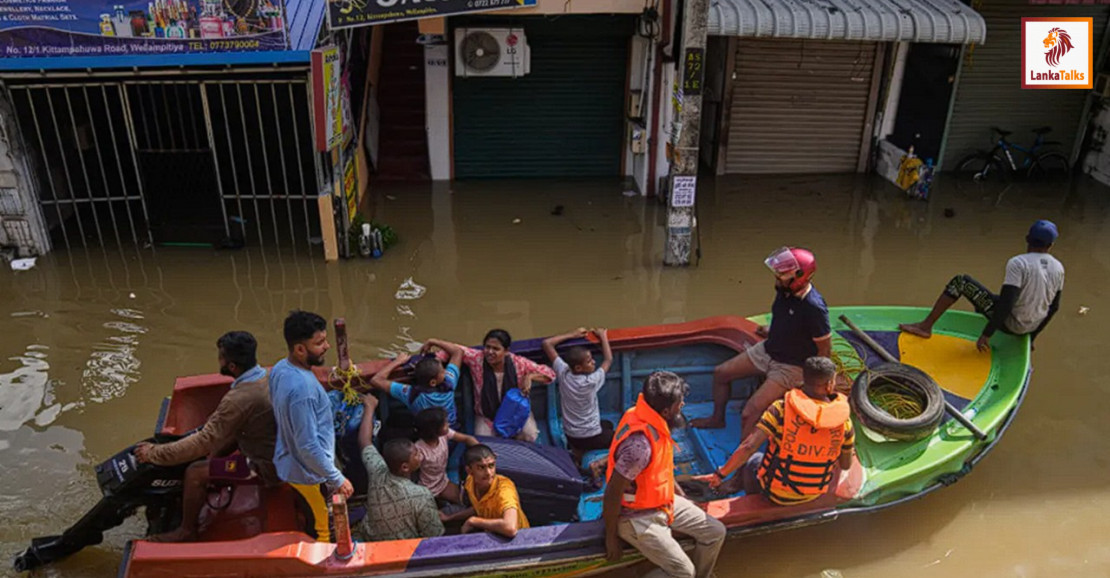
According to the United Nation’s office for Disaster Risk Reduction (UNDRR) Global Rapid Post-Disaster Damage Estimation (GRADE) report, the estimated direct physical damage Sri Lanka had borne due to Cyclone Ditwah is worth $ 4.1 billion, equivalent to approximately 4% of Sri Lanka’s 2024 gross domestic product (GDP).
The report further states that all 25 districts of Sri Lanka were impacted by flooding and extreme rainfall, with Kandy being the worst hit district, with district-specific damages totaling at $ 689 million. The report states that the damage makes Cyclone Ditwah one of the costliest cyclones to impact Sri Lanka on record.
Source - The Morning